The pursuit of speed has always been a driving force in road cycling. As we progress through 2026, the industry is witnessing a massive shift in how riders and manufacturers approach aerodynamic cycling optimization. For several years, the market was dominated by lightweight, all-rounder race bikes that compromised absolute aerodynamic efficiency for weight savings. However, the pendulum has swung back. Today, the focus is squarely on cutting through the wind with maximum efficiency. Whether you are a competitive racer or a dedicated enthusiast looking to improve your personal bests, understanding the latest aerodynamic trends and bike fit philosophies is essential for unlocking free speed.
The Return of the Dedicated Aero Bike
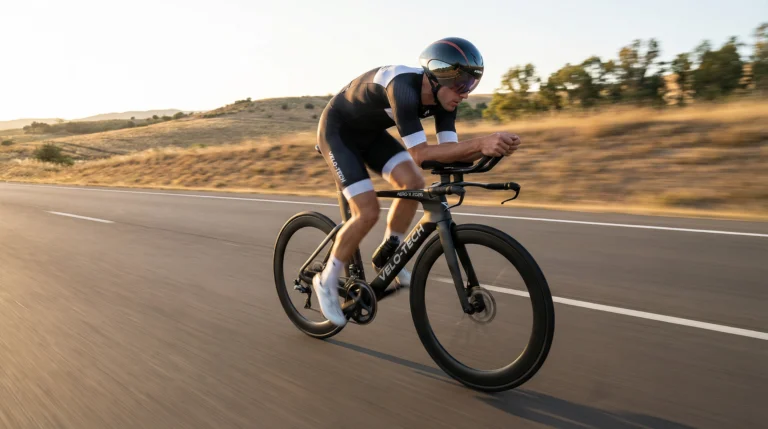
One of the most significant developments in 2026 is the storming return of the dedicated aero bike. In recent seasons, many WorldTour teams opted for versatile all-rounders, but the latest data has proven that aerodynamic gains far outweigh minor weight penalties on all but the steepest gradients. Manufacturers have spent the last few years mastering the latest UCI regulations, resulting in frames that are strikingly fast and visually aggressive.
Bikes like the updated Cervélo S5 and the striking Factor One are leading this charge. These machines feature deeper tube profiles, radical fork designs, and incredibly clean front ends. Furthermore, the integration of components has reached new heights. Cables and hoses are entirely hidden from the wind, reducing drag significantly. If you are interested in how these advancements compare to off-road disciplines, you can explore our insights on 2026 Gravel Bike Trends and Technology Innovations. For a comprehensive look at the bikes shaping the professional peloton, BikeRadar offers an excellent overview of 2026 road tech predictions.
Cockpit Customization and Integration
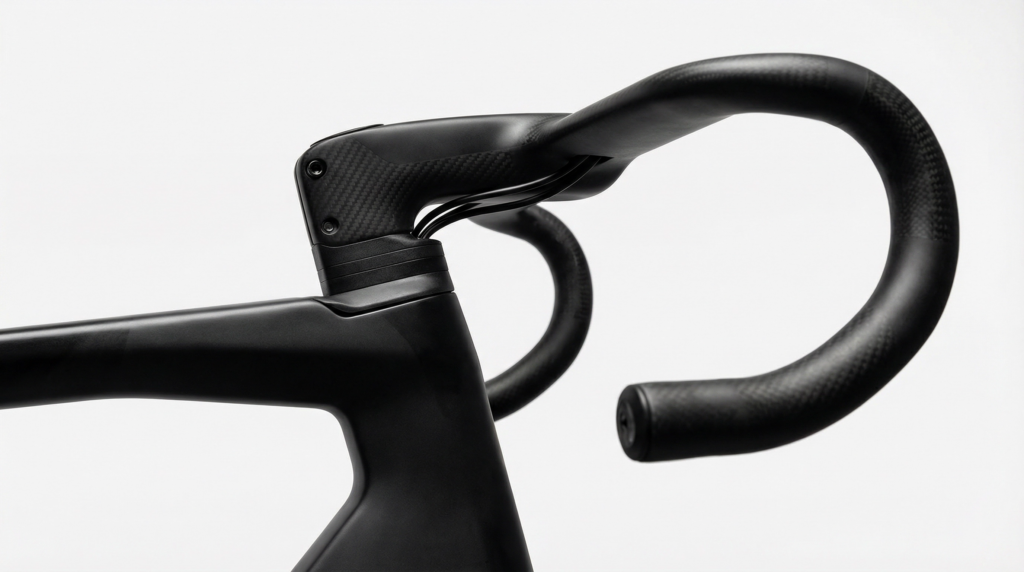
The front of the bicycle is the first point of contact with the wind, making it a critical area for aerodynamic optimization. Integrated cockpits—where the handlebar and stem are molded as a single carbon fiber unit—are now standard on high-performance road bikes. However, the trend for 2026 goes beyond mere integration; it is about extreme customization.
Professional riders and serious amateurs are increasingly turning to 3D-printed cockpits designed specifically for their unique biomechanics. This technology allows for precise control over handlebar width, reach, and drop shape. The prevailing trend is a move toward significantly narrower handlebars. While 40cm or 42cm bars were once the norm, many riders are now opting for 36cm or even 34cm widths. Narrower bars reduce the rider’s frontal area, which is the largest contributor to aerodynamic drag. This shift requires an adjustment period, but the speed benefits are undeniable. To understand the science behind these changes, Aero-Coach provides a detailed breakdown on understanding road bike fit aerodynamics.
Integrated cockpits eliminate exposed cables and present a minimal frontal area to the wind, significantly reducing aerodynamic drag.
Sustainable Aerodynamic Bike Fit
Achieving an aerodynamic position is only beneficial if you can sustain it for the duration of your ride. The old philosophy of “long and low, slam that stem” is being replaced by a more nuanced approach to bike fit in 2026. Biomechanists and fit specialists now prioritize sustainable aerodynamics.
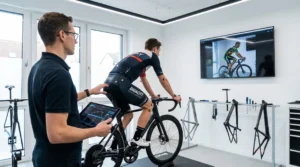
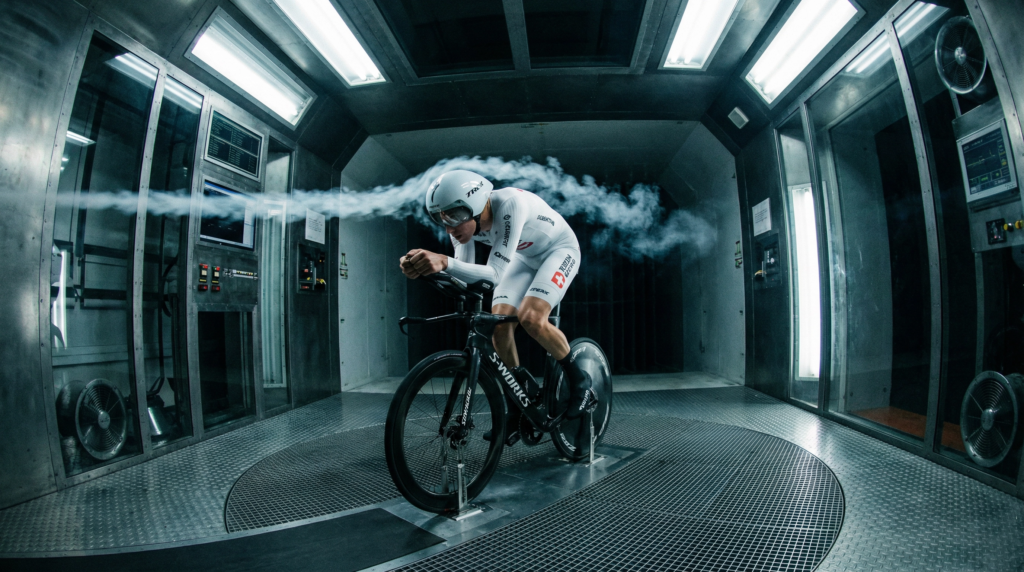
A position that is incredibly fast in a wind tunnel but causes lower back pain after thirty minutes is ultimately slower in the real world. Modern bike fits focus on rotating the pelvis forward, engaging the glutes, and allowing the rider to comfortably rest their forearms on the tops of the bars or in the drops. Additionally, crank arms are getting shorter. Moving from 172.5mm to 165mm or even 160mm cranks opens up the hip angle at the top of the pedal stroke. This allows the rider to adopt a lower, more aerodynamic torso position without restricting breathing or causing hip impingement. Proper recovery is also vital when adapting to a new, aggressive position; be sure to review our guide on Cycling Recovery and Fitness Optimization Trends to keep your body performing at its peak.
Wind tunnel testing helps riders find the perfect balance between aerodynamic efficiency and biomechanical sustainability.
Textured Surfaces and Apparel Innovations
Aerodynamic optimization extends far beyond the bicycle itself. In fact, the rider accounts for roughly 80% of the total aerodynamic drag. Consequently, apparel innovations are a major focus for 2026. The use of textured surfaces to manipulate airflow is becoming ubiquitous in the peloton.
Skinsuits, once reserved exclusively for time trials, are now the default choice for all race days. These suits feature strategically placed textured fabrics that act as boundary layer trips, helping air flow smoothly around the rider’s body rather than separating and causing turbulent drag. We are also seeing this technology applied to aero socks, shoe covers, and even gloves. Furthermore, time trial-style aero helmets are becoming increasingly common in mass-start road races. While ventilation can be a concern on hot days, the aerodynamic savings offered by a smooth, elongated helmet profile are too significant to ignore. Cycling Weekly highlights these developments in their article on the 5 aero trends that will shape the next era of road racing.
Wheel Technology and Rolling Efficiency
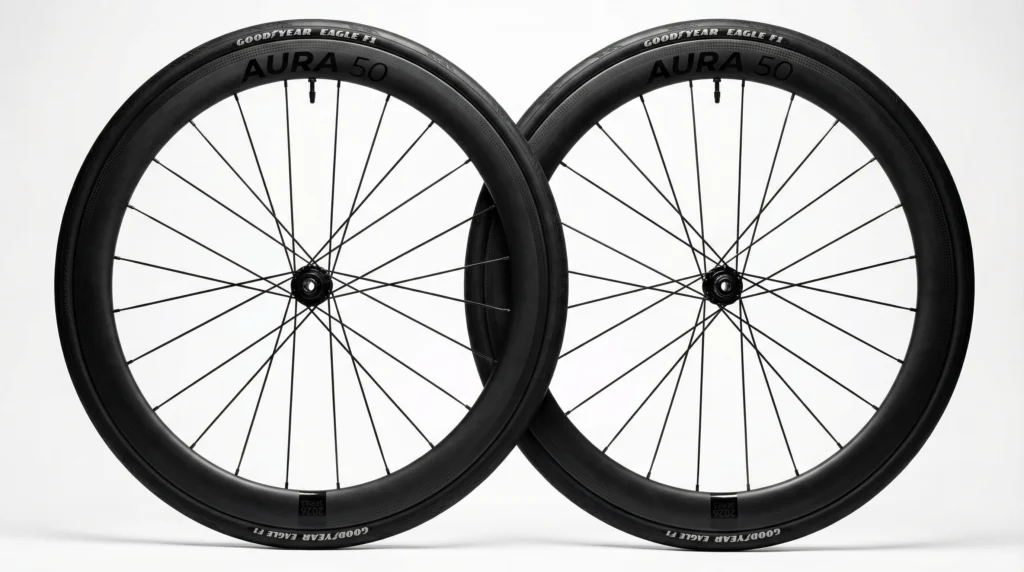
No discussion of aerodynamic cycling is complete without addressing wheel technology. Deep-section carbon wheels remain a cornerstone of any aero setup. In 2026, the sweet spot for all-around aerodynamic performance is generally considered to be rim depths between 50mm and 60mm.
Modern aero wheels are designed with wider internal rim widths to perfectly integrate with high-volume tubeless tires, typically 28mm or 30mm wide. This creates a seamless transition between the tire and the rim, minimizing turbulence. Additionally, manufacturers are experimenting with textured rim surfaces and innovative spoke profiles to further reduce drag at various yaw angles. Maintaining these high-tech components is crucial for optimal performance, so regularly consult our Essential Bike Maintenance tips. For a comprehensive review of the latest wheelsets, CyclingNews offers a guide to the best road bike wheels of 2026.
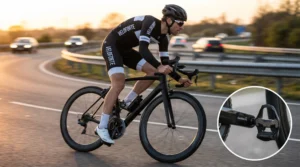
Deep-section carbon wheels paired with wide tubeless tires offer the ultimate combination of aerodynamic speed and rolling efficiency.
Conclusion
The landscape of aerodynamic cycling in 2026 is defined by a holistic approach to speed. By embracing dedicated aero bikes, customizing your cockpit, refining your bike fit for sustainable power, and investing in advanced apparel, you can significantly reduce your aerodynamic drag. Remember that free speed is available to everyone, not just professional racers. By carefully evaluating your equipment and your position on the bike, you can ride faster and more efficiently, turning your hard-earned watts into maximum forward momentum.