AI-powered bike lights are changing how cyclists stay visible on the road. These smart systems adjust brightness, beam angle, and flashing patterns based on traffic, speed, and surroundings, helping riders stay safer in real time.
What Makes AI Smart Bike Lights Different
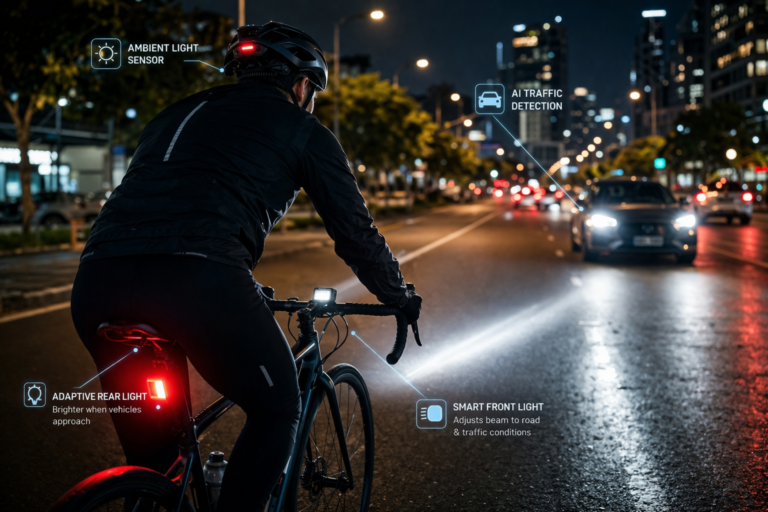
Traditional bike lights provide consistent illumination, but they do not react to changing environments. AI smart bike lights use sensors and machine learning to analyze traffic flow, road conditions, and rider movement.
Instead of a fixed beam, these lights adapt automatically. For example, when a car approaches from behind, the rear light may increase brightness or change its flashing pattern. When riding on empty roads, the system may conserve battery by lowering intensity.
If you already use safety gear like radar systems, you may also want to explore our guide on
cycling radar systems to build a complete safety setup.
Key Features of AI Bike Lights
- Adaptive brightness based on ambient light and traffic
- Motion detection to react to nearby vehicles
- Brake sensing that increases brightness when slowing down
- Automatic beam adjustment for urban and trail riding
- App connectivity for customization and ride data
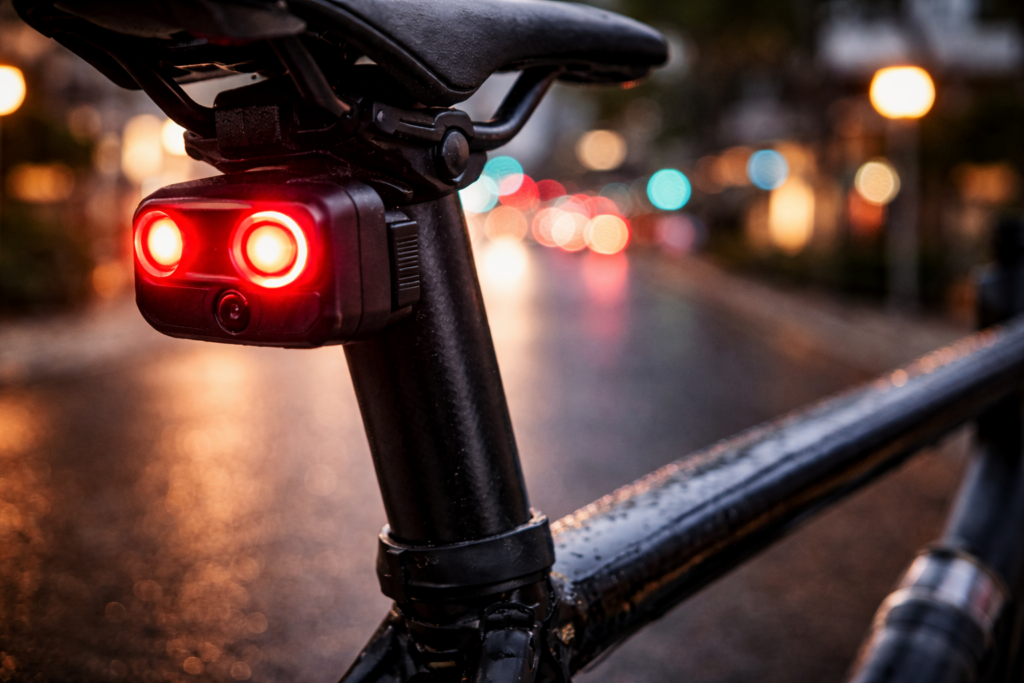
How AI Improves Cycling Safety
Visibility is one of the biggest concerns for cyclists, especially in urban environments. AI bike lights address this by reacting faster than a rider can manually adjust settings.
When a vehicle approaches quickly, the system can increase light intensity instantly. Some models even use predictive behavior, analyzing traffic speed and direction to anticipate risk.
According to NHTSA bicycle safety data, visibility plays a major role in preventing accidents. Smart lighting adds another layer of awareness.
Real-World Use Cases
AI smart lights are especially useful in these scenarios:
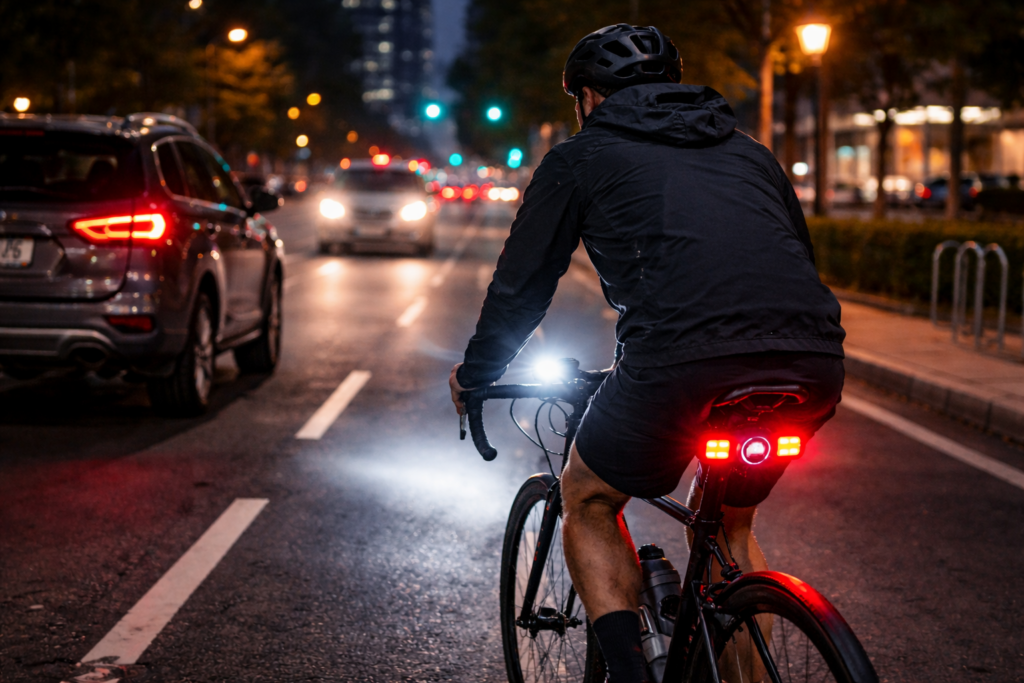
- Urban commuting with heavy traffic
- Night riding on poorly lit roads
- Group rides where spacing changes frequently
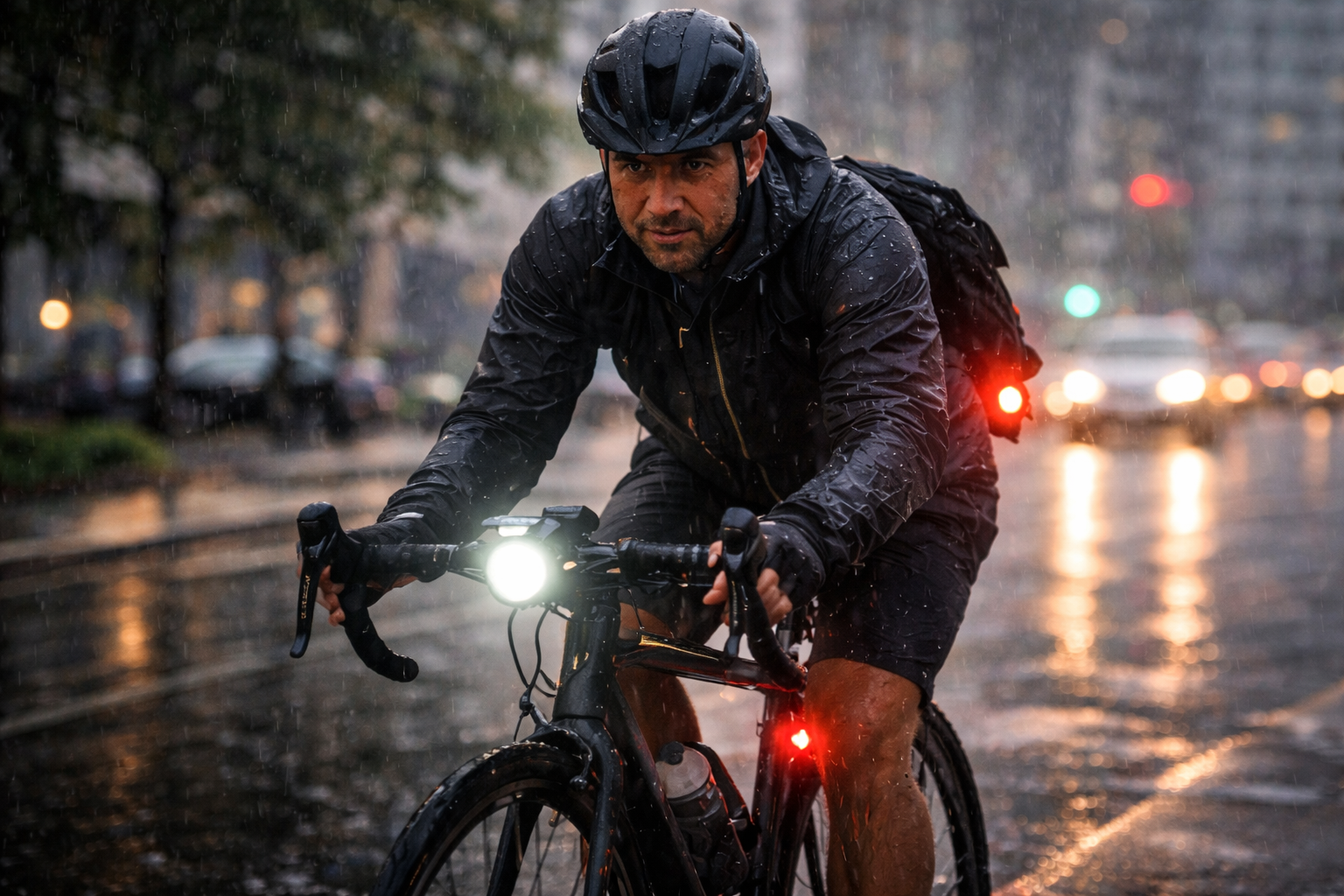
- Rain or fog conditions with reduced visibility
Many cyclists pair these lights with cameras. You can read more about that in this guide from Cycling Weekly.
Popular AI Smart Bike Light Brands
Several brands are leading this trend in 2026. These include:
- Garmin with radar-integrated lighting systems
- Knog with adaptive lighting modes
- Lezyne offering smart connectivity features
- BikeRadar reviews for comparisons
- REI cycling guides for safety tips
Battery Life and Efficiency
One concern with advanced tech is battery consumption. AI lights manage this by adjusting output dynamically. Instead of running at full power all the time, they optimize usage based on need.
This can extend battery life significantly compared to traditional high-output lights.
Are AI Bike Lights Worth It
AI smart bike lights may not replace all safety gear, but they add a valuable layer of protection. Riders who commute daily or ride in traffic-heavy areas may benefit the most.
If you are already investing in safety gear, combining smart lighting with helmets and radar systems creates a more complete setup.
For additional protection tips, check our guide on
cycling safety tips.
Final Thoughts
AI-powered bike lights represent the next step in cycling safety. They react faster than manual adjustments and provide better visibility in changing conditions.
As technology continues to evolve, these systems may become standard for everyday riders, not just enthusiasts.