The Evolution of Disc Brake Technology in 2026
The cycling industry has witnessed a remarkable transformation in stopping power over the last decade. As we navigate through 2026, disc brake technology 2026 has reached unprecedented levels of refinement. Gone are the days when riders debated the merits of rim brakes versus disc brakes. Today, the conversation has shifted entirely to hydraulic innovations, heat dissipation, and precise modulation. Whether you are tackling steep mountain descents or navigating slick urban streets, modern braking systems offer a level of control that was previously unimaginable.
Manufacturers have focused heavily on refining the internal mechanics of hydraulic systems. This continuous improvement means that riders no longer have to compromise between weight and stopping power. Furthermore, the integration of advanced materials has made these systems more reliable under extreme conditions. Consequently, understanding these advancements is crucial for any cyclist looking to upgrade their ride or maintain their current setup.
Understanding Hydraulic Innovations and Modulation
One of the most significant leaps in recent years is the enhancement of brake modulation. Modulation refers to the rider’s ability to precisely control the amount of braking force applied, rather than experiencing an abrupt on-off sensation. In 2026, leading brands like Shimano and SRAM have perfected their lever linkages to provide a progressive feel. This means that a light touch yields gentle deceleration, while a firmer squeeze delivers massive stopping power without locking up the wheels.
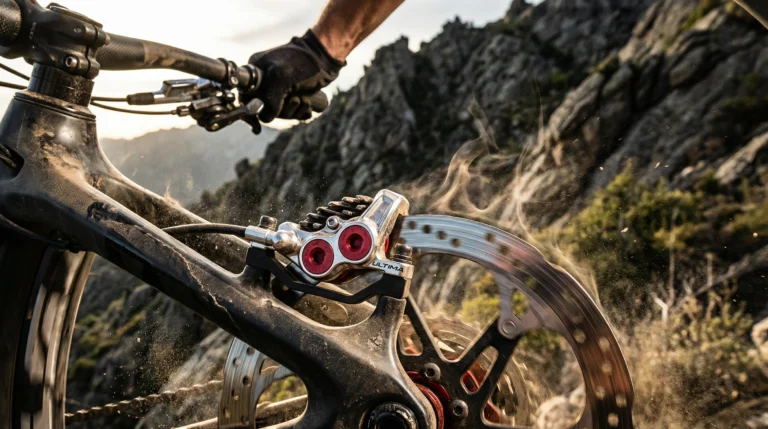
The shift toward four-piston calipers in both mountain and gravel biking has been a game-changer. While two-piston systems are still common on lightweight road bikes, four-piston designs distribute pressure more evenly across the brake pad. This results in better heat management and more consistent performance during long descents. Additionally, the use of mineral oil versus DOT fluid continues to be a point of differentiation, with many riders preferring the less corrosive nature of mineral oil for home maintenance.
For those interested in keeping their systems running smoothly, regular maintenance is essential. You can learn more about keeping your entire bike in top condition by reading our comprehensive guide on essential bike maintenance.
Mastering Heat Dissipation on Long Descents
Heat is the enemy of any braking system. When descending steep grades, the friction between the brake pads and the rotor generates immense temperatures. If this heat is not managed properly, it can lead to brake fade—a terrifying scenario where the brakes lose their effectiveness. To combat this, 2026 disc brake technology incorporates sophisticated heat dissipation strategies. According to experts at BikeRadar, larger rotors and floating designs are critical for maintaining performance under stress.
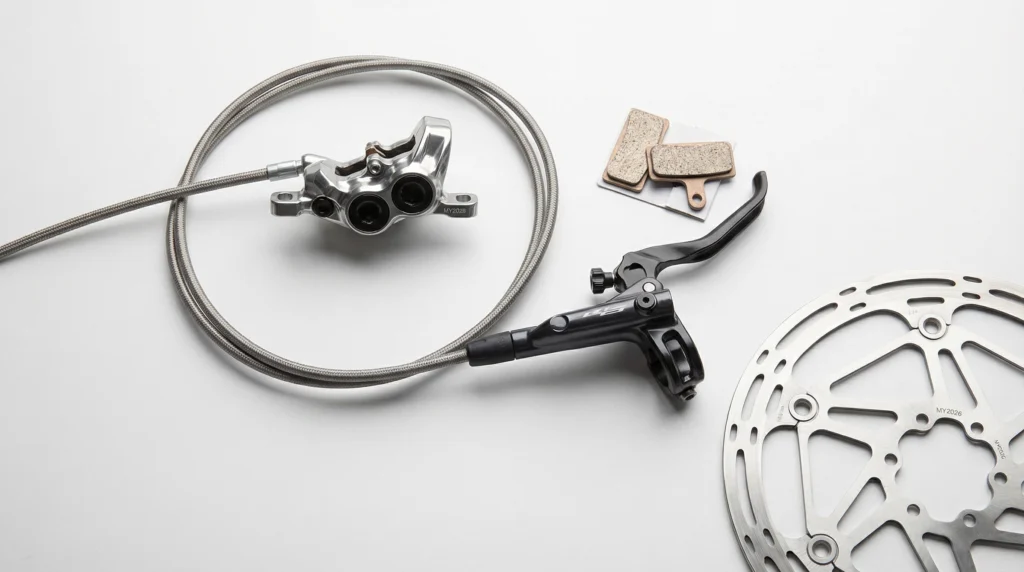
Floating rotors feature a steel braking surface riveted to an aluminum carrier. This design allows the steel ring to expand when heated without warping, while the aluminum carrier acts as a heat sink, drawing high temperatures away from the hub and bearings. Moreover, manufacturers are now integrating cooling fins directly into the brake pads. These fins catch the passing airflow, significantly reducing the operating temperature of the caliper.
Rotor size also plays a pivotal role in heat management. While 160mm rotors were once the standard, many aggressive riders are now opting for 180mm or even 200mm rotors. The larger surface area provides more leverage and dissipates heat much faster. If you are pushing the limits on technical trails, upgrading your rotor size is one of the most cost-effective performance enhancements available.
The Future of Braking and Rider Safety
Looking ahead, the integration of electronics into braking systems is an emerging trend. While fully wireless brakes are still in the prototype phase, we are seeing the introduction of anti-lock braking systems (ABS) for e-bikes and premium commuter models. These systems use sensors to detect wheel slip and automatically modulate brake pressure, preventing crashes on slippery surfaces. This technology borrows heavily from the automotive industry and represents a massive leap forward in rider safety.
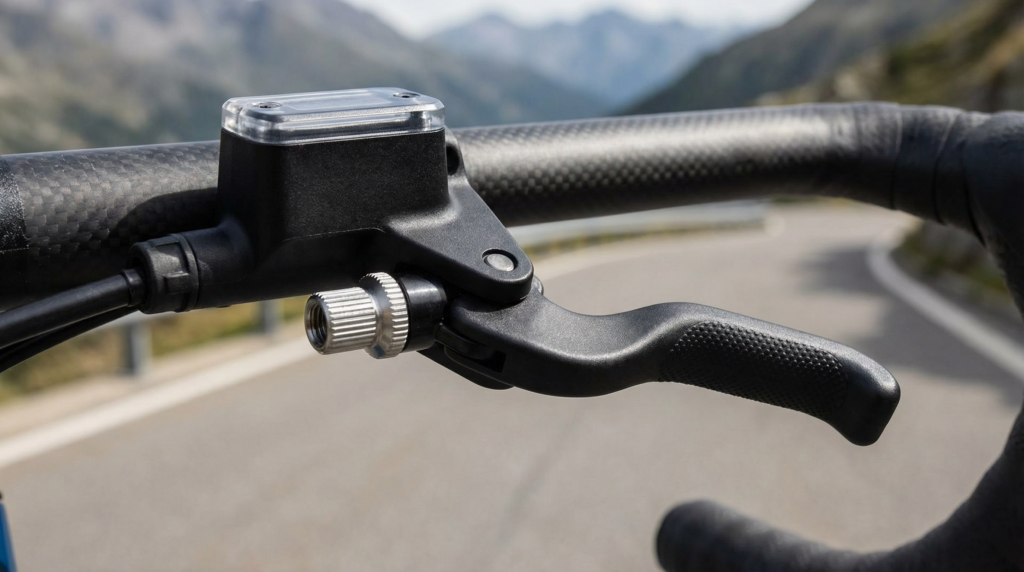
Another exciting development is the refinement of ergonomic lever designs. Modern levers offer tool-free reach adjustment, allowing riders with different hand sizes to customize the fit perfectly. This ergonomic focus reduces hand fatigue on long rides and ensures that maximum braking power is always within easy reach. For riders who spend hours in the saddle, this comfort translates directly to better control and confidence.
As you upgrade your components, it is also worth considering how your body interacts with the bike. Proper alignment can significantly impact your braking efficiency. Check out our insights on bike fit technology to ensure you are positioned optimally for both power and control.
Maintenance and Upkeep for Peak Performance
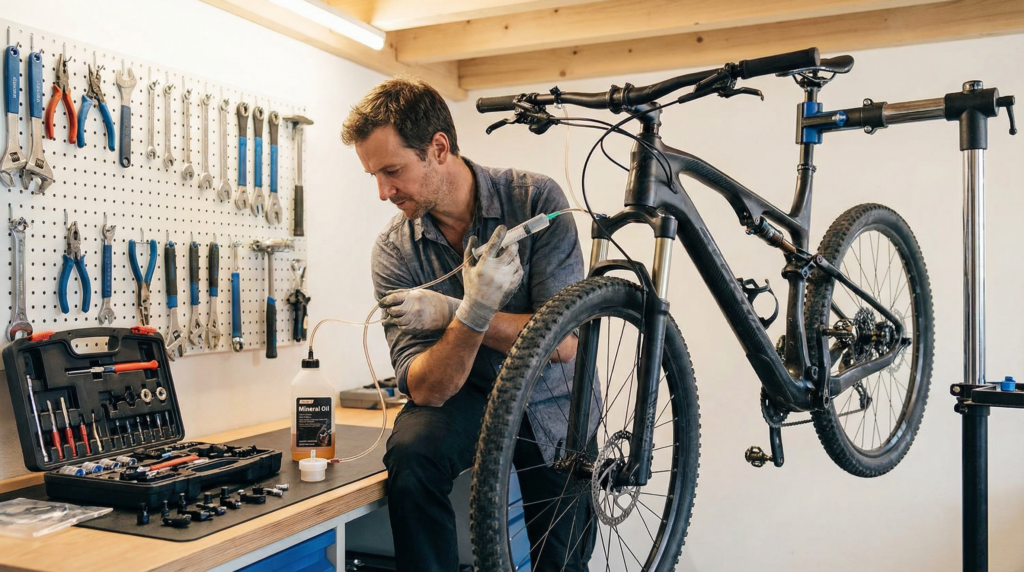
Even the most advanced disc brake technology 2026 has to offer requires regular maintenance to function correctly. Bleeding your brakes—the process of removing air bubbles from the hydraulic fluid—is a necessary skill for serious cyclists. Air in the system causes a spongy lever feel and drastically reduces stopping power. Fortunately, modern bleed kits have become much more user-friendly, allowing home mechanics to achieve professional results.
Pad inspection is another critical maintenance task. Riding with worn pads not only compromises your safety but can also cause irreversible damage to your rotors. It is advisable to check your pad thickness regularly and replace them before the friction material wears down to the metal backing plate. When selecting replacement pads, you will typically choose between sintered (metallic) and organic (resin) compounds. Sintered pads offer better performance in wet and muddy conditions, while organic pads provide a quieter ride and stronger initial bite in dry weather.
For more insights into the latest cycling innovations, including how advanced components are shaping the sport, explore our article on gravel bike suspension technology. Staying informed about these advancements will help you make the best choices for your riding style and ensure that your equipment is always ready for the next adventure.