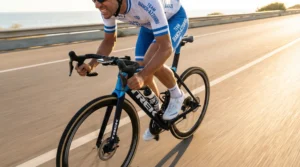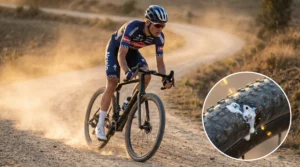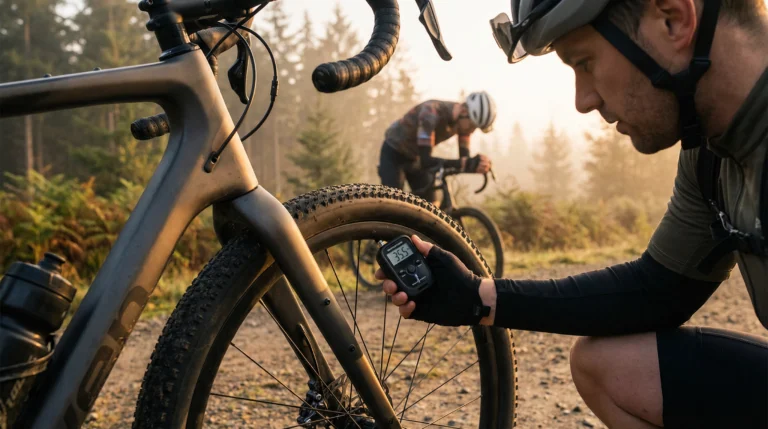
The conventional wisdom surrounding cycling tire pressure has completely shifted in 2026. For decades, cyclists believed that pumping their tires to the maximum recommended pressure was the secret to riding faster. The logic seemed sound: a rock-hard tire feels fast and responsive on smooth tarmac. However, modern sports science and rigorous testing have proven that this old rule of thumb is fundamentally flawed. Today, optimizing your tire pressure is one of the most effective ways to instantly improve your speed, comfort, and grip.
When you ride on a perfectly smooth surface, such as a wooden velodrome track, high pressure does indeed reduce rolling resistance. Unfortunately, real-world roads are never perfectly smooth. They are covered in tiny imperfections, cracks, and debris. When a high-pressure tire hits these imperfections, the entire bike and rider are deflected upward. This vertical deflection wastes forward momentum and forces your body to absorb the vibrations, leading to rapid muscular fatigue.
Conversely, a tire inflated to a lower, optimized pressure acts as a micro-suspension system. It deforms and absorbs the bumps in the road, allowing the bike to roll smoothly forward without losing momentum. This concept, known as impedance, is the cornerstone of modern tire pressure optimization and rolling resistance science. By lowering your pressure, you not only ride faster but also significantly increase your comfort and traction.
The Rise of Tire Pressure Monitoring Systems (TPMS)
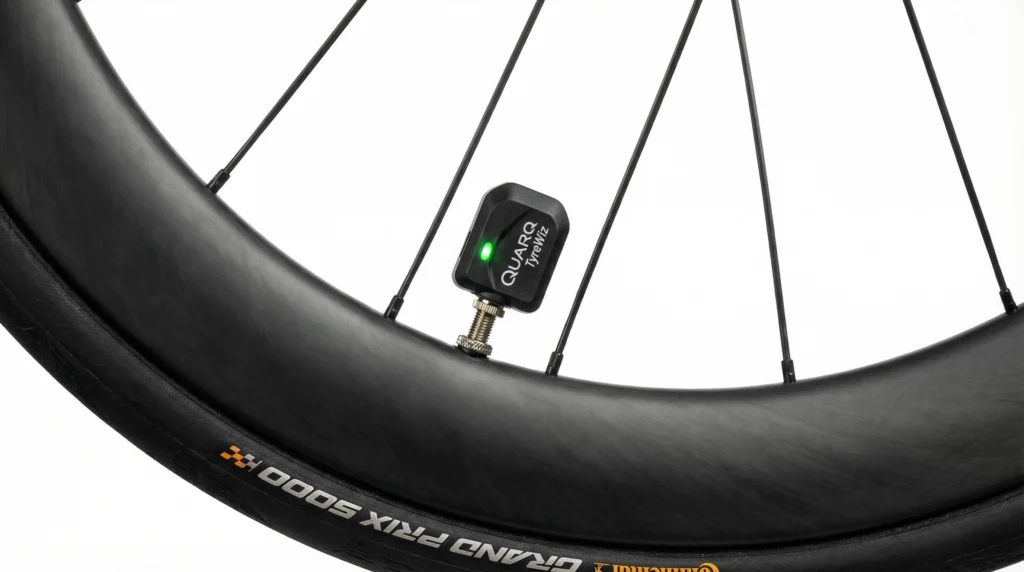
Determining the perfect tire pressure used to involve a lot of guesswork and trial and error. Cyclists would rely on the “thumb test” or inaccurate gauges built into their floor pumps. In 2026, technology has eliminated the guesswork. The market has seen a surge in sophisticated tire pressure monitoring systems for bicycles. These lightweight, highly accurate sensors attach directly to your valve stems and transmit real-time data to your cycling computer or smartphone.
Products like the Quarq TyreWiz, SKS Airspy, and Tubolito PSENS have revolutionized how riders manage their setups. These systems allow you to experiment with different pressures and accurately replicate your ideal setup every single time you ride. Furthermore, they provide crucial alerts if your pressure drops dangerously low during a ride, potentially saving you from a catastrophic blowout or a damaged carbon rim.
How to Find Your Optimal PSI
Finding your optimal tire pressure depends on several critical factors: your total system weight (rider plus bike), your tire width, the internal width of your rims, and the surface conditions you plan to ride on. A 150-pound rider on 28mm tires will require a vastly different pressure than a 200-pound rider on 32mm tires. Fortunately, several excellent online tire pressure calculators, such as the one provided by Silca, offer highly accurate starting points based on your specific metrics.
As a general rule for 2026, most amateur cyclists are still running their tires 15 to 20 PSI too high. If you are riding a modern road bike with 28mm or 30mm tires, your optimal pressure is likely somewhere between 60 and 75 PSI. If you are riding a gravel bike with 40mm tires, you should probably be running between 30 and 40 PSI. These lower pressures are made possible by the widespread adoption of tubeless tire sealant technology, which eliminates the risk of pinch flats.
Adjusting for Surface Conditions
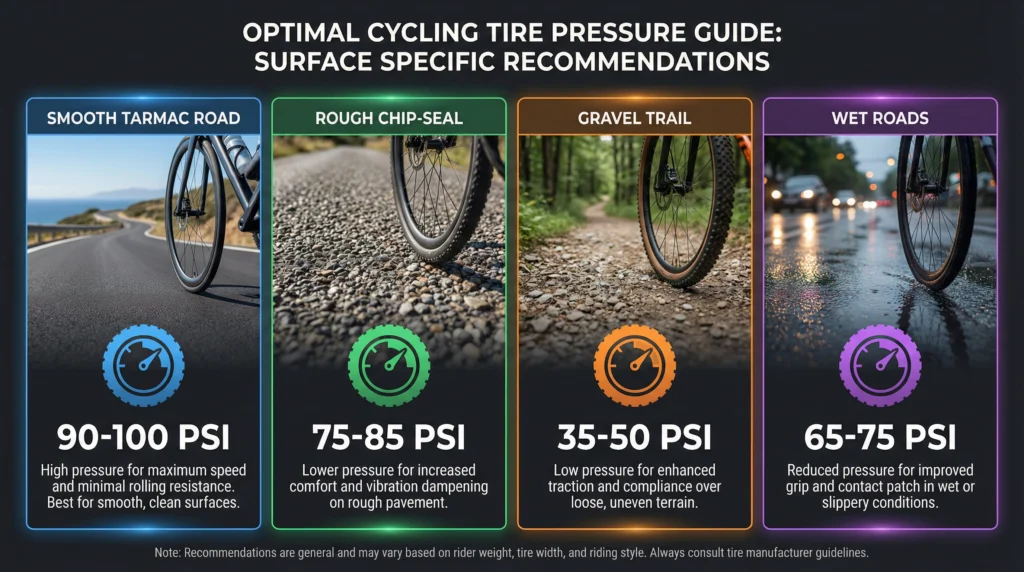
Your optimal pressure is not a static number; it should change based on the terrain. When riding on smooth, freshly paved tarmac, you can run a slightly higher pressure to minimize rolling resistance. However, if your route includes rough chip-seal, cracked pavement, or light gravel, dropping your pressure by 5 to 10 PSI will dramatically improve your speed and comfort. The rougher the surface, the lower your pressure should be.
Weather conditions also play a vital role in tire pressure optimization. When riding on wet roads, dropping your pressure by 5 to 10 PSI increases the size of your tire’s contact patch with the road. This larger contact patch provides significantly more grip, allowing you to corner confidently and brake safely in slippery conditions. This is a crucial safety tip often overlooked by recreational riders.
The Hidden Cost of Pressure Loss
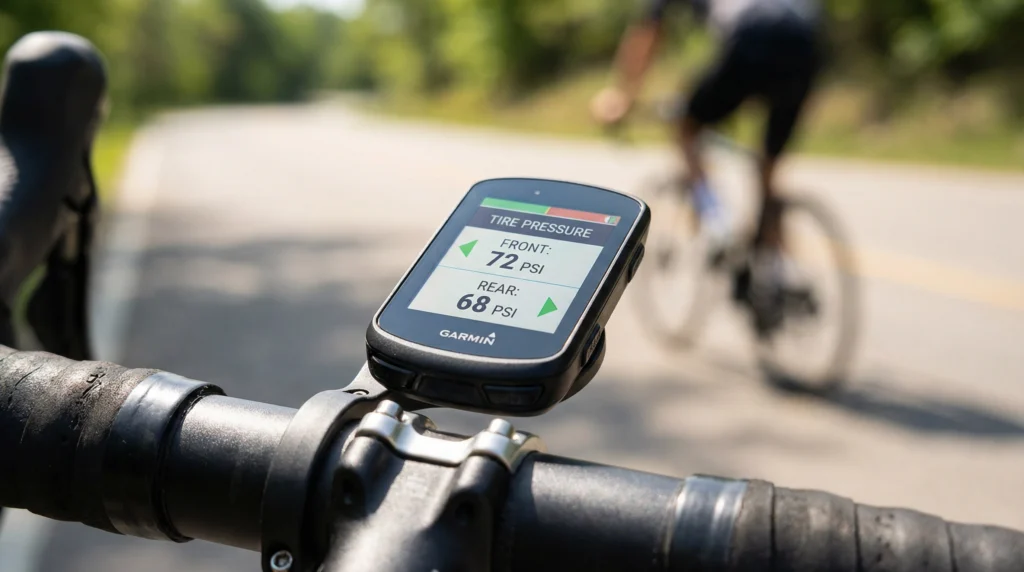
One of the most surprising findings from recent tire pressure research is how quickly tires lose air. If you are running high-performance latex inner tubes, you can lose up to 6 PSI overnight. Even standard butyl tubes and tubeless setups lose a small amount of pressure over a few days. This means that if you only pump your tires once a week, you are likely riding at a suboptimal pressure for most of your rides.
To maintain your optimal setup, you must check your tire pressure before every single ride. Do not rely on the gauge built into your floor pump, as these are notoriously inaccurate and can be off by as much as 10 to 15 PSI. Instead, invest in a high-quality, standalone digital pressure gauge or a reliable tire pressure monitoring system. The small investment in an accurate gauge will pay massive dividends in your riding performance.
Upgrading Your Ride in 2026
Optimizing your tire pressure is the cheapest and most effective upgrade you can make to your bicycle. It requires no new equipment—just a willingness to experiment and a reliable digital gauge. By embracing lower pressures and utilizing modern research on supple tires and rolling resistance, you will instantly transform how your bike feels and performs on the road.
For more ways to enhance your cycling experience, explore our guide on gravel bike suspension technology. Additionally, ensuring your wheels and brakes are functioning perfectly is essential, so review our latest article on disc brake hydraulic innovations. Finally, if you are looking to optimize your body position as well as your bike, check out our insights on 3D body scanning for bike fitting.