The Evolution of Cycling Shoes and Cleat Technology in 2026
The world of cycling footwear is undergoing a massive transformation in 2026. Riders are no longer forced to choose between agonizing stiffness and sloppy comfort. Instead, the latest cycling shoes and cleat technology innovations are blending data-driven design with advanced materials to create the ultimate connection between rider and machine. Whether you are a professional road racer seeking maximum power transfer or a dedicated gravel enthusiast looking for all-day comfort, the footwear landscape has never been more exciting.
For decades, the fundamental design of cycling shoes remained relatively stagnant. However, recent advancements have completely rewritten the rulebook. Manufacturers are now utilizing massive datasets, including hundreds of thousands of 3D foot scans, to engineer shoes that accommodate a wider variety of foot shapes. Furthermore, the integration of sophisticated fastening systems and customizable carbon soles has elevated the standard for premium cycling footwear. In this comprehensive guide, we will explore the most significant trends shaping cycling shoes and cleat technology in 2026.
Data-Driven Fit and the Wider Toe Box Revolution
Perhaps the most noticeable shift in 2026 cycling shoe design is the widespread adoption of the wider toe box. Historically, high-performance road shoes were notoriously narrow, often causing numbness and hot spots during long rides. Fortunately, brands have recognized that a cramped foot cannot produce optimal power. By analyzing extensive biometric data, companies like Specialized have redesigned their flagship models, such as the S-Works Torch, to feature a toe box that is significantly wider than previous generations. This data-driven approach ensures that the shoe contours naturally to the foot, allowing the metatarsals to splay comfortably under load.
This shift toward ergonomic design is not limited to a single brand. Across the industry, manufacturers are prioritizing anatomical correctness over traditional, restrictive aesthetics. Consequently, riders with wider feet no longer have to size up and compromise on heel hold just to find a comfortable fit. Brands like Lake have long championed multiple width options, and their influence is now pushing mainstream competitors to offer standard, wide, and even extra-wide variations. This democratization of fit means that every cyclist can experience the benefits of a perfectly tailored shoe, which is essential for maximizing performance and preventing injury.
Moreover, the focus on fit extends beyond the toe box. Modern cycling shoes feature refined heel cups designed to lock the foot securely in place without excessive pressure. This secure heel hold is critical during the upstroke of the pedal cycle, where any slippage translates directly to lost wattage. By combining a roomy forefoot with a locked-in heel, 2026 cycling shoes offer a previously unattainable balance of comfort and efficiency. If you are interested in how biometric data is influencing other areas of cycling, check out our guide on Bike Fit Technology and 3D Body Scanning Trends 2026.
Advanced Fastening Systems: The Dominance of BOA
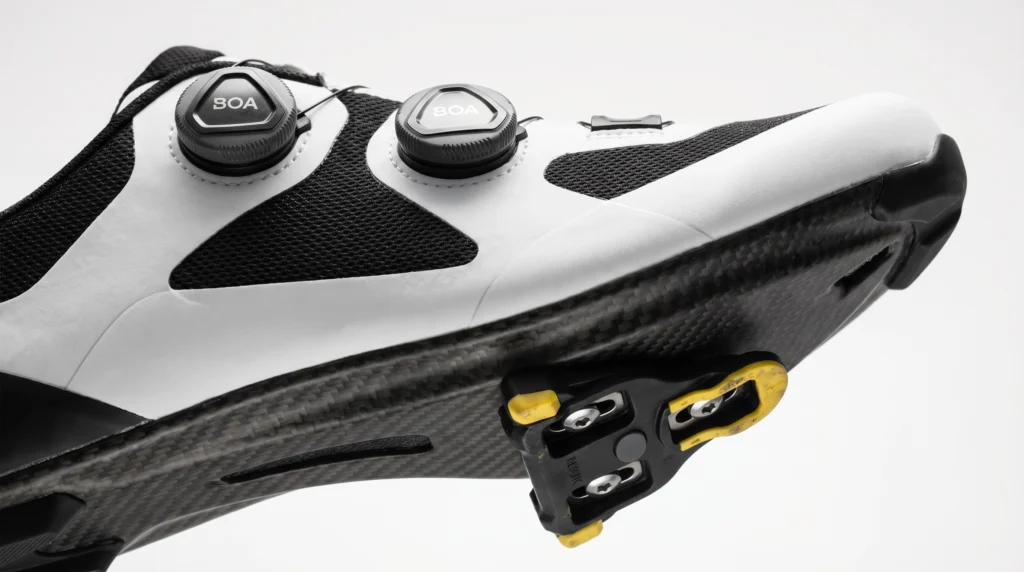
When examining the upper construction of 2026 cycling shoes, the dominance of the BOA dial fastening system is undeniable. While laces and Velcro straps still have their place, the dual-zone BOA configuration has become the gold standard for premium footwear. The latest iteration of these dials, such as the BOA Li2, offers unprecedented micro-adjustability. Riders can tighten or loosen the tension in precise, one-millimeter increments, allowing for on-the-fly adjustments that adapt to foot swelling during a long ride.
The beauty of the dual-zone system lies in its ability to isolate tension across different areas of the foot. Typically, one dial controls the fit across the instep, while the other manages the lower forefoot. This separation allows cyclists to secure the upper portion tightly for power transfer while leaving the lower section slightly looser to maintain circulation. Furthermore, the cables used in these systems have evolved from traditional steel wire to advanced textile laces, which distribute pressure more evenly across the top of the foot, eliminating the dreaded “bite” associated with older designs.
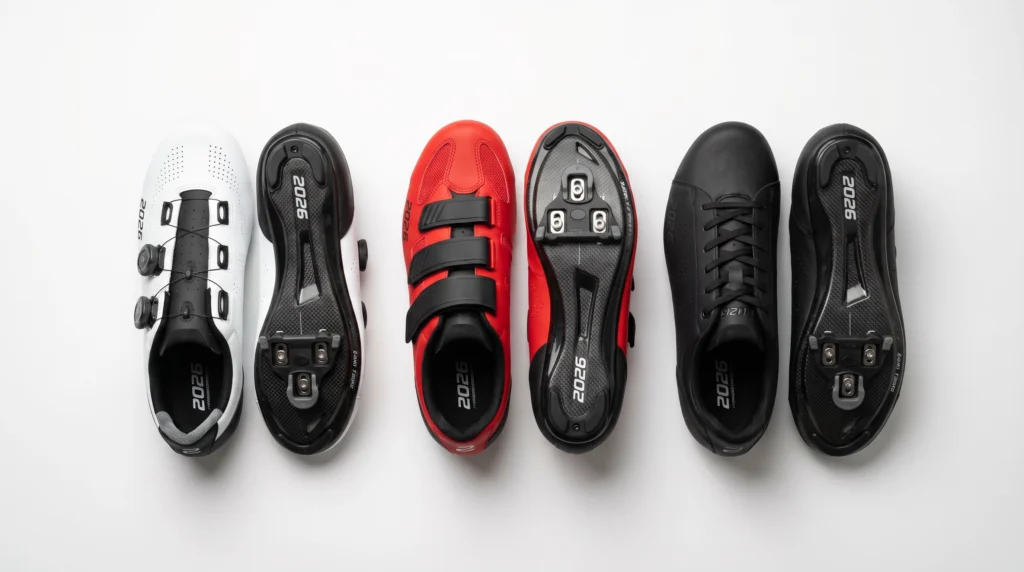
Despite the prevalence of BOA dials, alternative fastening methods continue to see innovation. For instance, Fizik has developed a unique Powerstrap system that utilizes wide Velcro bands wrapping around the foot in a figure-eight pattern. This design provides a remarkably secure and comfortable fit at a more accessible price point. Similarly, lace-up shoes remain popular among weight-conscious climbers and riders who prefer a classic aesthetic. Regardless of the specific mechanism, the overarching goal of 2026 fastening systems is to create a seamless, second-skin feel that enhances the connection to the pedal. For more insights into optimizing your riding experience, explore our article on Cycling Cadence and Pedaling Efficiency Optimization 2026.
Carbon Sole Innovations and Custom Molding
The foundation of any high-performance cycling shoe is its sole, and in 2026, carbon fiber remains the undisputed king of materials. However, the way manufacturers utilize carbon has evolved significantly. Instead of simply creating the stiffest plank possible, engineers are now designing soles with tuned flex zones. These strategically placed areas of compliance allow for a tiny amount of torsional movement, which significantly reduces foot fatigue and minimizes the risk of knee strain without compromising forward power transfer.
Another major advancement in sole technology is the rise of custom molding. Brands like Bont have pioneered the use of heat-moldable carbon chassis that can be shaped perfectly to the individual contours of a rider’s foot. By heating the shoes in a conventional oven and then wearing them as they cool, cyclists can achieve a truly bespoke fit that eliminates pressure points and maximizes support. This level of customization was once reserved exclusively for professional athletes, but it is now readily available to dedicated amateurs seeking the ultimate performance advantage.
In addition to tuned stiffness and custom molding, modern carbon soles feature improved ventilation systems. Strategically placed intake ports at the toe and exhaust vents at the heel create a continuous flow of cooling air beneath the foot. This airflow is crucial for regulating temperature during intense efforts in hot weather, preventing the uncomfortable sensation of “hot foot.” Furthermore, many premium shoes now incorporate adjustable arch support systems within the insole, allowing riders to fine-tune the biomechanical alignment of their lower limbs. To understand how these innovations translate to measurable performance gains, read our comprehensive Cycling Power Meters and Training Metrics Guide 2026.
Cleat Interface Evolution: Road vs. Gravel
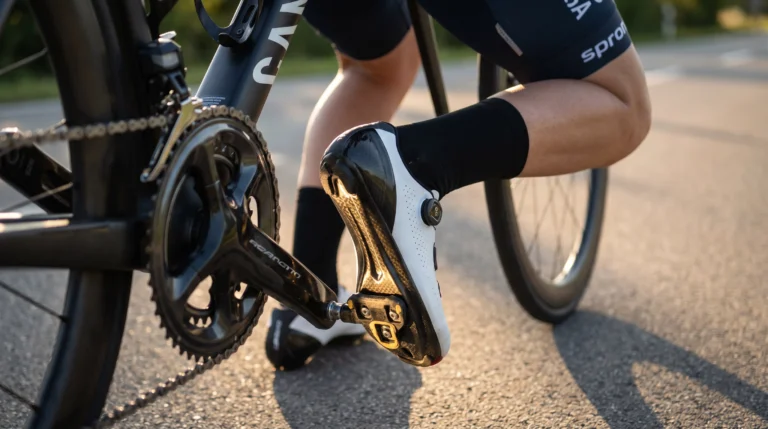
While the shoes themselves have seen incredible advancements, the cleat interface remains a critical component of the pedaling equation. In 2026, the divide between road and off-road systems is more pronounced than ever, with each discipline benefiting from specialized technology. For road cyclists, the traditional three-bolt system (such as Shimano SPD-SL or Look Keo) continues to dominate. However, the focus has shifted toward maximizing the contact area between the cleat and the pedal body. A larger contact patch improves stability and power transfer, ensuring that every ounce of effort is driven directly into the drivetrain.
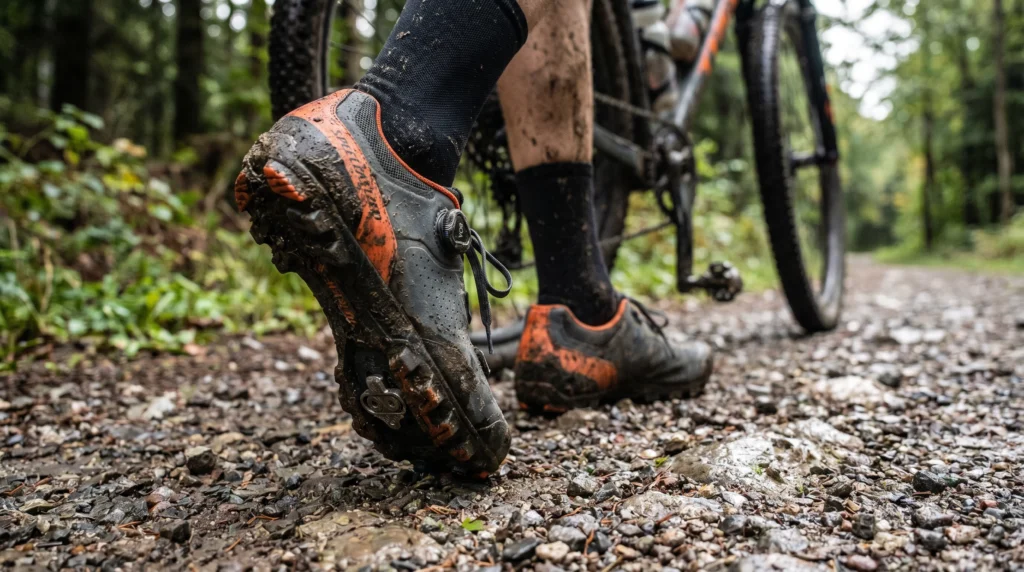
Conversely, the explosion of gravel riding has spurred rapid innovation in two-bolt, recessed cleat systems. Gravel shoes must balance the stiffness required for efficient pedaling with the flexibility and grip needed for walking on rugged terrain. To achieve this, manufacturers are integrating advanced rubber compounds into the outsoles, providing exceptional traction on wet rocks and loose dirt. Additionally, the cleat channels are being redesigned to shed mud more effectively, ensuring reliable engagement even in the worst conditions. If you are curious about the latest trends in off-road riding, be sure to check out our coverage of 2026 Gravel Bike Trends and Technology Innovations.
Another notable trend in cleat technology is the increased range of adjustability. Modern shoes feature extended cleat slots that allow riders to position the cleat further back toward the midfoot. This rearward placement can alleviate strain on the Achilles tendon and improve calf muscle efficiency during long endurance events. As our understanding of cycling biomechanics deepens, the ability to fine-tune cleat position has become an essential tool for injury prevention and performance optimization.
Conclusion: Stepping into the Future
The cycling shoes and cleat technology of 2026 represent a triumph of engineering and biomechanical research. By prioritizing data-driven fit, advanced fastening systems, and tuned carbon soles, manufacturers have created footwear that seamlessly integrates the rider with the bicycle. Whether you are sprinting for a finish line or embarking on a multi-day bikepacking adventure, the right pair of shoes can profoundly impact your comfort and performance.
As you consider upgrading your cycling footwear, it is essential to look beyond mere aesthetics and focus on the technologies that align with your specific riding style. For a deeper dive into the latest gear, explore the comprehensive reviews at Cyclingnews, or check out the top picks from BikeRadar. Additionally, you can find excellent insights on off-road options at OutdoorGearLab, learn about the newest Shimano innovations directly from Shimano, and discover the benefits of custom molding at Bont Cycling. The future of cycling footwear is here, and it is designed to make every pedal stroke more powerful and comfortable than ever before.