The KYB inverted coil MTB fork is one of 2026’s most interesting suspension developments. Japanese manufacturer KYB, known for motorcycle and automotive suspension, has introduced a 160mm inverted mountain bike fork with a steel coil spring and adjustable air assistance. It targets trail, enduro, and electric mountain bikes rather than lightweight cross-country racing.
Its combination of motorcycle-style engineering and bicycle-specific dimensions sounds compelling, but the launch also raises practical questions. How does the air-assisted coil work? Will the fork feel stable on rough descents? And can riders install it on their current bike? Here’s a closer look at confirmed specifications, early riding feedback, and ownership considerations.
What Makes KYB’s New Inverted MTB Fork Different?
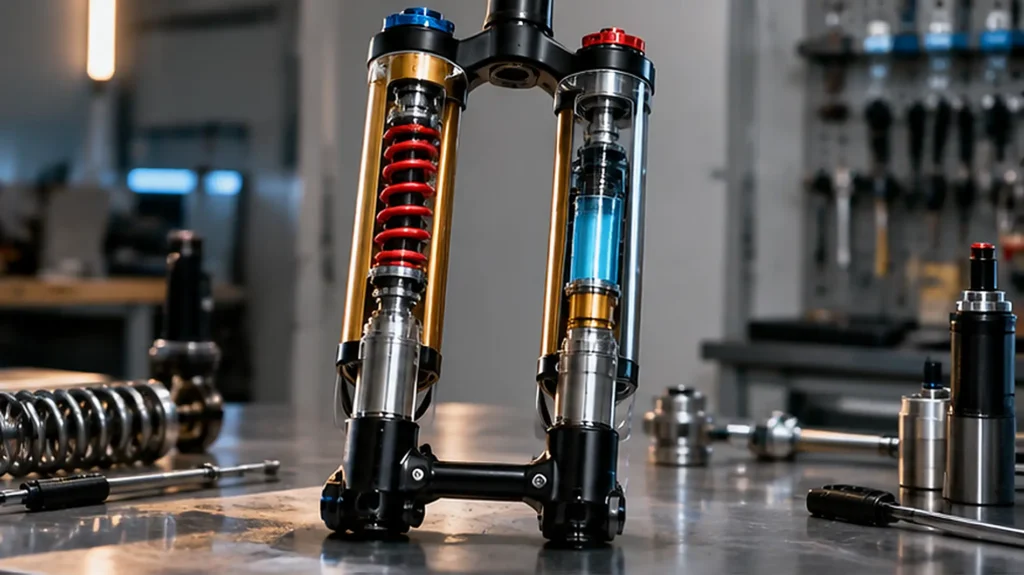
Most mountain bike forks have thinner upper stanchions sliding inside larger lower legs. KYB reverses this arrangement. In its inverted, or upside-down, design, the larger outer tubes sit above the sliding stanchions, closer to the crown.
Such layouts are familiar in motocross, a field where KYB has extensive experience. Its official mountain-bike suspension page highlights motorcycle-derived piston and valve technology, alongside an emphasis on controlled movement over rough surfaces.
The design is not completely unprecedented in cycling. FOX introduced its own modern inverted Podium fork, and KYB previously supplied suspension for Honda’s RN01 downhill racing project. What is new here is KYB’s specific 160mm coil-and-air configuration intended for today’s trail bikes and e-MTBs.
KYB Inverted Coil MTB Fork: Key Specifications
| Feature | Reported specification |
|---|---|
| Chassis | Single-crown inverted design |
| Suspension travel | 160mm |
| Spring system | Replaceable steel coil with adjustable air assist |
| Damping adjustments | Compression and rebound |
| Wheel sizes | 27.5-inch and 29-inch |
| Front axle | 20 x 110mm thru-axle |
| Stanchion diameter | 32mm |
| Outer leg diameter | 41mm |
| Published axle-to-crown | 579mm |
| Reported offset | 43mm |
| Brake mount | Post mount; 160mm direct-mount reference |
| Claimed weight | 2,850g (2.85kg) |
These figures come from Pinkbike’s November 13 announcement coverage and subsequent European technical reports. Confirm final production details and installation limits before buying.
Why Do Mountain Bike Brands Use Inverted Forks?
An upside-down design allows engineers to distribute structural material and bending loads differently. It can also change the moving mass and the friction characteristics of the sliding parts. In theory, that may help a fork respond smoothly to repeated small impacts.
However, an inverted fork usually lacks the arch connecting the lower legs of a conventional fork. That arch contributes to torsional stiffness, particularly when the wheel is twisted sideways during braking or hard cornering. An inverted model must achieve sufficient stiffness through its crown, legs, axle, and other connections.
KYB uses 32mm stanchions, which are relatively slim for aggressive 160mm applications. That doesn’t automatically mean poor steering precision, because diameter is only one part of chassis design. Independent comparisons will need to establish how it behaves in off-camber corners and repeated rock strikes.
How Does the Coil Spring and Air Assist Work?
A steel coil provides the fork’s primary spring force. By changing the spring for a different rate, a rider can better match suspension support to body weight and riding intensity. Coil springs often appeal to riders seeking predictable movement and a supple beginning to the travel.
KYB adds an adjustable air chamber alongside the coil. That extra adjustment is intended to fine-tune the spring behavior without replacing the steel spring every time. The precise pressure recommendations and spring curves depend on KYB’s setup guidance.
It’s important not to confuse this with a conventional air-only fork. The coil remains a central part of the system, while the air component adds tuning possibilities. Our article on next-generation air shocks and coil-like sensitivity explains why spring design, internal friction, and damping must be considered together.
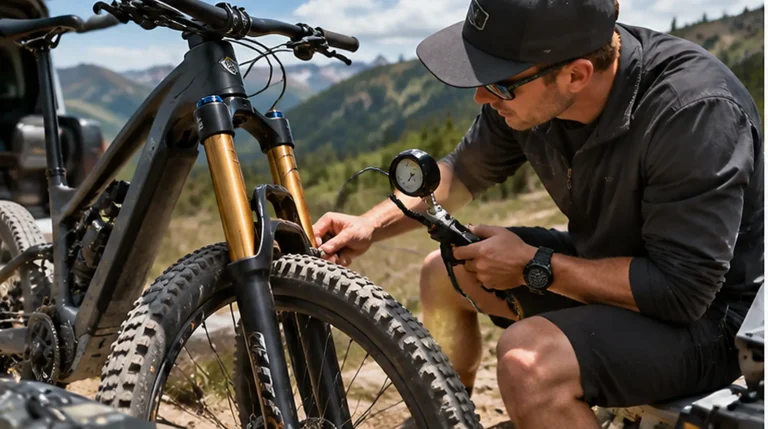
The fork also offers compression and rebound adjustment. Compression controls resistance as the fork moves into its travel; rebound controls how quickly it returns. Neither adjustment should be changed randomly during a ride. Begin with the manufacturer’s baseline and record adjustments.
Is 160mm Travel Enough for Enduro and E-MTB Riders?
For many trail and all-mountain bikes, 160mm front travel provides a useful balance between rough-terrain absorption and manageable geometry. It can handle rock gardens, roots, drops, and repeated braking bumps when paired with an appropriate frame and correctly tuned damping.
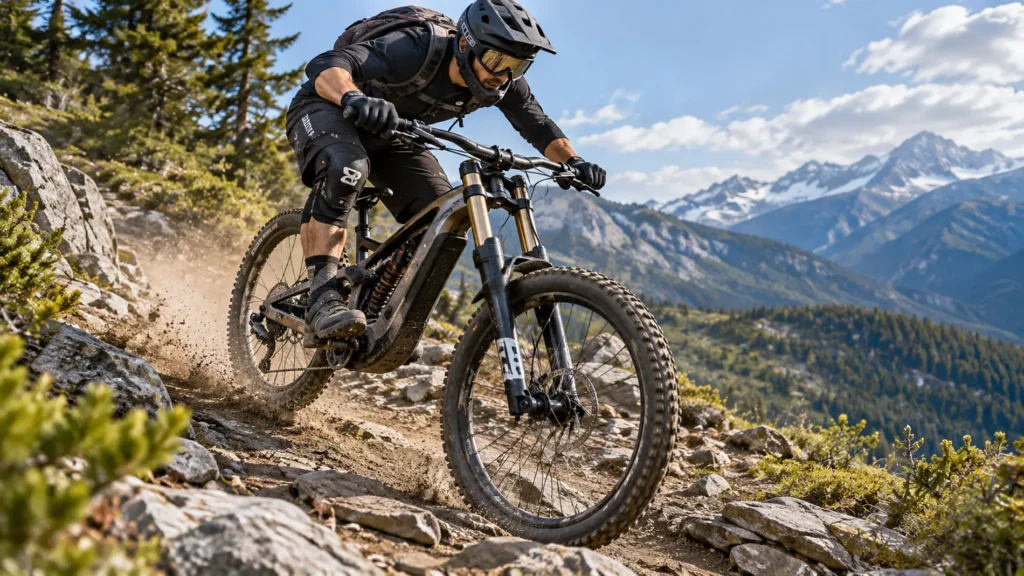
KYB explicitly targets e-MTBs as well. Electric bikes are often heavier than comparable unassisted models, placing greater demands on fork control, braking, and wheel durability. A controlled fork can help keep the front tire engaged, but no suspension system can compensate for inappropriate tire pressure or poor line choice.
The Honda RN0 e-MTB technology guide provides another example of how 160mm fork travel fits into a current all-mountain platform.
How Heavy Is the KYB Fork Compared With FOX Podium?
At a claimed 2.85kg, the KYB is not attempting to be the lightest premium fork. FOX lists a 2,695g starting weight for its Podium inverted fork, which also uses a 20 x 110mm axle but employs an air spring.
The published figures suggest a weight difference, although complete-bike comparisons must account for model specification and accessories. The KYB’s steel spring may appeal to riders willing to carry additional mass in exchange for their preferred suspension feel.
Weight alone cannot reveal handling quality. Damper performance, steering precision, and service intervals may matter more than a modest difference on a scale. Riders who mostly pedal long distances should assess whether this specialist fork offers a meaningful improvement over their current equipment.
Compatibility: The Checks Buyers Should Not Skip
Before considering the KYB fork as an upgrade, ask a qualified shop to verify the complete front-end setup. A fork that looks similar to your current model may require different hardware or change the bike’s geometry.
- Front hub: The 20 x 110mm axle is not interchangeable with every common mountain bike hub.
- Frame geometry: Check the frame manufacturer’s approved travel and axle-to-crown limits.
- Headset and steerer: Confirm taper, available steerer length, and crown clearance.
- Braking: Verify rotor size, caliper position, approved adapters, and brake-hose routing.
- Wheel clearance: Check actual tire dimensions and clearance through the fork’s travel.
- Maintenance: Find out who supplies replacement springs, seals, bushings, and service support.
One point worth particular attention is the brake mount. Reports describe a 160mm direct-mount reference, unusual for a fork positioned toward enduro and e-MTB use. That does not mean 160mm is necessarily the correct rotor for your bike. The approved rotor and adapter combination must be confirmed before installation.
What Have Early Test Riders Reported?
Initial riding feedback provides useful context, but it isn’t a final verdict on durability. In its KYB fork review, BIKE Magazine praised the fork’s sensitivity and tracking while reporting less convincing performance over very rough terrain.
Earlier Bikerumor prototype coverage highlighted its distinctive crown and open questions about stiffness. Prototype impressions and production specifications should not be treated as identical.
The most valuable comparisons will come from repeated tests on identical bikes and tires, including hard braking, off-camber turns, suspension heat, and long-term bushing wear. Grip and steering also depend on tires, which is why our e-MTB traction-control guide is relevant to the wider discussion.
KYB Inverted Fork Price and Availability in 2026
KYB is developing European sales and service support. According to MTB-News on November 16, 2026, sales are planned in Germany, Austria, and Switzerland, with a reported price of €1,800 including a second spring and spring-change tool.
That is a regional published price, not a confirmed worldwide MSRP. Customers outside those markets should check distributor availability, labor costs, warranty terms, and access to replacement parts before assuming the fork can be purchased locally.
Is KYB’s New Fork Worth Considering?
The KYB inverted coil MTB fork is intriguing for experienced enduro and e-MTB riders who value coil-spring behavior, unusual chassis engineering, and adjustable support. Its motorcycle suspension background gives the project credibility, but a famous manufacturer cannot substitute for fit and performance testing.
Potential buyers must also accept the 2.85kg claimed weight and investigate hub, brake, and frame compatibility. Riders with a reliable existing fork may get more value from a professional service and suspension setup than from changing components.
Final Thoughts
KYB’s 160mm inverted fork adds a fresh coil-and-air option to mountain bike suspension in 2026. The architecture, replaceable springs, and compression and rebound controls make it an interesting alternative to familiar air forks.
Its long-term success will depend on real trail performance, clear service documentation, parts availability, and sensible compatibility. For now, it belongs on the specialist upgrade shortlist rather than everyone’s automatic shopping list.