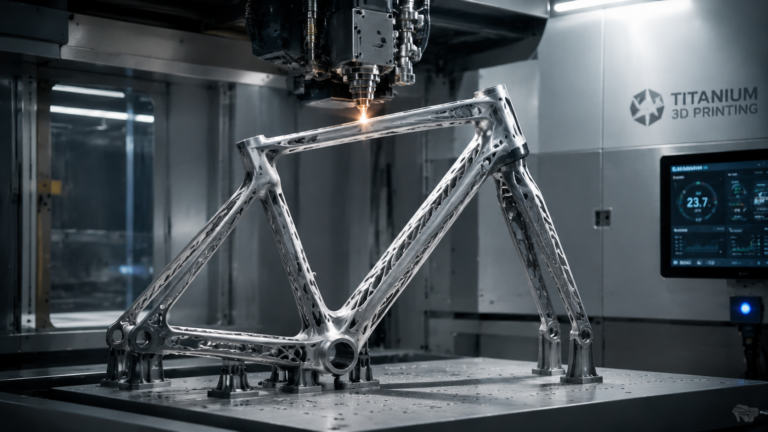
In 2026, 3D printing is transforming bicycle manufacturing at every level. From professional racing teams to custom bike builders, additive manufacturing is enabling precision frame design that was previously impossible with traditional carbon layups or metal welding.
This technology allows manufacturers to optimize strength, weight, and geometry at a microscopic level.
How 3D Printing Is Changing Bike Design
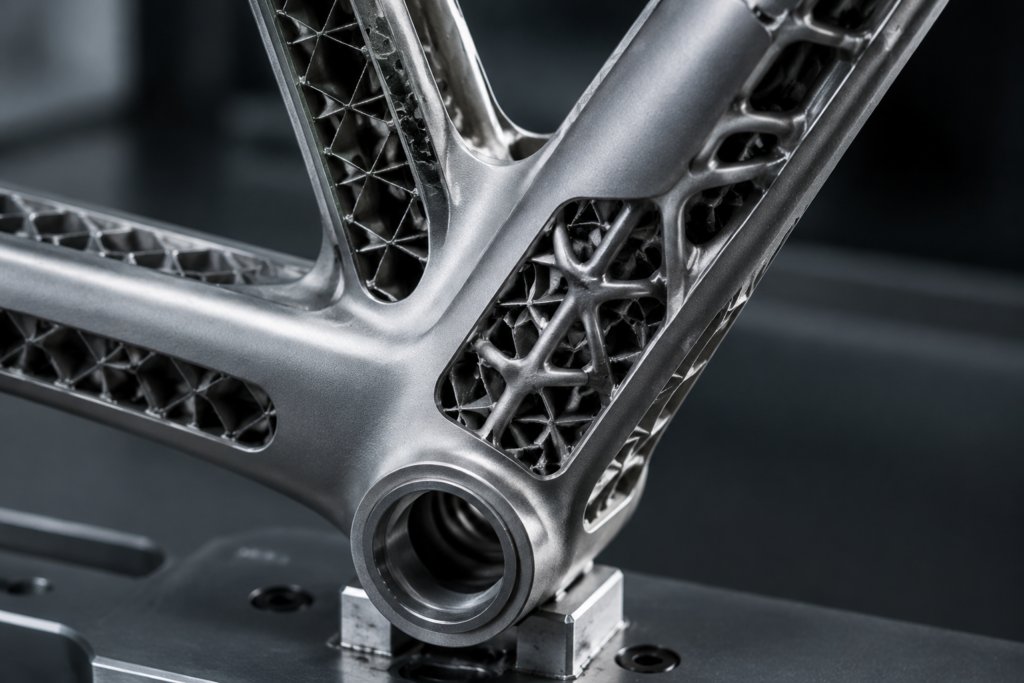
Unlike traditional manufacturing, 3D printing builds frame components layer by layer. This allows engineers to reinforce stress zones while removing unnecessary material elsewhere, resulting in lighter and stronger frames.
It also enables highly customized geometry tailored to individual rider biomechanics.
Key Advantages
- Fully customized frame geometry for rider fit
- Weight reduction through precision material placement
- Faster prototyping and production cycles
- Improved vibration absorption on rough terrain
Leading manufacturers like Specialized and Pinarello are already experimenting with hybrid 3D-printed components.
Impact on Performance Cycling
Riders benefit from improved comfort, better power transfer, and optimized stiffness-to-weight ratios. This is especially valuable in road racing and gravel endurance cycling.
For related innovation trends, see our article on bike frame materials 2026.
The Future of Frame Manufacturing
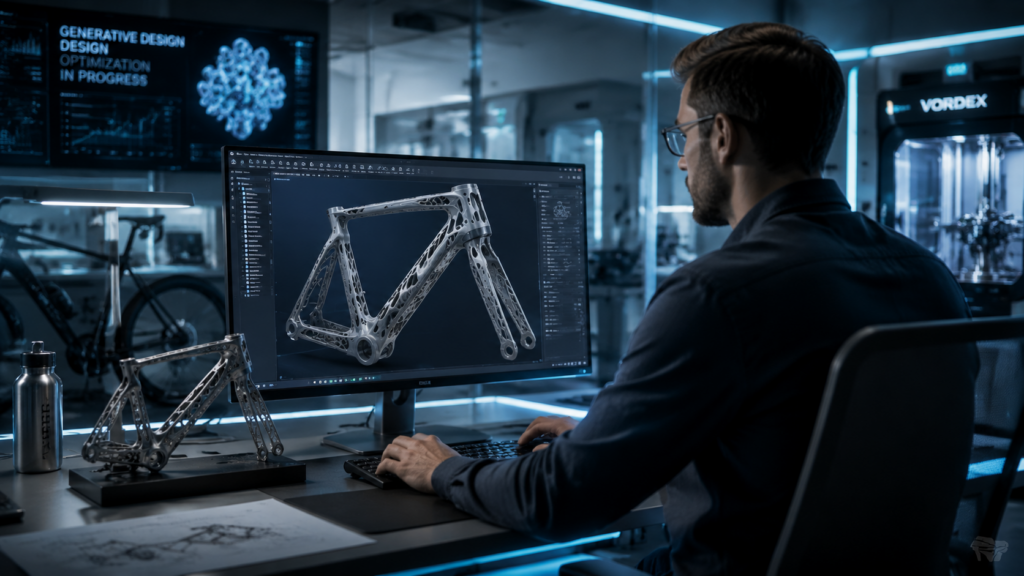
Future developments may include fully 3D-printed frames using titanium alloys and recyclable composites, reducing production waste while improving performance consistency.