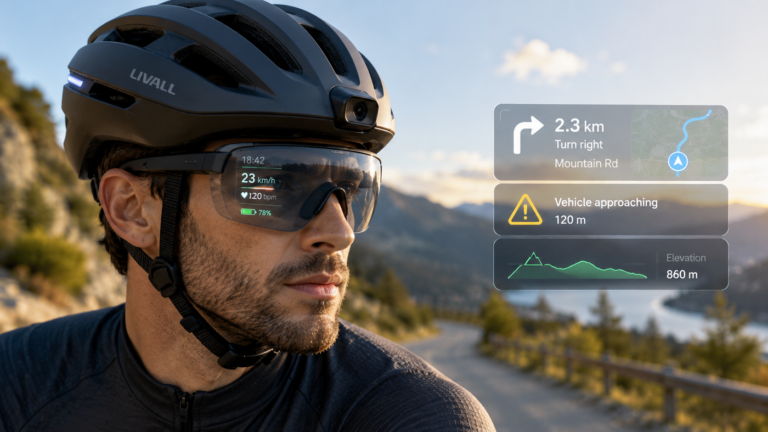
Cycling safety technology is advancing rapidly in 2026, with smart helmets leading the innovation wave. These devices now go far beyond basic protection, integrating sensors, communication systems, and augmented reality displays.
The goal is simple: reduce accidents, improve awareness, and provide instant emergency response when crashes occur.
What Makes a Helmet “Smart”?
Smart helmets now include crash detection sensors, GPS tracking, and real-time communication features. Some advanced models also include heads-up displays that project navigation and performance data directly into the rider’s field of view.
Core Safety Features
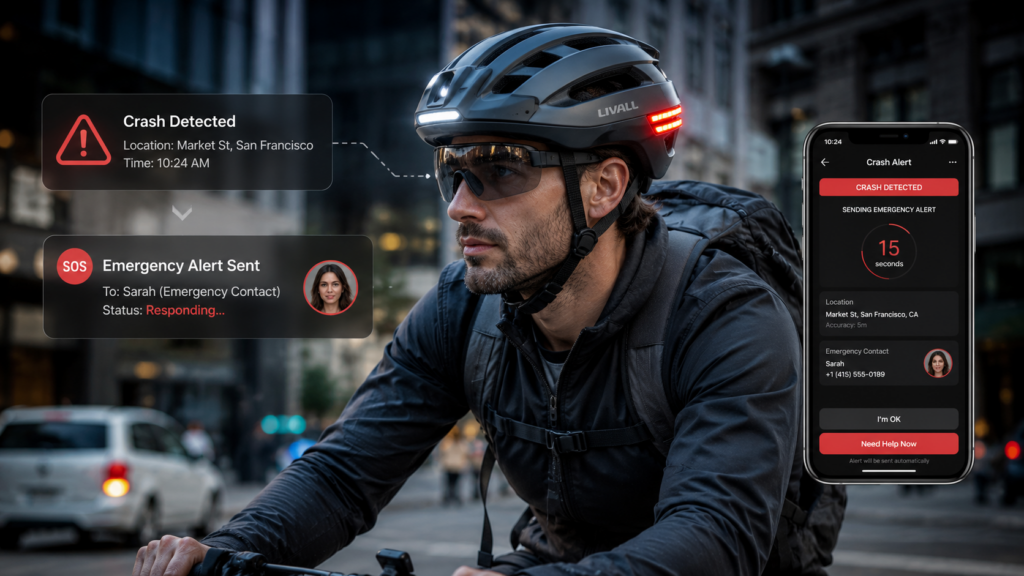
- Automatic crash detection and SOS alerts
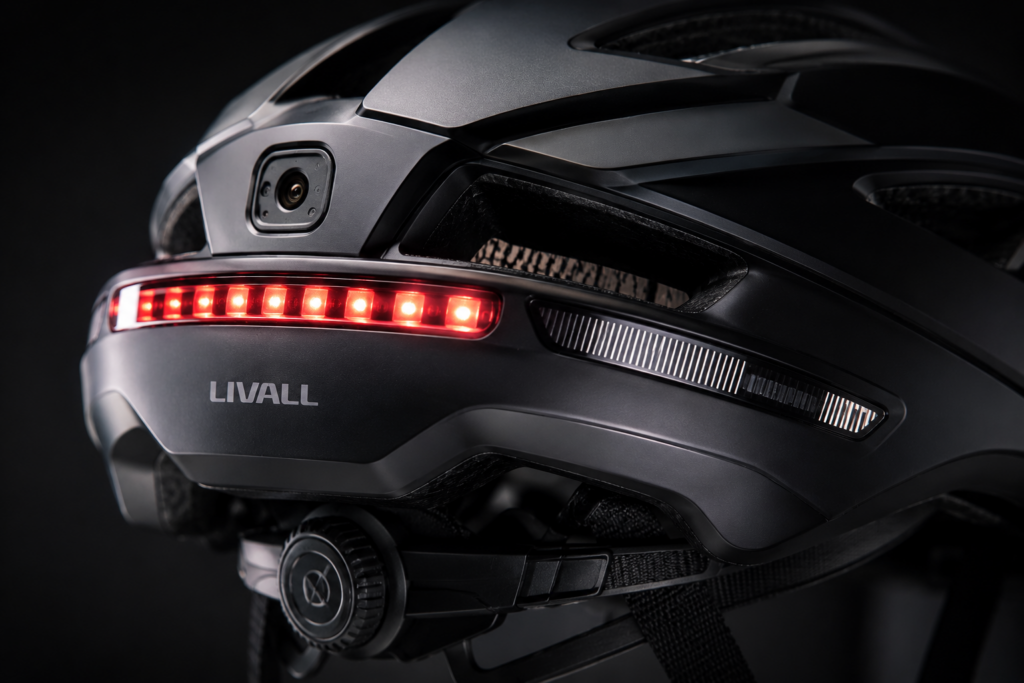
- Integrated LED lighting for visibility
- Turn-by-turn AR navigation systems
- Bluetooth communication with riders and phones
Leading innovations can be seen in brands like Livall, POC, and Giro.
How Smart Helmets Improve Safety
By detecting sudden impact forces, smart helmets can automatically send emergency alerts to pre-set contacts. This reduces response time in remote cycling areas or mountain trails.
Improved visibility systems also reduce collision risk in urban environments.
Integration With Cycling Ecosystems
Modern helmets now connect with cycling computers, smartwatches, and AI training apps. This allows a fully integrated performance and safety ecosystem.
Learn more about training integration in our AI cycling training guide.
The Future of Cycling Safety
Future helmets may include biometric monitoring such as hydration levels, fatigue detection, and neural focus tracking, making cycling safer than ever before.