When it comes to cycling gear, nothing is more critical than protecting your head. As we navigate through 2026, the landscape of cycling helmet safety has undergone a dramatic transformation. Driven by rigorous new testing standards and groundbreaking technological innovations, modern helmets offer unprecedented levels of brain protection. Whether you are navigating busy city streets on your daily commute or descending mountain passes at high speeds, understanding the latest advancements in cycling helmet safety is essential for every rider. This guide will explore the new standards, the crucial role of rotational impact protection, and the rise of smart helmet technology.
Understanding the 2026 Safety Standards
For decades, helmet safety standards primarily focused on linear impacts—direct, straight-on blows to the head. While these tests ensured helmets could prevent skull fractures, they did not adequately address the complex realities of real-world cycling crashes. In 2026, regulatory bodies across Europe and the United States have implemented significantly stricter testing protocols that fundamentally change how helmets are designed and evaluated.
The most critical update to the 2026 standards is the mandatory inclusion of angular acceleration tests. When a cyclist falls, they rarely hit the ground at a perfect 90-degree angle. Instead, impacts occur at an angle, causing the head to rotate violently. This rotational force is a primary cause of severe brain injuries, including concussions and diffuse axonal injury. The new standards require helmets to demonstrate a proven ability to mitigate these rotational forces. Furthermore, testing now includes higher impact speeds and requires coverage over a larger portion of the head, particularly for e-bike specific helmets. For a detailed breakdown of these regulatory changes, The Beam provides an excellent analysis of the 2026 cycling helmet standards.
The Crucial Role of MIPS Technology
The shift toward rotational impact testing has cemented MIPS (Multi-directional Impact Protection System) as an essential component of modern helmet design. While MIPS has been available for several years, the 2026 standards have elevated it from a premium upgrade to a baseline necessity for quality head protection.
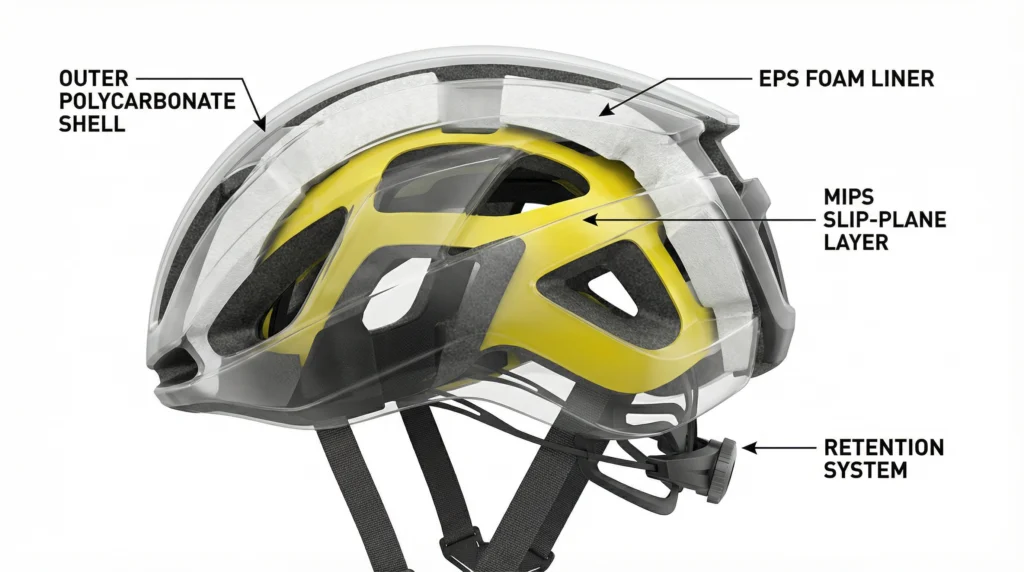
MIPS works by incorporating a low-friction slip-plane layer between the helmet’s outer hard shell and the inner EPS foam liner. During an angled impact, this layer allows the helmet to rotate slightly relative to the rider’s head—typically 10 to 15 millimeters in a matter of milliseconds. This microscopic movement effectively redirects dangerous rotational forces away from the brain, functioning much like a car’s crumple zone. Studies indicate that helmets equipped with MIPS can reduce the risk of rotational brain injury by up to 40% compared to traditional non-MIPS helmets. Other competing technologies, such as WaveCel and SPIN, operate on similar principles of rotational mitigation. If you are a female rider looking for gear tailored to your needs, check out our article on The Unstoppable Growth of Women’s Cycling in 2026 for insights on female-specific helmet designs.
The MIPS slip-plane layer allows the helmet to rotate independently of the head during an angled impact, significantly reducing rotational forces on the brain.
Smart Helmets and Integrated Features
Beyond structural safety, 2026 is the year of the “smart helmet.” Technology companies are integrating advanced electronics directly into helmet designs to enhance rider visibility, communication, and situational awareness. These innovations are particularly valuable for urban commuters navigating complex traffic environments.
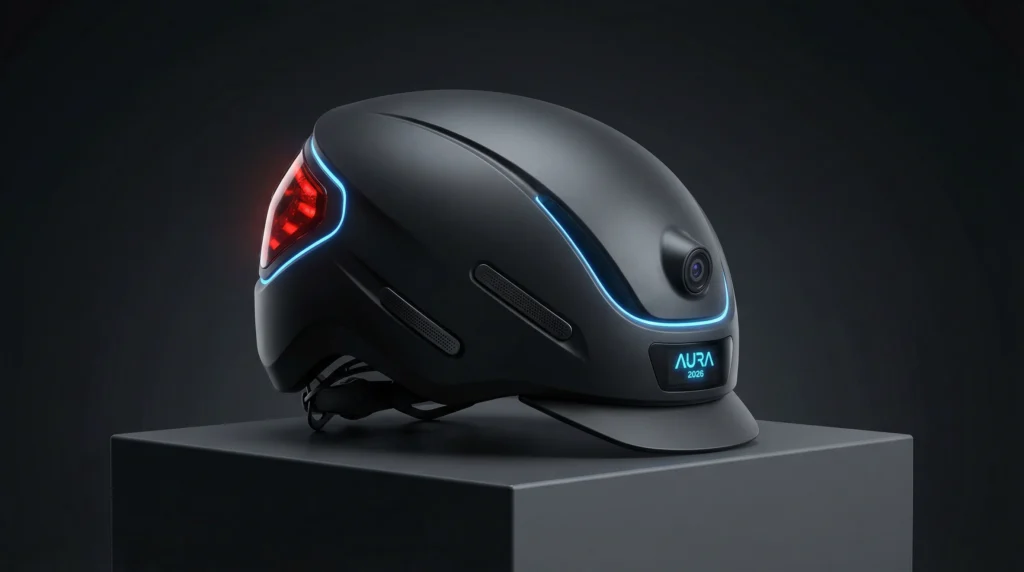
Modern smart helmets frequently feature integrated LED lighting systems. These are not just simple blinking lights; they include high-visibility rear panels, turn signals activated by a handlebar remote, and even automatic brake lights that detect deceleration. Additionally, built-in Bluetooth speakers and wind-canceling microphones allow riders to listen to navigation prompts or communicate with riding partners without blocking out ambient traffic noise. Some premium models now incorporate rear-view camera lenses that stream a live feed to a smartphone mounted on the handlebars, acting as a digital rearview mirror. For more information on how technology is changing the daily ride, read our post on The Rise of Urban Commuting: E-Bike Adoption Trends. To explore the electronics inside these devices, SENA offers a fascinating look inside the smart helmet.
Smart helmets combine advanced impact protection with integrated lighting and communication technology to enhance overall rider safety.
Proper Fit for Maximum Protection
Even the most technologically advanced helmet is rendered ineffective if it does not fit correctly. In 2026, manufacturers are offering more refined sizing options and highly adjustable retention systems to ensure a secure, comfortable fit for a wider variety of head shapes.
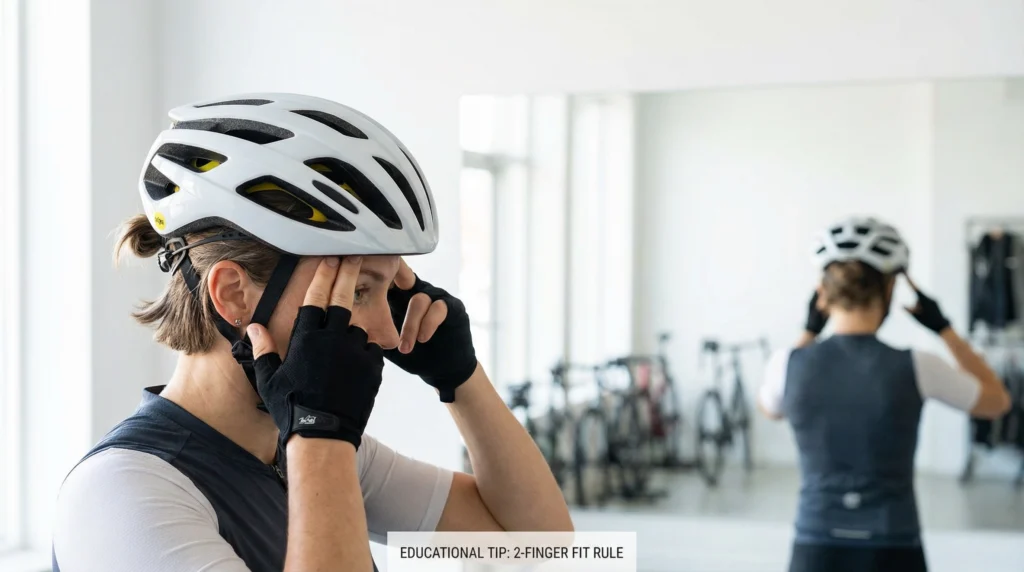
A properly fitted helmet should sit level on your head, positioned low on the forehead—typically one to two finger-widths above your eyebrows. It should not tilt backward, exposing your forehead, nor should it tilt forward, obstructing your vision. The retention dial at the back of the helmet should be tightened until the helmet feels snug but not painfully tight. When you shake your head, the helmet should not move independently. Furthermore, the chin strap should form a “V” shape just under your ears, and you should only be able to fit one finger between the strap and your chin. If you are riding an e-bike, ensuring a perfect fit is even more critical due to the higher average speeds; review our guide on 2026 E-Bike Laws Cyclists Need to Know for more safety context. For additional guidance on selecting the right gear, Lazer Sport provides comprehensive advice on all you need to know about helmet safety.
Using the two-finger rule helps ensure your helmet sits low enough on your forehead to provide adequate frontal impact protection.
Conclusion
The advancements in cycling helmet safety technology in 2026 represent a monumental leap forward in rider protection. By understanding the importance of the new angular acceleration standards and prioritizing helmets equipped with rotational impact systems like MIPS, you can significantly reduce your risk of severe head injuries. Whether you opt for a lightweight aerodynamic model for racing or a feature-rich smart helmet for commuting, always ensure a proper fit. Your brain is your most valuable asset; protect it with the best technology available before you turn the pedals. For a broader look at the latest innovations, Road Bike Rider discusses new helmet technology designed to reduce risk.