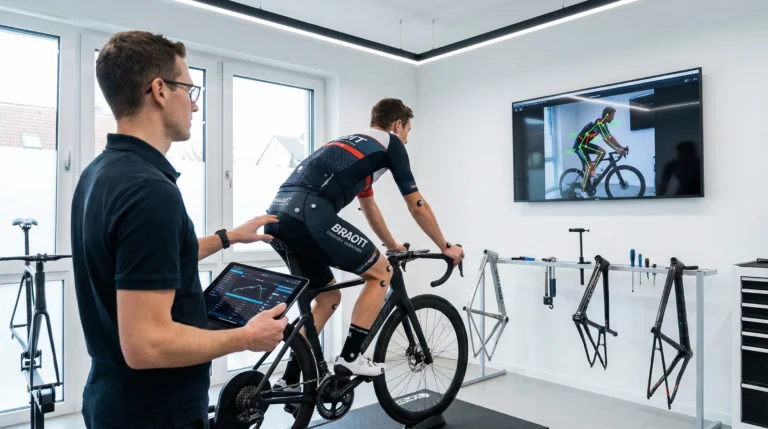
For decades, achieving the perfect position on a bicycle relied heavily on a fitter’s subjective eye, a plumb bob, and a tape measure. While experienced professionals could achieve excellent results, the process was often more art than science. Today, the landscape has been completely transformed. As we explore the latest bike fit technology in 2026, artificial intelligence, 3D body scanning, and computational fluid dynamics (CFD) have revolutionized how we interact with our machines. These advancements are democratizing elite-level aerodynamic optimization, making it accessible to everyday riders without the need for expensive wind tunnel testing.
The shift toward data-driven fitting is not merely about chasing marginal gains; it is about finding the perfect intersection of aerodynamics, power output, and sustainable comfort. Traditional fitting often forced riders to choose between an aggressive, aerodynamic posture and a comfortable, powerful one. However, modern systems analyze the rider’s unique biomechanics to find a position that maximizes all three variables simultaneously. This holistic approach is proving invaluable across all disciplines, from road racing to the rapidly expanding world of women’s competitive cycling.
The Rise of AI-Powered Aerodynamic Optimization
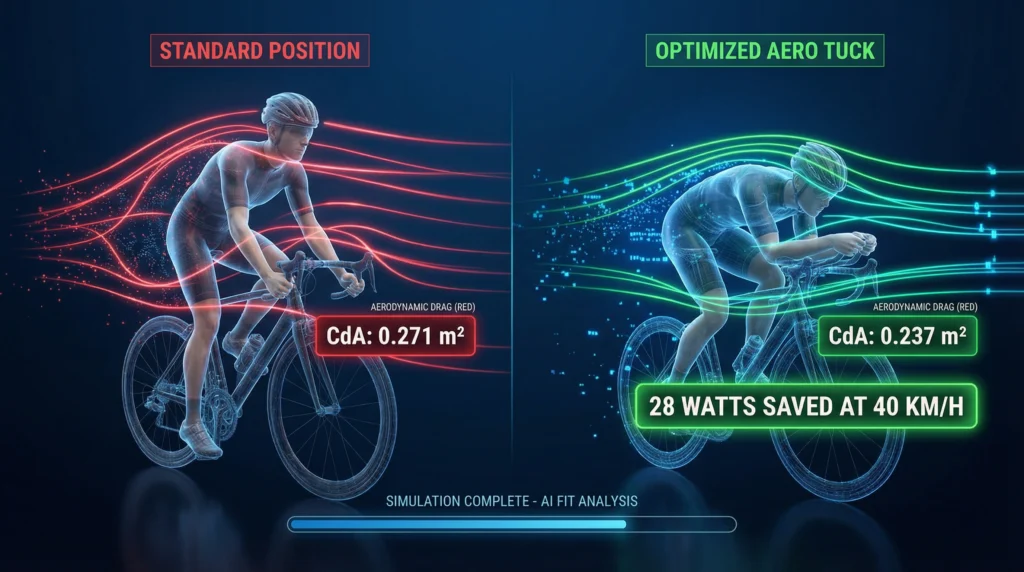
Perhaps the most exciting development in 2026 is the integration of AI software into the fitting process. Platforms like AiRO and MyVeloFit are utilizing advanced machine learning algorithms to analyze rider positioning with astonishing accuracy. These systems create a “virtual twin” of the cyclist, allowing fitters to run countless simulations without the rider having to turn a pedal. By adjusting parameters virtually, the software can predict exactly how a change in saddle height or stem length will impact the rider’s overall drag coefficient (CdA).
The results of these AI interventions are often dramatic. In a recent test conducted by Cycling Weekly regarding AI bike fitting, testers found that optimizing head and forearm positioning through AI analysis saved an incredible 37 watts at 40 km/h. Over a standard 40km time trial, that equates to nearly three minutes of time saved. Crucially, the software revealed that seemingly aerodynamic positions—like dropping the hands lower—actually increased drag by exposing more arm surface area. This level of counterintuitive insight was previously only available through $2,000 wind tunnel sessions, but is now accessible for a fraction of the cost.
This focus on aerodynamic efficiency perfectly complements the latest aerodynamic cycling equipment trends. While buying a new aero frame or deep-section wheels can certainly make you faster, optimizing your body position remains the most cost-effective way to reduce drag, as the rider’s body accounts for roughly 75% of the total aerodynamic resistance.
3D Body Scanning and Motion Capture
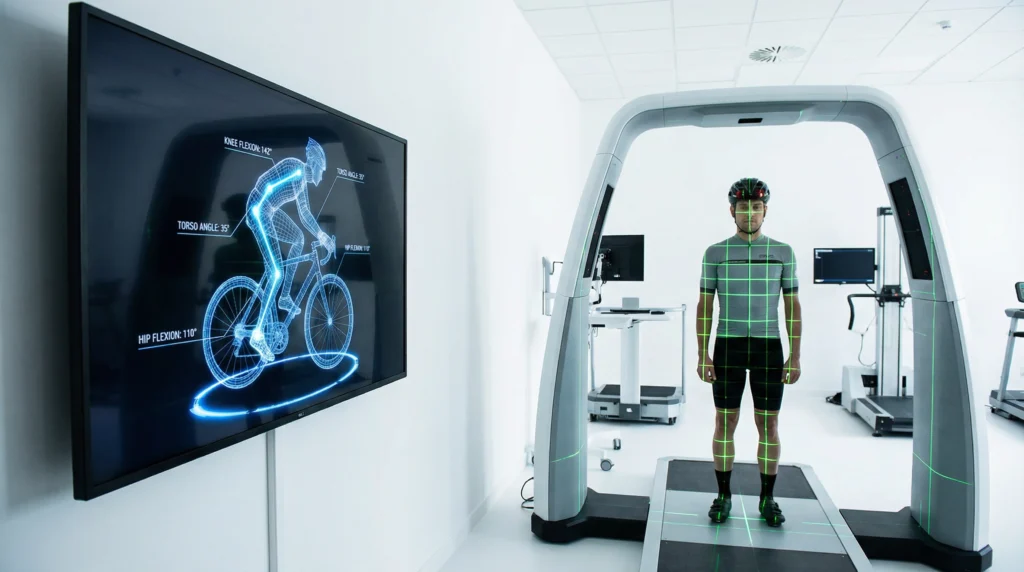
Alongside AI analysis, 3D body scanning has become a cornerstone of premium bike fitting studios. Systems developed by companies like SQlab and ID Match utilize advanced computer vision to capture the rider’s exact anatomical dimensions in three-dimensional space. By projecting laser grids or using multi-camera setups, these scanners measure skeletal structure, joint angles, and muscular asymmetries with millimeter precision.
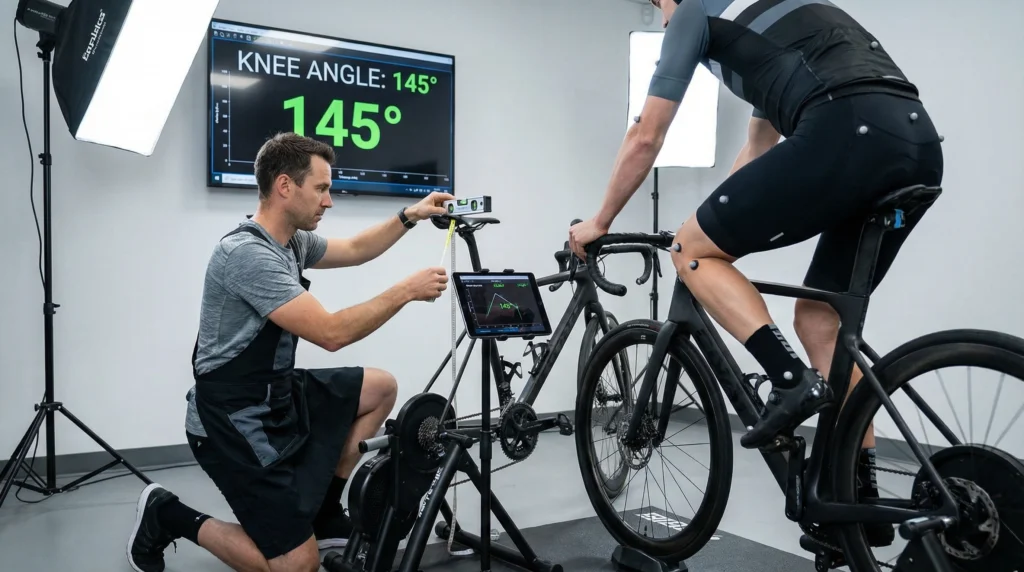
Once the static scan is complete, dynamic motion capture takes over. As the cyclist pedals on a stationary rig, infrared cameras track markers placed on key anatomical landmarks. This real-time data stream allows the fitter to observe how the rider’s body moves under load, identifying issues like knee tracking wobble, pelvic rocking, or uneven pedal strokes. According to research highlighted by Road.cc on the benefits of modern bike fitting, this dynamic analysis is critical for resolving chronic pain issues in the lower back, knees, and wrists.
Furthermore, this precise biomechanical data is essential when setting up complex components like modern road bike wheel systems or dialing in the exact cleat placement on your cycling shoes. A millimeter of adjustment at the cleat can drastically alter the tracking of the knee, and 3D motion capture ensures that these micro-adjustments are made based on hard data rather than guesswork.
The Hybrid Approach: AI Meets Human Expertise
Despite the incredible capabilities of AI and 3D scanning, the role of the professional human bike fitter has not been rendered obsolete. Instead, the industry is moving toward a highly effective hybrid approach. The technology provides the objective data—the aerodynamic drag numbers, the precise joint angles, and the power output metrics. However, it requires an experienced human fitter to interpret that data and apply it to the individual rider’s unique circumstances.
An AI program might suggest a highly aggressive aero tuck that saves 30 watts, but a human fitter will recognize if the rider lacks the hamstring flexibility or core strength to sustain that position for more than ten minutes. The fitter acts as the bridge between the theoretical optimum and the practical reality. They ensure that the final position not only cuts through the wind efficiently but also allows the rider to breathe properly, digest nutrition, and handle the bike safely.
As we look toward the future of cycling performance, it is clear that embracing these technological advancements is key to unlocking our full potential. Whether you are a competitive racer looking to shave seconds off your time trial, or an endurance rider seeking to eliminate knee pain on long weekend rides, investing in a modern, technology-driven bike fit is one of the smartest decisions you can make. By combining the precision of 3D scanning with the analytical power of AI, you can ensure that your machine is perfectly tuned to your unique physiology.