The Foundation of Power: Why Cycling Posture Matters in 2026
When we think about improving our cycling performance, the immediate focus often shifts to upgrading our equipment or pushing harder on the pedals. However, the most significant gains in 2026 are coming from an entirely different area: the rider’s body. Specifically, mastering your cycling posture and core strength training is the ultimate upgrade. A strong core is the anchor that allows your legs to generate maximum power without wasting energy through unnecessary upper body movement.
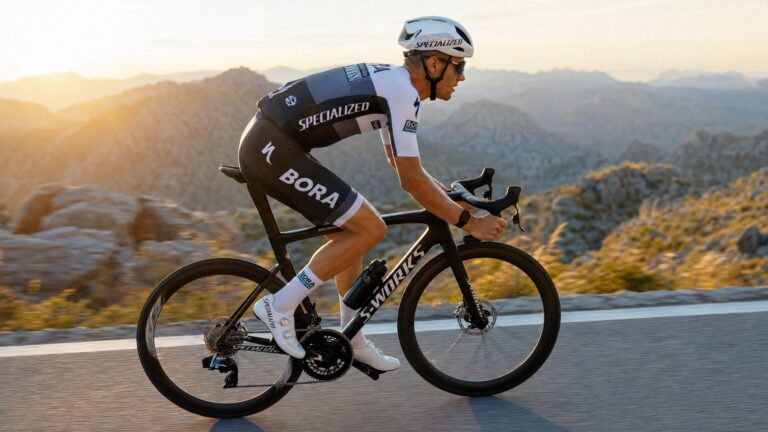
Furthermore, maintaining the correct position on the bike is crucial for aerodynamics and comfort. As speeds increase and rides get longer, the aerodynamic drag becomes the primary force you must overcome. By optimizing your posture, you can slice through the wind more efficiently. Additionally, a proper position significantly reduces the risk of overuse injuries, particularly in the lower back and knees.
Deconstructing the Perfect Riding Position
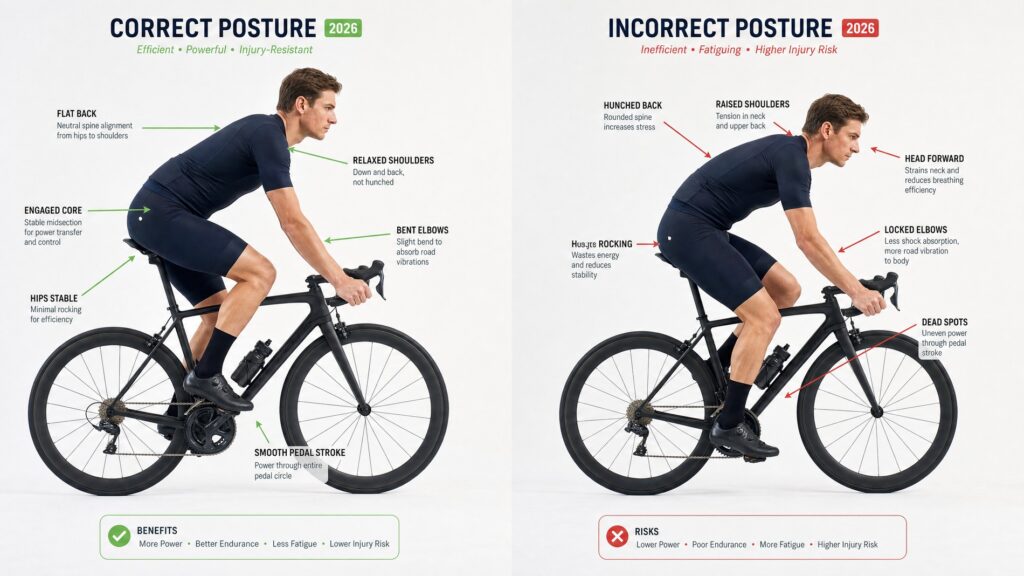
Achieving the ideal cycling posture is a delicate balance between aerodynamics, power output, and comfort. First and foremost, your spine should maintain a neutral alignment. This means avoiding a excessively hunched back, which can compress your diaphragm and restrict breathing. Instead, aim for a relatively flat back, pivoting forward from the hips rather than bending at the waist.
Moreover, your upper body should remain relaxed. Tension in the shoulders and neck is a common issue that leads to fatigue and discomfort. Keep your shoulders dropped away from your ears and maintain a slight bend in your elbows. This bend acts as a natural shock absorber, soaking up road vibrations before they reach your torso. If you find yourself locking your elbows, it is a clear sign that your reach might be too long or your core is not adequately supporting your weight.
For more insights on how your body interacts with the bike, check out our guide on Bike Fit Technology and 3D Body Scanning 2026. Proper fitting is the first step to achieving a sustainable posture.
The Role of Core Strength in Cycling
Your core is the bridge connecting your upper and lower body. When you push down on the pedals, the opposing force travels up through your legs and into your pelvis. If your core is weak, your pelvis will rock side to side, dissipating that valuable energy. Conversely, a strong core stabilizes the pelvis, ensuring that every ounce of effort is directed straight into the drivetrain.
In addition to power transfer, core strength is vital for endurance. As you fatigue during a long ride, your form naturally begins to deteriorate. A robust core allows you to maintain that efficient, aerodynamic posture for hours on end. According to Bicycling Magazine, targeted core exercises are essential for preventing the dreaded lower back pain that plagues many cyclists.
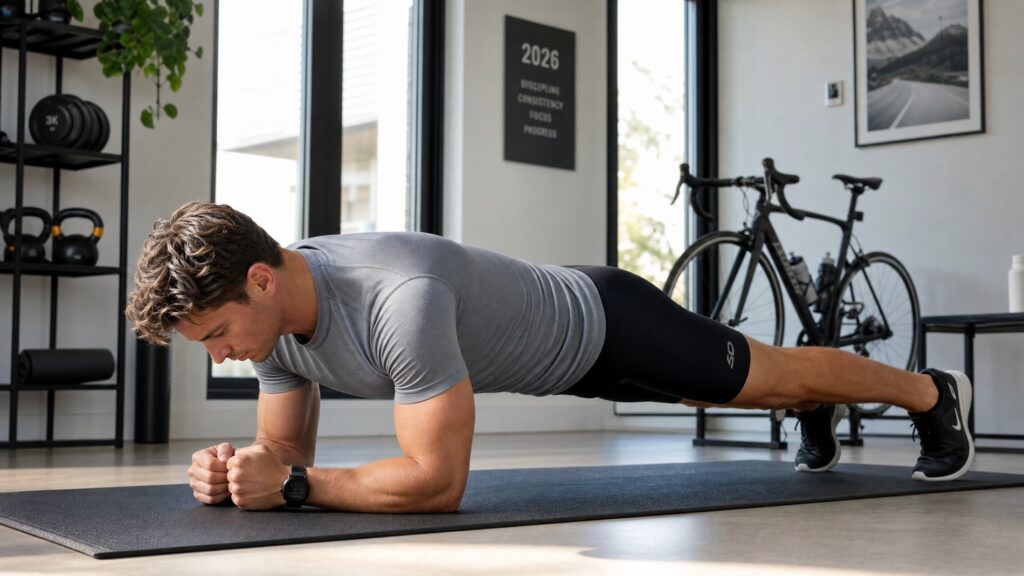
Essential Core Exercises for Cyclists
Building a cycling-specific core requires more than just traditional crunches. You need exercises that target the deep stabilizing muscles, including the transverse abdominis, obliques, and lower back extensors. Here are three highly effective movements to incorporate into your routine:
- The Plank: This classic isometric exercise is unparalleled for building overall core stability. Focus on keeping your body in a perfectly straight line from your head to your heels, actively engaging your glutes and bracing your abdominals.
- Russian Twists: Cycling involves a significant amount of rotational force, especially when climbing out of the saddle. Russian twists strengthen the obliques, helping you resist this rotation and maintain a stable torso.
- Bird-Dog: This movement is excellent for improving balance and strengthening the lower back. It teaches your body to stabilize the core while the limbs are in motion, perfectly mimicking the demands of pedaling.
For a comprehensive approach to building strength, TrainerRoad recommends starting with basic bodyweight movements before progressing to weighted exercises.
Flexibility and Mobility: The Missing Link
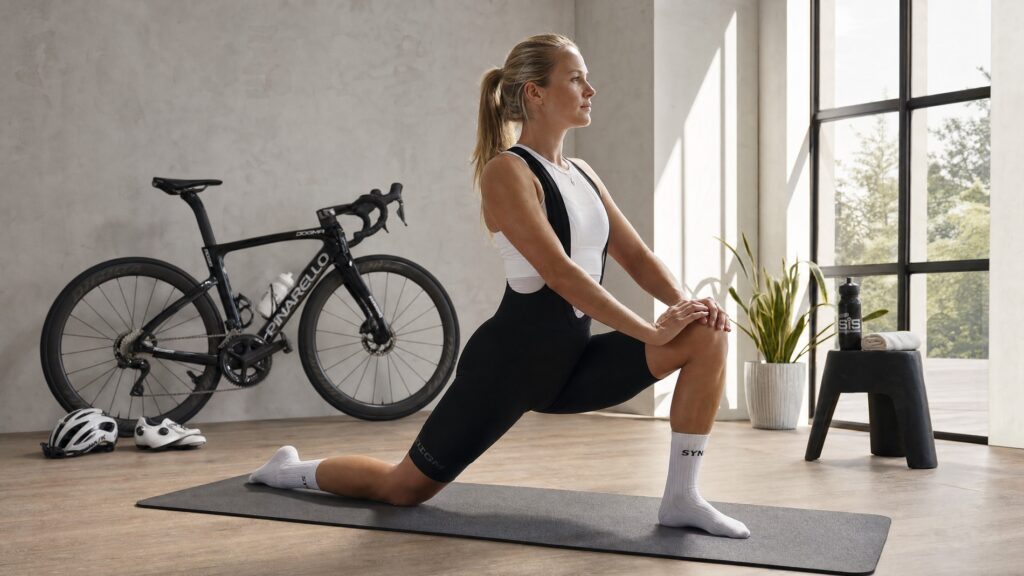
Strength alone is not enough; you must also possess the flexibility to comfortably reach the handlebars while maintaining a flat back. Tight hamstrings and hip flexors are notoriously common among cyclists, as the pedaling motion keeps these muscles in a constantly shortened state. This tightness can tilt the pelvis backward, forcing the lower spine to round excessively.
Therefore, a dedicated stretching routine is just as important as your strength workouts. Focus on opening up the hips and lengthening the hamstrings. Regular yoga practice can be incredibly beneficial for cyclists, improving both flexibility and body awareness. ROUVY highlights that improved flexibility allows you to get into more aerodynamic positions without sacrificing comfort or power.
Integrating Core Work into Your Training Plan
Consistency is the key to seeing results from your core strength training. You do not need to spend hours in the gym; rather, short, focused sessions are highly effective. Aim for two to three 15-minute core workouts per week. These can easily be tacked onto the end of an easy ride or performed on your rest days.
Furthermore, try to actively engage your core while you are actually riding. Periodically check in with your posture: Are your shoulders relaxed? Is your back relatively flat? Are you bracing your midsection slightly? By consciously practicing good form, it will eventually become second nature.
To ensure your muscles are recovering adequately from this added workload, review our article on Cycling Recovery and Muscle Regeneration 2026. Proper recovery is essential for adapting to new training stimuli.
Conclusion: Ride Stronger, Ride Longer
In 2026, the most advanced cycling technology is useless if the engine driving it is inefficient. By prioritizing your cycling posture and committing to a consistent core strength training routine, you will unlock a new level of performance. You will climb with more power, descend with greater control, and finish long rides feeling fresher than ever before.
Remember, a strong core is not just about speed; it is about longevity in the sport. By protecting your lower back and optimizing your biomechanics, you ensure that you can continue enjoying the ride for years to come. For more tips on optimizing your performance, explore our insights on Cycling Cadence and Pedaling Mechanics 2026.
For further reading on how strength training impacts older athletes, Roadman Cycling offers excellent insights into the benefits of heavy lifting for cyclists over 40. Additionally, Red Bull provides a great list of game-changing strength exercises to incorporate into your gym routine.