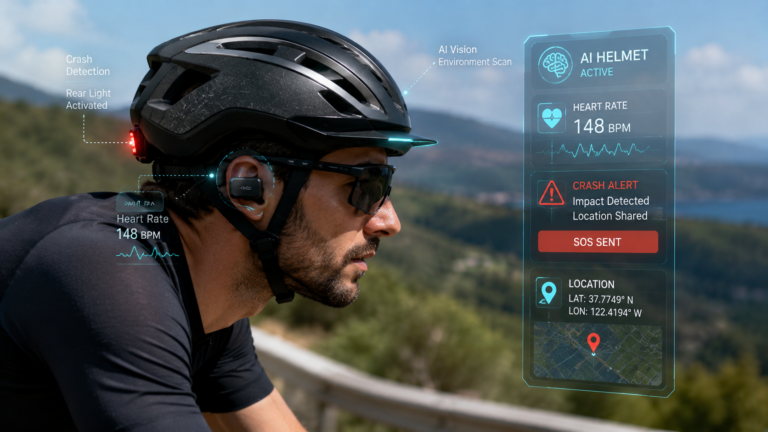
The cycling world is rapidly evolving with technology designed to protect riders and enhance performance. In 2026, connected cycling safety systems are no longer optional—they’re becoming essential for road and gravel riders alike. From AI-powered crash detection to real-time biometric monitoring, today’s cyclists have more tools than ever to stay safe and informed during every ride.
AI Alerts: The Smart Rider’s Companion
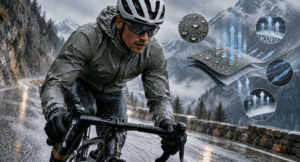
Modern cycling helmets and smart sensors now use AI-powered alerts to warn riders of potential hazards. From oncoming traffic to sudden braking events, these systems integrate with smart glasses or handlebar-mounted displays to provide immediate feedback. Internal sensors detect high-risk maneuvers and trigger early alerts, reducing reaction time significantly compared to traditional cycling awareness.
Integration with GPS and mapping apps allows riders to receive predictive alerts based on traffic density, road conditions, and real-time weather data. This AI-driven approach represents a leap forward in cycling safety technology.
Crash Detection and Emergency Response
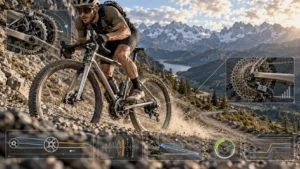
One of the most significant advancements is automatic crash detection. Smart helmets and connected sensors can detect impact forces typical of a crash and immediately alert emergency contacts. Many systems integrate with mobile apps to transmit location, medical information, and crash severity.
Leading manufacturers, like Livall and Sena, offer helmets equipped with 3-axis accelerometers and gyroscopic sensors, ensuring fast and accurate detection. Integration with municipal emergency services is also on the rise, creating a seamless safety network for cyclists worldwide.
Rider Biometrics: Real-Time Health Monitoring
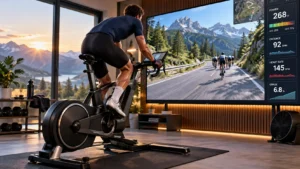
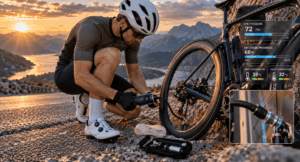
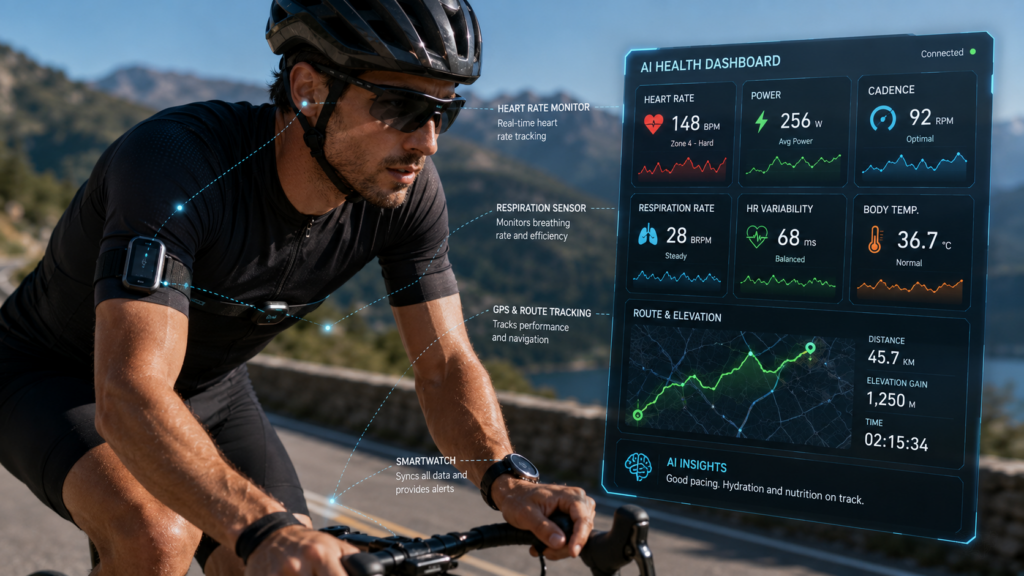
Beyond crash alerts, biometric monitoring allows cyclists to track heart rate, oxygen saturation, and other vital signs in real time. Systems such as Wahoo and Garmin smart devices integrate with AI dashboards to detect fatigue or abnormal physiological patterns. Alerts can suggest hydration, rest breaks, or intensity adjustments.
This technology is particularly valuable for endurance and competitive cyclists who need to optimize performance while minimizing risk. Studies show that monitoring metrics like heart rate variability and stress levels can significantly reduce the likelihood of accidents caused by fatigue or overexertion.
Integration With Smart Bikes and Apps
Connected cycling safety systems are not standalone—they integrate with smart bike technology and mobile applications. Power meters, GPS navigation, and smart lighting systems can synchronize with helmets and wearables to provide a comprehensive safety ecosystem. For example, adaptive bike lights can brighten or flash in response to approaching vehicles detected by AI sensors.
The Future of AI-Enhanced Cycling Safety
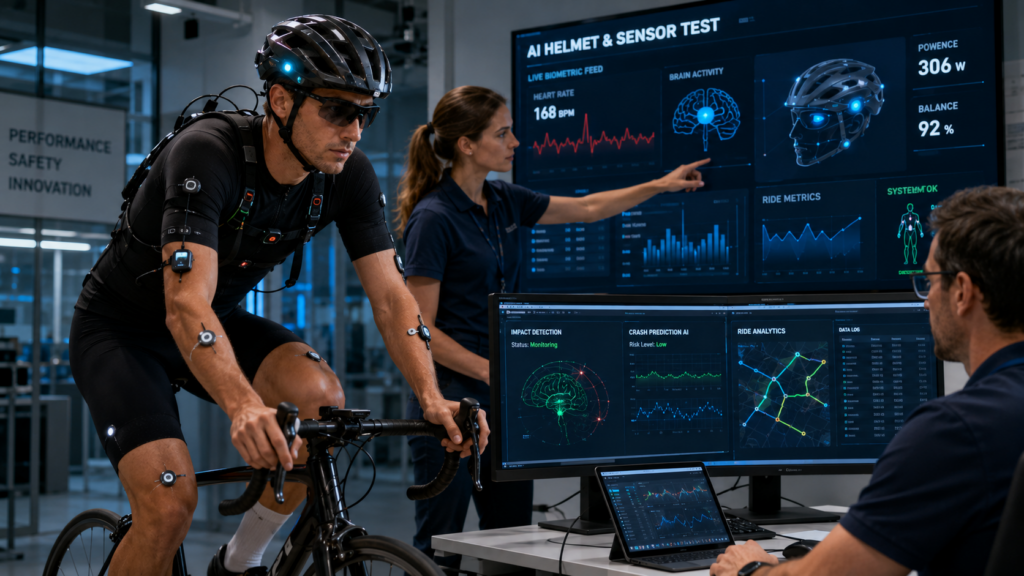
As AI and sensor technologies continue to evolve, the next generation of cycling safety systems will offer predictive analytics, personalized risk scores, and enhanced integration with smart cities. Riders in 2026 will benefit from intelligent systems that anticipate hazards before they happen and dynamically adapt to their physical condition and environment.
For cyclists interested in upgrading their safety equipment, checking out internal resources like helmet guides and gear reviews can provide comparisons and recommendations for the best AI-integrated systems available in 2026.