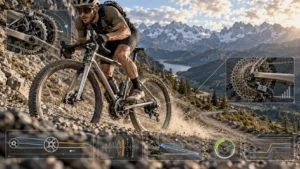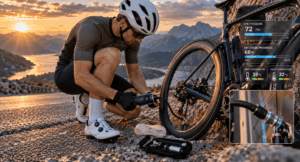
Gravel e-bikes are evolving rapidly. In 2026, advanced performance features like torque vectoring, regenerative braking, and smart range optimization are revolutionizing adventure cycling, providing better handling, extended battery life, and safer off-road performance.
Torque Vectoring: Enhanced Control on Rough Terrain
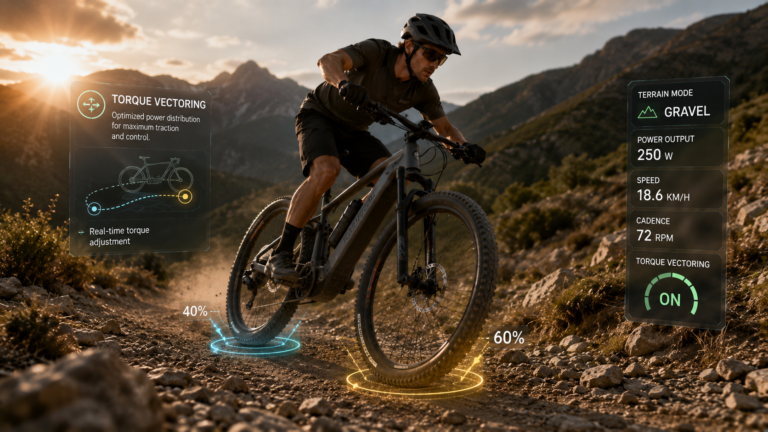
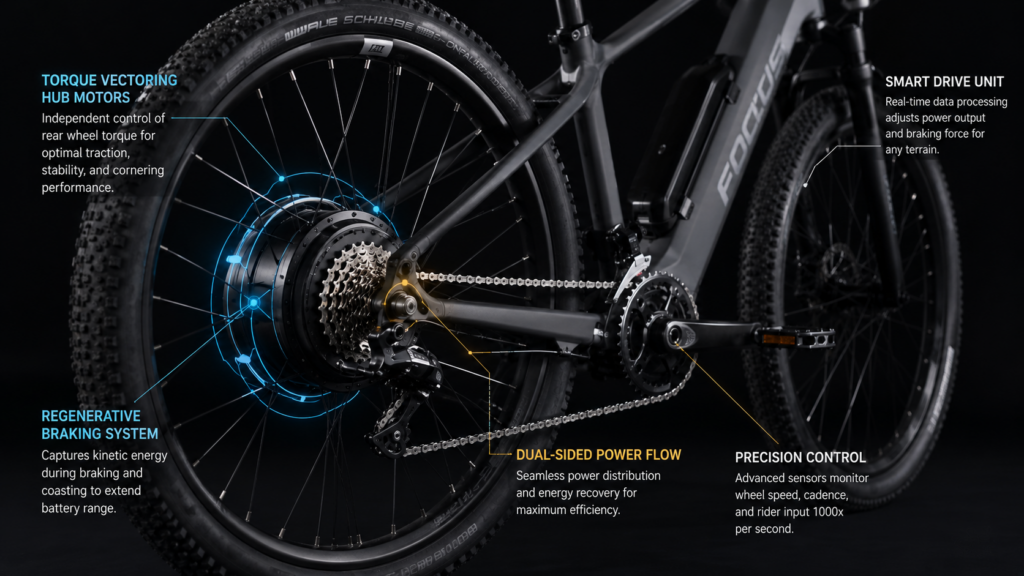
Torque vectoring allows e-bikes to distribute power to each wheel or hub independently, improving traction and cornering stability. On gravel or loose surfaces, this results in a smoother and more controlled ride. Brands such as Specialized and Canyon are implementing torque vectoring in high-end e-gravel models to enhance off-road performance.
Regenerative Braking: Extending Ride Range
Modern e-gravel bikes feature regenerative braking, which recovers kinetic energy during deceleration. This not only extends battery life but also provides additional control on descents and technical terrain. Riders can monitor regenerative gains via integrated displays connected to smart battery systems.
Smart Range Optimization
AI-powered e-bike systems now predict battery consumption based on terrain, rider weight, and riding style. Smart range optimization automatically adjusts motor assistance and regeneration to maximize distance. This is especially valuable for long gravel rides or multi-day bikepacking trips.
For more battery insights, check out our guide on Smart E-Bike Battery Systems 2026.
Integration with Rider Metrics
These smart e-bikes can integrate with wearable sensors to track rider power output, heart rate, and fatigue. The AI system can adjust assistance in real-time for both safety and efficiency. Cyclists can pair these systems with apps like Garmin or Strava to optimize performance.

Safety and Adventure Advantages
- Improved handling and stability through torque vectoring
- Energy recovery with regenerative braking
- Extended ride range using predictive smart assistance
- Real-time adaptation to rider fatigue and terrain
Internal Resources
- Gravel Bike Technology 2026
- Light E‑Gravel Bikes Are Redefining Adventure Cycling
- Cycling Gravel Bike Technology and Geometry
- Smart Bikepacking Systems 2026
External Resources
Conclusion
Gravel e-bikes in 2026 are smarter, safer, and more capable than ever. Torque vectoring, regenerative braking, and AI-driven range optimization redefine the limits of off-road cycling and bikepacking adventures.