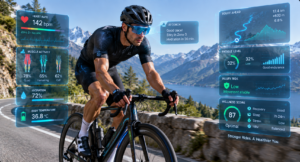
In 2026, augmented reality (AR) is reshaping how cyclists navigate roads, avoid hazards, and monitor performance. AR helmets and glasses with HUD (heads‑up display) technology provide real‑time guidance, alerts, and critical ride metrics without taking your eyes off the road.
What Is AR Cycling Navigation?
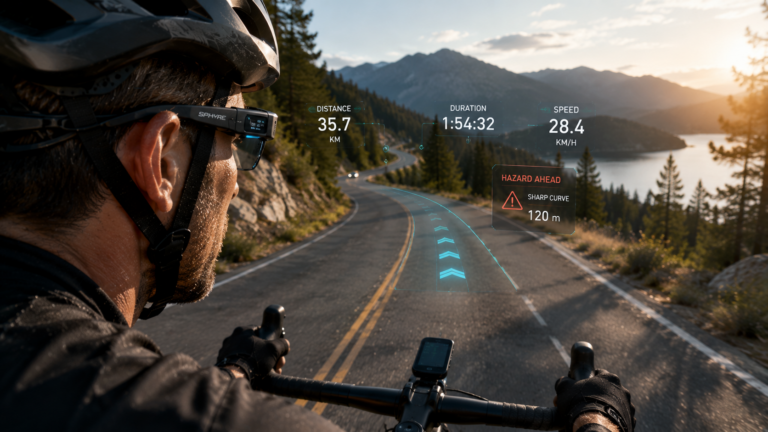
AR cycling systems use transparent displays embedded in glasses or helmets to project navigation cues, hazard warnings, and ride data directly into the rider’s field of view. Unlike phone or bike computer screens, AR keeps your eyes focused forward, enhancing awareness and safety.
Key features include:
- Turn‑by‑turn route AR overlays
- Hazard alerts from connected sensors
- Performance metrics like speed, cadence, and power
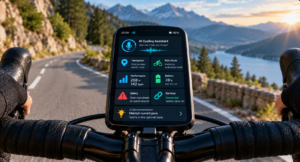
- Integration with smart cycling apps
Brands like Garmin, Wahoo, and emerging specialists are pushing AR into mainstream cycling tech.

Real‑Time Safety Enhancements
AR systems now link with radar and camera sensors (similar to advanced safety systems used in motorcycles and cars) to pre‑warn riders of approaching vehicles or obstacles. This capability builds on radar coverage discussed in our article on gravel bike tech trends.
For example, an AI model can highlight a vehicle approaching from the rear as a transparent red marker in your display — alerting you before you even look back.
Navigation & Training Features
Beyond safety, AR navigation adapts your ride dynamically. If weather changes or traffic builds, the system can suggest alternative routes, automatically optimized for your performance profile and terrain.
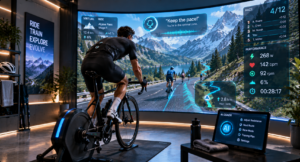
In integration with apps like Strava and TrainingPeaks, AR displays can project power targets, climb gradients, and pacing cues mid‑ride.
Group Riding & Social Integration
AR also enhances group activities. Connected systems show teammates’ positions, speed differentials, and planned maneuvers right in your view. Some models link with safety wearables to share riders’ status in real time — valuable for events and long group rides.
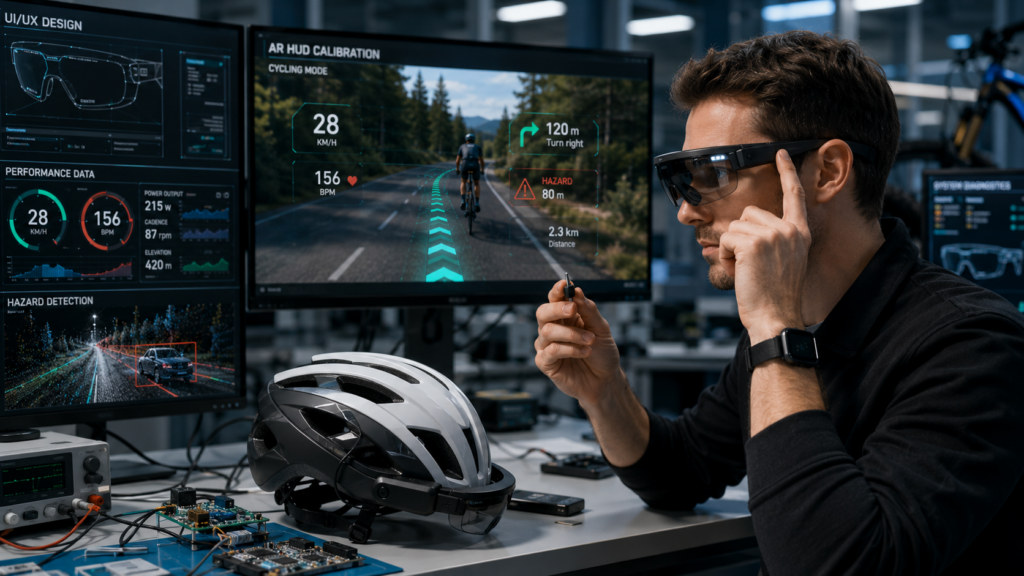
Behind the Scenes: Engineering AR HUDs
Developing AR for cycling requires high‑speed processing, lightweight optics, and durability. Engineers test UX in simulated environments similar to what we discussed in our smart tech labs in smart bikepacking systems.
These systems balance brightness (for daylight visibility) with transparency (to avoid blocking the real world), and calibrate gesture or voice control for hands‑free use.
External Resources for AR Cycling Tech
- Wired – AR Headsets Overview
- CyclingNews – AR in Cycling
- TechCrunch – AR Tech Trends
- Apple AR Development
- NHTSA Bicycle Safety Guides
Conclusion
Augmented reality and heads‑up display cycling systems are enhancing safety, performance, and the overall ride experience in 2026. As sensors, AI, and display tech evolve, AR HUDs will likely become a standard part of serious cyclists’ gear.