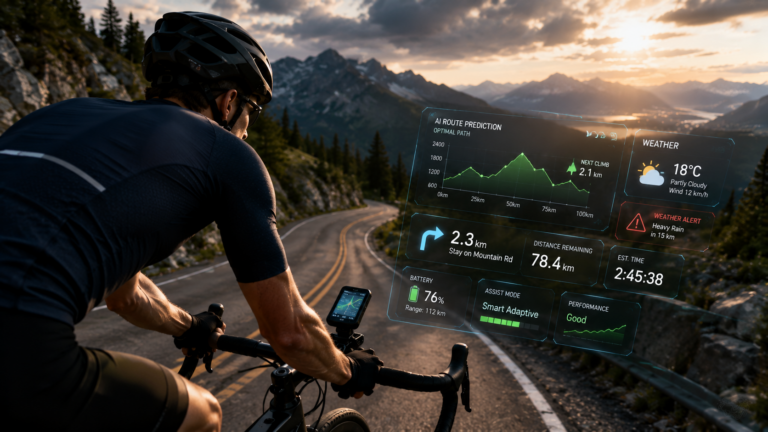
Cycling navigation technology is entering a new generation in 2026. Traditional GPS devices helped riders follow routes, but artificial intelligence is now changing how cyclists plan, navigate, and experience their rides.
Modern AI cycling navigation systems 2026 use machine learning, real-time data, and predictive algorithms to create smarter routes based on rider goals, terrain conditions, weather, and safety information.
The Evolution of Cycling GPS Technology
For years, cycling computers primarily provided basic navigation features such as distance tracking, turn directions, and elevation information. Today, advanced systems are becoming intelligent riding assistants.
AI-powered navigation platforms can analyze thousands of data points to recommend routes that match a cyclist’s ability and preferences.
Popular cycling technology companies such as Garmin, Wahoo, and Bryton continue developing smarter cycling computers and connected navigation systems.
Smart Route Planning With Artificial Intelligence
One of the biggest advantages of AI navigation is personalized route creation. Instead of selecting a route based only on distance, AI considers multiple factors.
- Rider experience level
- Current fitness condition
- Road surface quality
- Elevation difficulty
- Weather conditions
- Traffic patterns
This allows cyclists to receive routes designed specifically for their riding style.
Predictive Maps for Safer Cycling
Safety is becoming a major focus of cycling navigation technology. Future systems can analyze road conditions, vehicle activity, and potential hazards before riders encounter them.
For urban cyclists, AI navigation may recommend safer streets with lower traffic volume or improved bike infrastructure.
According to research and safety resources from the National Highway Traffic Safety Administration, better awareness and safer cycling environments are important factors in reducing bicycle-related crashes.
AI Weather and Terrain Predictions
Weather can dramatically affect cycling performance. Rain, wind, temperature, and trail conditions can change a planned ride within minutes.
AI navigation systems can combine weather forecasts with terrain information to recommend better departure times and route adjustments.
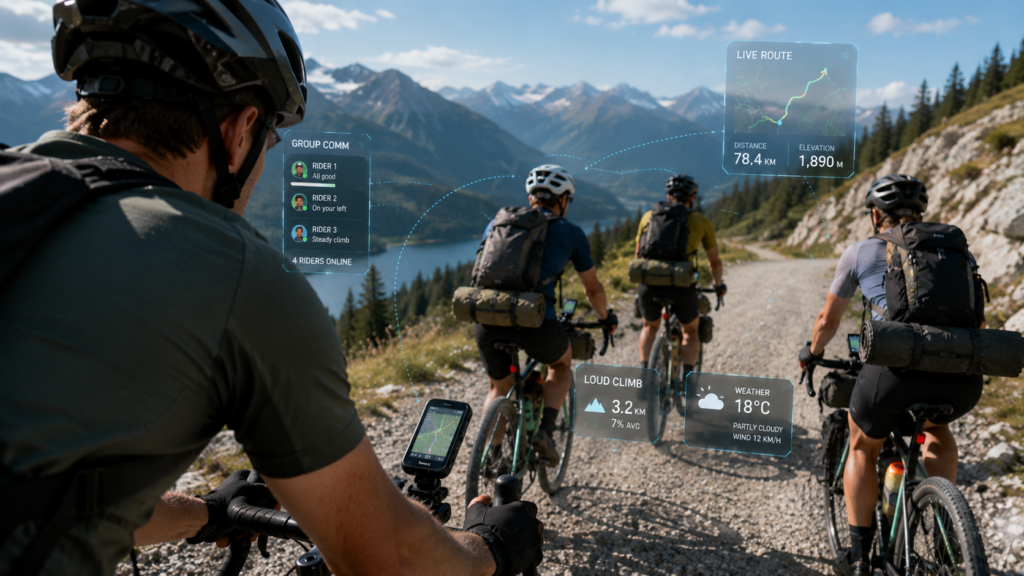
This is especially valuable for gravel cyclists and bikepackers exploring remote areas.
Integration With Smart Cycling Equipment
Future navigation systems will connect with more cycling devices, including smart helmets, electronic shifting systems, power meters, and wearable sensors.
For example, a navigation system could adjust recommendations based on rider fatigue or remaining battery power on an electric bike.
You can learn more about connected cycling technology in our articles about smart bikepacking systems and AI-powered cycling training.

Navigation for Long-Distance Adventure Cycling
Adventure cyclists will benefit significantly from AI navigation improvements. Multi-day riders can receive route suggestions that consider charging locations, water access, elevation difficulty, and weather risks.
Combined with modern bikepacking equipment, AI navigation makes exploring unfamiliar areas easier and safer.
Future of AI Cycling Navigation
The future of cycling navigation will likely include augmented reality displays, voice-controlled guidance, and predictive safety recommendations.
Smart helmets, cycling glasses, and handlebar displays may eventually provide navigation information directly in the rider’s field of vision.
Conclusion
AI navigation systems are transforming cycling in 2026 by making routes smarter, safer, and more personalized. Whether riding through cities, gravel roads, or remote mountain trails, artificial intelligence is helping cyclists explore with greater confidence.