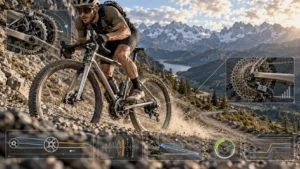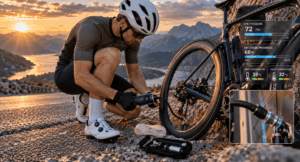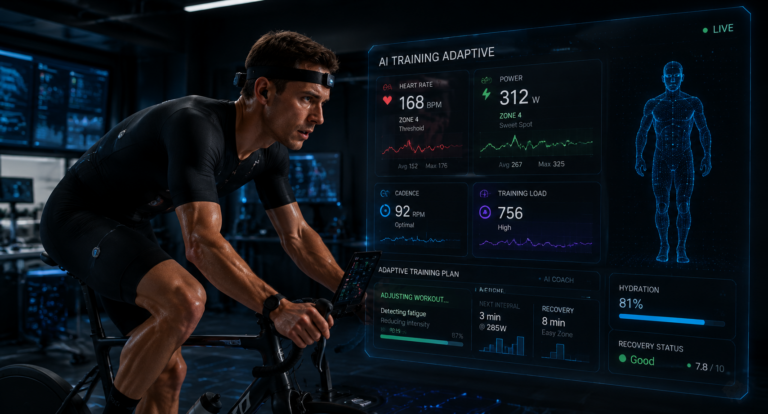
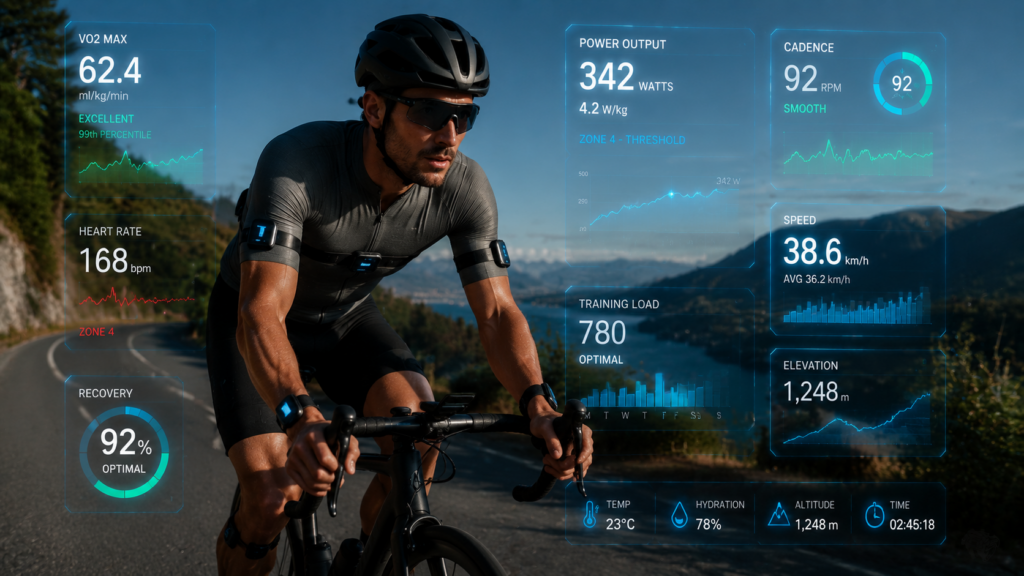
AI-driven cycling training is transforming how athletes prepare for endurance and competition. In 2026, riders no longer follow static training plans—everything is adaptive, data-driven, and personalized in real time.
How AI Training Works
Modern systems integrate data from Garmin devices, power meters, and heart rate sensors to adjust workouts dynamically. Platforms like TrainingPeaks now use predictive AI models to optimize fatigue and recovery balance.
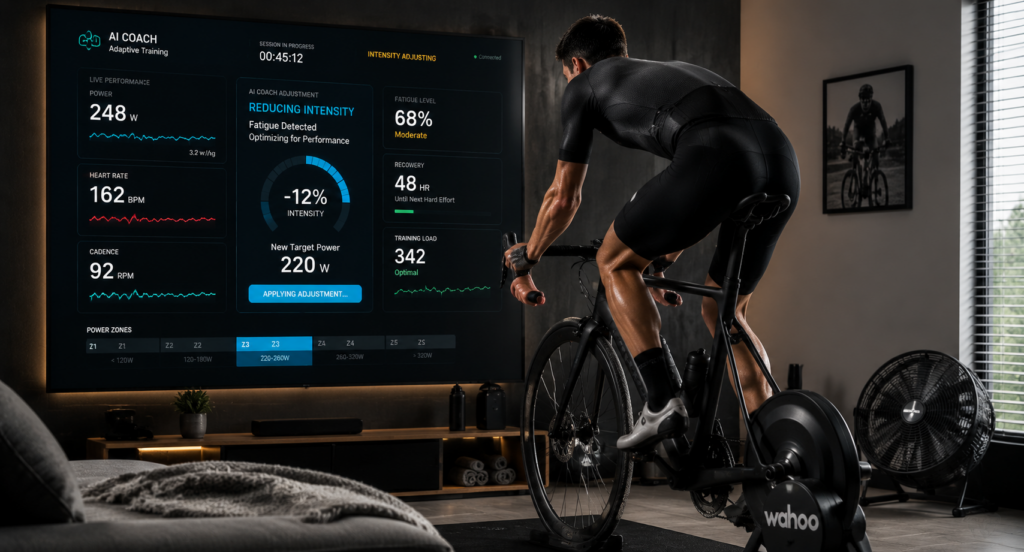
Adaptive Training Zones
Instead of fixed zones, AI recalculates thresholds based on daily readiness, sleep quality, and stress levels. This ensures cyclists train at the optimal intensity every day.
Real-Time Feedback Systems
Smart trainers such as Wahoo and Tacx adjust resistance mid-ride, simulating climbs, sprints, or recovery intervals automatically.
Performance Optimization Benefits
- Faster endurance gains
- Reduced overtraining risk
- Personalized recovery tracking
Internal Links
Conclusion
AI cycling training represents the next evolution of endurance sport science, blending human performance with machine intelligence.