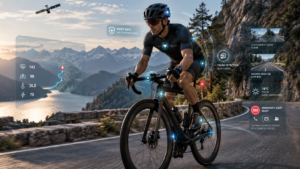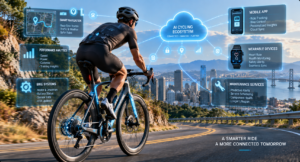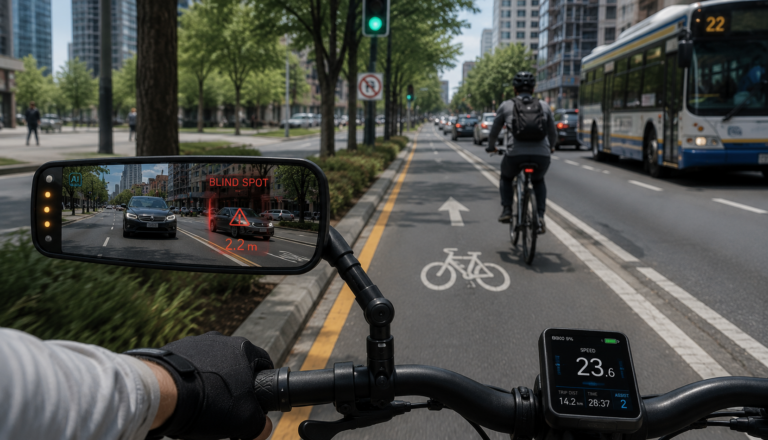
Cycling technology continues to evolve rapidly in 2026. One of the most impactful innovations for rider safety and awareness is the smart cycling mirror. Far beyond traditional reflective mirrors, these connected devices now integrate AI traffic detection, blind‑spot alerts, and real‑time ride analytics — helping riders anticipate danger before they react.
What Makes a Mirror “Smart”?
A traditional bike mirror helps riders see behind them, but it has limitations: it’s static, requires head turning, and doesn’t detect fast‑approaching vehicles. Smart cycling mirrors solve these challenges by integrating:
- AI‑powered radar or camera sensors
- Real‑time blind‑spot detection
- Connected smartphone app alerts
- Night mode and low‑light enhancement
These systems work together to provide visual and audio alerts so riders can focus on the road ahead — reducing reaction time and improving situational awareness.
AI Traffic Detection & Safety Alerts
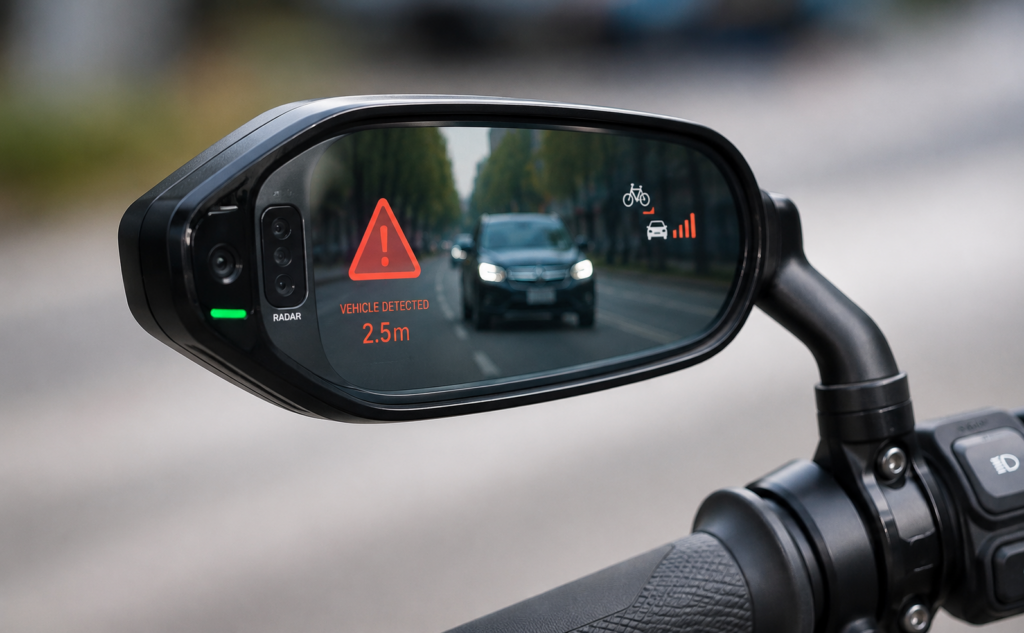
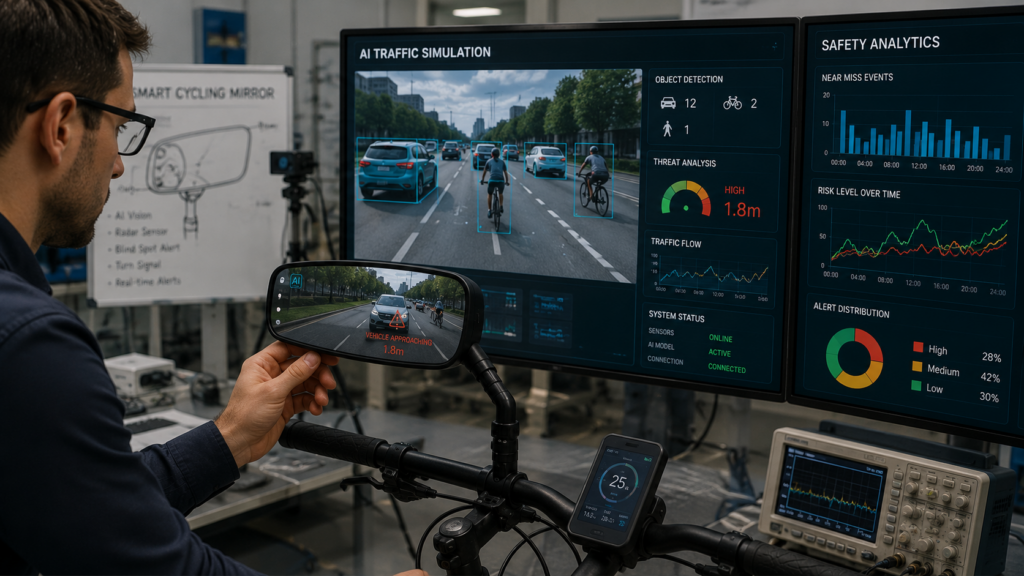
The backbone of a smart mirror is its ability to use AI to detect and classify moving objects around the rider. Cameras and radar sensors mounted on the bike or mirror communicate with a built‑in processor that tracks:
- Approaching vehicles from behind
- Cyclists or pedestrians entering blind spots
- Sideswipe risks at intersections
- Fast‑moving obstacles on narrow roads
When a potential hazard is detected, the mirror displays warnings directly on its digital screen or sends a notification to the cyclist’s connected device. This system can drastically improve safety in busy urban environments and high‑traffic scenarios.
For broader context on connected cycling safety systems, see our article on connected cycling analytics.
Integration With Connected Apps & Devices
Smart cycling mirrors often sync with smartphone apps and wearable devices to create a fully connected ride experience. Features include:
- Mobile notifications for hazard alerts
- Route logging and traffic heatmaps
- Battery level monitoring for mirror and sensors
- Emergency contacts & crash detection integration
This means a rider can receive a traffic alert on both their smart mirror and phone, or even through a connected helmet HUD or smartwatch.
Benefits for Urban & Commuter Cyclists
Smart mirrors are especially beneficial for:
- Daily commuters navigating city traffic
- Cyclists in fast‑paced group rides
- Mountain bikers on shared trails
- Night riders needing enhanced visibility
Urban riders can see vehicles and hazards earlier, reducing the risk of side‑swipe accidents or unexpected overtakes.
Smart Mirror Technology & Standards
Smart mirrors rely on a synergy of hardware and software:
- Radar & Cameras for object detection
- AI Algorithms for classification and threat prediction
- Connectivity via Bluetooth/Wi‑Fi to mobile apps
- Low‑power Displays optimized for day/night visibility
Manufacturers often adopt standards from vehicle ADAS (Advanced Driver Assistance Systems) technology, translating them into compact, lightweight cycling formats.
Independent Testing & Rider Reviews
Independent cycling review sites provide detailed performance insights. For example:
- BikeRadar – Tech Gear Reviews
- CyclingNews – Gear Tech
- Bicycling – Gear Technology
- World Triathlon Safety Insights
- Adventure Rider Forums – Cyclist Safety
Installation & Setup Tips
Setting up a smart cycling mirror is typically straightforward:
- Mount on handlebar or helmet bracket
- Pair with the companion app
- Calibrate sensor range and field of view
- Set alert preferences (audio/visual)
Ensure firmware stays up‑to‑date to benefit from the latest AI traffic models and safety updates.
Conclusion
Smart cycling mirrors are redefining how riders perceive their surroundings. With AI traffic detection, blind‑spot alerts, and connected ride awareness, these systems significantly enhance safety, particularly in urban and high‑traffic environments. As bike tech evolves in 2026, smart mirrors are an essential piece of the connected cyclist’s gear setup.