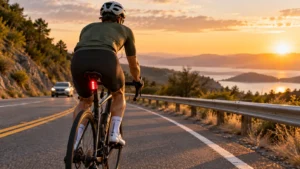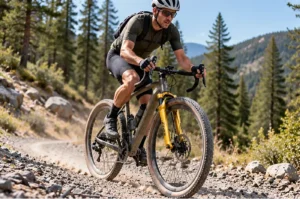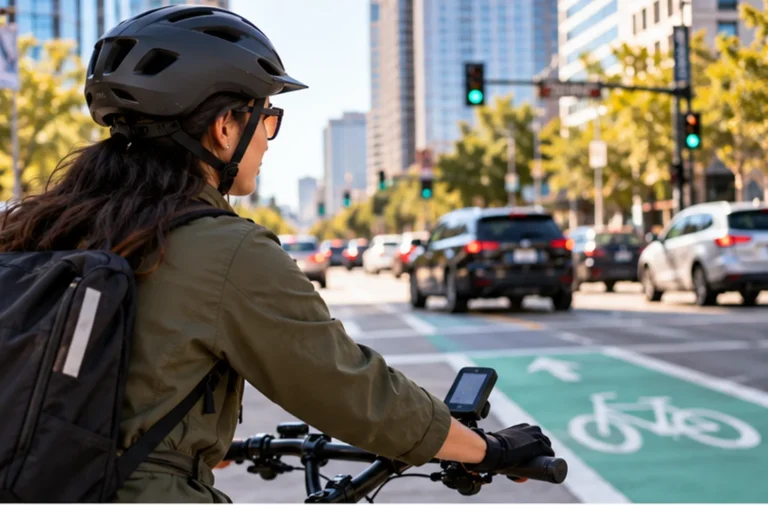
Electric mountain bikes are becoming more powerful, but raw motor output does not explain which bike is best for everyday riding. Some cyclists need a machine that can carry luggage and handle a weekday commute; others want responsive suspension and a removable battery for long days on mountain trails. The newly available Amflow TL and PR Carbon models illustrate this difference.
On October 26, 2026, Amflow announced worldwide availability of the TL Carbon touring-focused e-bike and US availability of the PR Carbon range. Both use Avinox motor technology, but their intended roles, prices, and equipment priorities are different. This Amflow TL vs PR Carbon guide compares the announced specifications, identifies practical trade-offs, and explains which riders should consider each bike.
Why Amflow TL and PR Are Making News
The timing matters: these are not just concepts shown at a trade fair. Amflow’s October 26 announcement confirmed the TL Carbon’s global sales opening and the US arrival of its PR Carbon and PR Carbon Pro. The American launch prices are $3,899, $4,999, and $6,799, respectively. Availability, taxes, dealer inventory, and region-specific specifications can change, so check the local listing before ordering.
Electrek’s coverage highlights the strategic shift: Amflow is stretching beyond performance e-MTBs into bikes intended to manage workdays, errands, touring, and recreational routes. For shoppers, the crucial question is less about maximum torque and more about whether the bicycle suits their actual weekly riding.
Amflow TL Carbon: The Do-More E-SUV
The TL Carbon is described as an electric SUV-style bicycle, a category that combines some mountain-bike hardware with the equipment expected on a practical commuter or touring machine. It is built around a carbon frame, full suspension, lights, mudguards, a rear rack, and other everyday-use features. Its goal is to make one bike useful across a wider variety of trips instead of optimizing solely for technical descending.
Amflow’s detailed TL release says the bike has a removable 800Wh battery and an Avinox M2 motor producing up to 125Nm of torque. The company lists weight as low as 22.6kg in a specified configuration; that is not necessarily the weight of a fully accessorized bike with racks, lights, pedals, and luggage. Ask for the exact as-sold weight if lifting the bike upstairs matters.
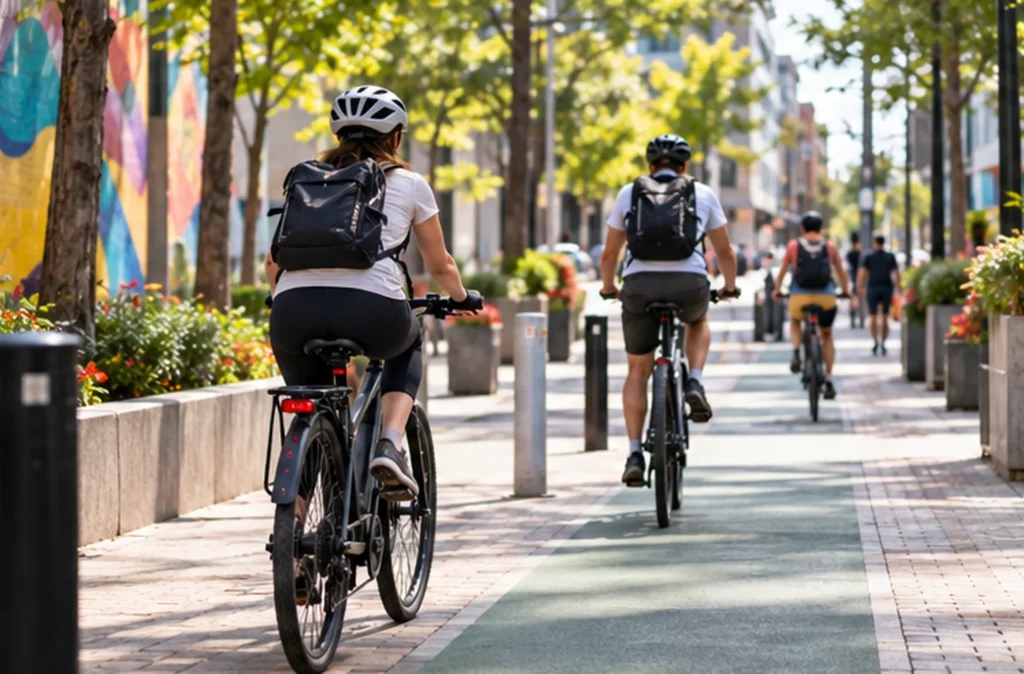
Amflow PR Carbon: A More Trail-Focused Choice
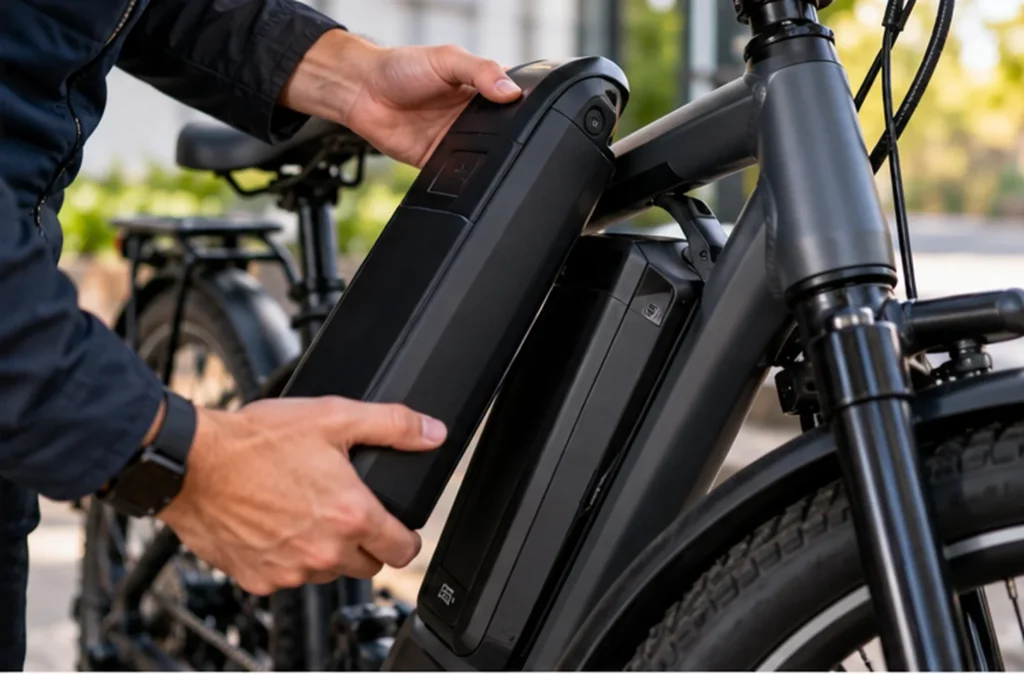
The PR Carbon range is aimed more directly at e-mountain-bike riding. Its headline practicality upgrade is a removable 800Wh battery. Riders can charge the pack away from the bicycle, and the manufacturer promotes swapping packs as another way to extend a trip. That is relevant when the bike lives in a garage without convenient electricity or when a spare battery is available for a long trail day.
The standard PR Carbon uses the Avinox M2 motor, rated at up to 125Nm. The PR Carbon Pro steps up to the M2S motor, rated at up to 150Nm. More torque can help with demanding climbing, but it should not be treated as a simple measure of overall ride quality. Tire grip, geometry, motor mapping, suspension setup, and rider control still determine whether the bike feels predictable on difficult ground.
Three Models, Three Different Prices
As of the October launch, the published US starting prices are:
- Amflow TL Carbon: $3,899, designed for versatile touring and everyday riding.
- Amflow PR Carbon: $4,999, focused on electric mountain-bike use with an M2 motor.
- Amflow PR Carbon Pro: $6,799, a higher-spec e-MTB with the stronger M2S motor.
That makes the PR Carbon $1,100 more than the TL at published US prices, and the Pro $1,800 more than the regular PR. Those differences are not only payments for more motor torque. Component packages and intended riding conditions matter. BIKE’s launch analysis examines why the TL’s equipment and price are unusually notable in the premium e-SUV category.
How Much Range Can Each Amflow E-Bike Deliver?
The TL’s manufacturer-tested range is up to 172km with its 800Wh battery under controlled conditions; Amflow advertises up to 158km for the PR Carbon under its specified test. Neither number should be treated as a guaranteed real-world result. The company’s PR test uses a flat paved road, an 80kg rider, Eco assistance, 21km/h speed, and a cadence of 65 rpm. Technical climbs, muddy tires, cold temperatures, extra luggage, and high assist settings can reduce range substantially.
Why Removable Batteries Matter
Both the touring and mountain-bike sides of the lineup emphasize removable batteries. That matters to apartment dwellers who cannot bring an entire bicycle close to a wall outlet, travelers who want off-bike charging, and riders organizing multi-day trips. Amflow says the 800Wh removable PR pack weighs as little as 4kg, which is manageable for many adults but still a substantial object to carry.
Battery interchangeability should never be assumed merely because two models quote the same capacity. Ask the brand or dealer which pack, charger, locking mechanism, firmware, and optional extender are approved for your exact bike. Our off-grid e-bike charging guide also explains why approved charging equipment matters on travel days.
Cargo Capacity: The TL’s Clear Advantage
The TL is designed to carry more than a water bottle and a small repair kit. Amflow advertises a maximum total system weight of 200kg, which includes the bicycle, rider, and cargo. That number is not a 200kg cargo allowance. The company’s published rack limits include up to 20kg for the optional front rack and 27kg for the rear rack, subject to the required mounting and setup instructions.
This makes the TL interesting for grocery runs, commuting with a laptop bag, weekend touring, and some bikepacking setups. It fits naturally beside the topics in our 2026 e-bike commuting guide. However, carrying extra weight changes braking distance, steering, suspension sag, and tire loading. Buyers should test the bike with realistic luggage rather than judging comfort from an empty showroom demonstration.
What Independent Testers Say About the TL
Early independent reviews provide more useful ownership context than a press release alone. E-MOUNTAINBIKE Magazine’s test reports a heavier, accessorized bike than the lowest manufacturer weight claim and examines the experience of riding it as an SUV-style e-bike. That distinction is important for riders who must lift it onto a rack or store it in a small apartment.
Which Model Suits Your Riding Style?
Choose the TL Carbon if you want one versatile e-bike for commuting, errands, rail trails, long touring days, and occasional unpaved adventures. Its practical equipment is a major part of its value, and the announced price makes it interesting to riders shopping for premium crossover e-bikes.
Consider the PR Carbon if mountain biking is your main activity and you want a removable 800Wh battery without paying for the highest-output version. Consider the PR Carbon Pro if you ride demanding trails often enough to justify its stronger motor and higher-end package. No model wins for every person; the best one is the bike whose design fits your routes.
Five Things to Check Before Ordering
- Fit: Confirm frame size, standover, reach, and handlebar position on a test ride.
- Installed weight: Include lights, racks, pedals, batteries, and accessories.
- Battery support: Check approved chargers, spare-pack price, and local service.
- Local classification: Confirm that the bike’s regional configuration is legal where you plan to ride.
- After-sales care: Ask about warranty coverage, software updates, replacement parts, and authorized service.
Amflow TL vs PR Carbon: The Bottom Line
Amflow’s October 2026 availability announcement gives riders two distinct options built around capable electric drive technology. The TL Carbon is a practical crossover bicycle with touring hardware and an aggressive published price. The PR Carbon range is more clearly aimed at riders who prioritize off-road performance, battery convenience, and—in the Pro build—higher motor output.
The smart purchase is not necessarily the most powerful one. Consider your actual routes, how you charge and store the bicycle, what you carry, and which components you can maintain locally. With those questions answered, the TL and PR stop looking like competing specification sheets and start looking like solutions to different riding needs.