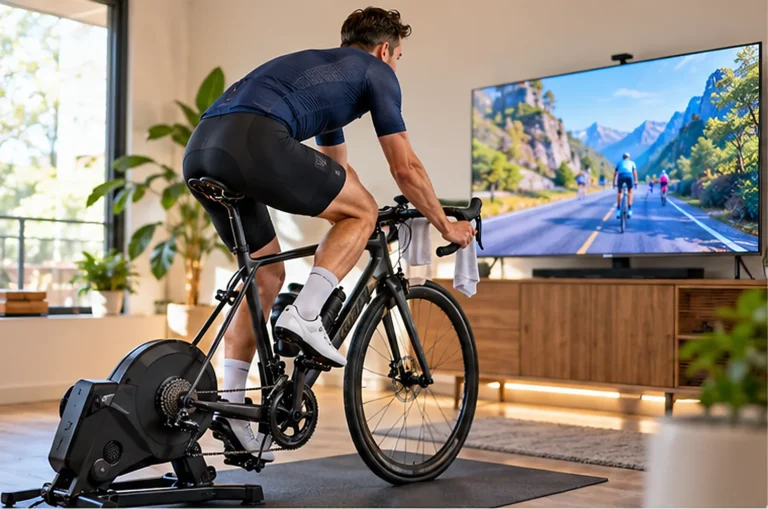
Indoor cycling has become increasingly realistic, but one element often feels different from riding on the road: the bike beneath you barely moves. On October 20, 2026, Garmin announced the Tacx Nēra smart trainer, a direct-drive model designed to change that experience with built-in multidirectional motion, integrated Wi-Fi and more flexible drivetrain choices. It also enters a crowded market where cyclists are comparing power accuracy, virtual shifting and trainer comfort, not simply maximum resistance.
What Makes the Tacx Nēra Different?
Garmin describes the Nēra as a connected direct-drive trainer with built-in motion pods. The idea is to introduce natural movement under the bicycle while keeping electronic resistance control and measured performance data. According to Garmin’s official launch announcement, it supports forward-backward and side-to-side movement to help replicate some of the subtle adjustments that happen outdoors.
That does not make a stationary trainer identical to riding a bicycle on real roads. A rider still cannot freely lean through a turn, shift weight over uneven ground or experience normal outdoor balance. But limited motion can make pedaling feel less rigid, especially during long seated efforts. The real question is whether the movement feels controlled, comfortable and stable for your riding style. Independent long-term tests will be useful for answering that question.
Built-In Motion Without a Separate Platform
Motion systems have existed on premium trainers and external rocker plates for years. Some move only fore and aft; others add a controlled side-to-side sensation. The Tacx Nēra incorporates its movement system into the trainer itself rather than requiring a separate full-size platform beneath the bicycle. That can simplify the overall equipment layout for riders who want realistic movement without adding another large accessory.
There is an important distinction from Garmin’s earlier NEO 3M. road.cc’s October 20 report notes that the Nēra’s motion is integrated differently and is not a selectable on/off mechanism in the same way as the earlier model’s motion plates. Anyone who strongly prefers a locked-down bike for sprinting should investigate that distinction before purchasing.
Garmin’s NEO 3M training manual recommends becoming familiar with motion gradually and provides specific advice for that older trainer. Its warnings should not automatically be treated as Nēra instructions, but they demonstrate why riders should read the correct product manual and build confidence before doing maximum-effort work on moving hardware.
Power Accuracy, Gradient and Sprint Resistance
Garmin quotes power and cadence accuracy within 1%, a simulated gradient of up to 20% and resistance supporting sprint efforts up to 2,200 watts. Those headline numbers put the Nēra among serious training products on paper. The official product specification page also describes its control and connection options.
Accuracy matters because many cyclists use trainer data to set intervals, monitor improvement and participate in virtual races. A high stated accuracy is encouraging, but it is still a manufacturer specification rather than proof that every individual unit will match an external power meter in every situation. Warm-up, software, measurement methods and drivetrain behavior may still affect comparisons. Consistency across weeks of training often matters more than chasing a perfectly matching number across devices.
The 20% simulated climb rating describes how steep a virtual incline the trainer can reproduce, not a promise about which hills a cyclist can physically climb. Likewise, 2,200 watts is a maximum simulated resistance capability, not an expectation for everyday training. Endurance riders should pay close attention to smooth resistance changes at moderate power, noise, comfort and connectivity.
Why Built-In Wi-Fi Matters for Virtual Cycling
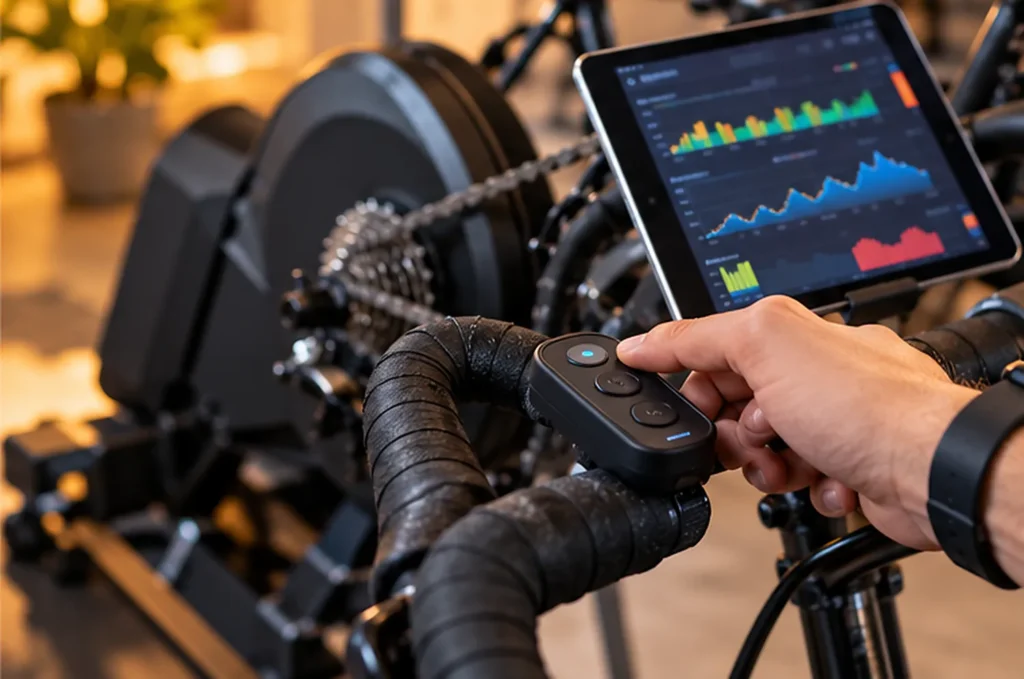
The Nēra includes Wi-Fi along with Bluetooth and ANT+ connectivity options. For riders using virtual cycling services, network stability is often as important as an impressive maximum gradient. A dropped trainer connection can interrupt an interval session or ruin the timing of a virtual sprint. Wi-Fi is another connection path that may reduce reliance on extra adapters when the home network and training platform support it.
iBikeBlog has already explored the broader evolution of virtual workouts in its indoor cycling revolution guide. The Nēra provides a fresh hardware example of how that connected experience continues to develop.
Cassette vs Zwift Cog and Click: Which Setup Works?
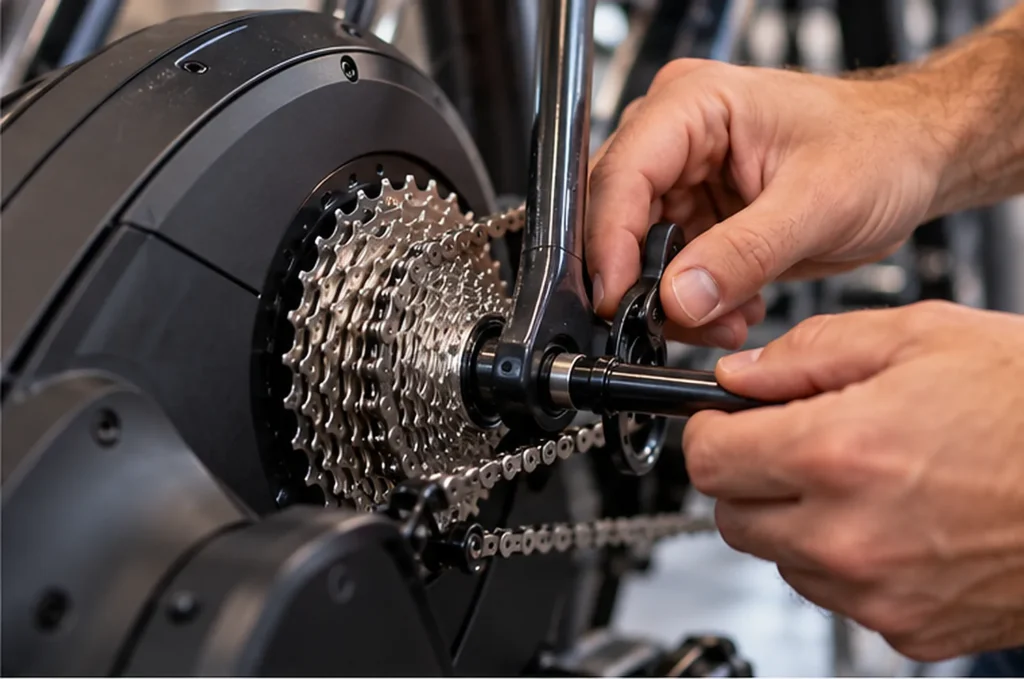
The standard Nēra comes with a preinstalled cassette, making it familiar for cyclists who prefer to use their bicycle’s mechanical gears during indoor sessions. The alternative Zwift Ready package comes with a Zwift Cog and Zwift Click. The Cog uses a single sprocket, while the Click offers compatible virtual shifting controls without physically moving the chain across a cassette.
Virtual shifting is particularly attractive for households sharing a trainer across bicycles with different gearing. It can reduce some of the swapping and adjustment involved in using a conventional cassette, but it still requires proper chain alignment and supported drivetrain configurations. Zwift’s Cog and Click explainer outlines the concept, while the company’s setup guidance shows the practical installation steps.
Virtual shifting support depends on the connected trainer, firmware and training application. Zwift’s troubleshooting guidance says some connection methods do not support virtual shifting even when the trainer itself is compatible. Garmin states that the Nēra’s Zwift Ready configuration can support virtual shifting in Zwift and ROUVY, subject to the platforms’ current requirements.
How the Nēra Fits Into Garmin’s Training Ecosystem
The Tacx Training app can configure the trainer and provide free workouts. Garmin also promotes a premium subscription option for additional virtual-course content, challenges and training experiences; the manufacturer’s announcement mentions an introductory trial for new Nēra customers. Garmin Coach plans from Garmin Connect can be integrated into compatible training workflows. Riders should check which functions are free, which require a subscription and which require connected devices.
Another option is Garmin’s Tacx Alpine gradient simulator, a separate accessory intended to add front-end elevation changes when supported. Garmin says the combination can simulate climbs up to 25% and descents as steep as minus 10%. That is an optional add-on with its own cost and space requirements, not equipment included with a standard Nēra purchase.
If structured training is the priority, review iBikeBlog’s cycling apps and training software guide before settling on an app subscription. A trainer is most valuable when the app, workout schedule and available training time all fit together.
Price, Setup Space and Practical Ownership
Garmin announced a suggested U.S. retail price of $999.99 for either Nēra configuration. Local taxes, regional availability and retailer promotions can change the final cost. Garmin’s published specifications list the unit at about 24.7 kilograms, meaning it is not something most riders will casually lift between rooms every day. Its folding legs may help with storage, but buyers should still measure the intended space and allow room for bike movement, ventilation and safe mounting.
A stable floor, suitable training mat, nearby power outlet, cooling fan and access to a screen should be part of the budget. For apartment use, investigate vibration transfer through floors as well as audible trainer noise. Even a mechanically quiet trainer will still produce drivetrain sounds and movement. Before purchase, verify rear-axle spacing, freehub or virtual-shifting configuration and bicycle clearance against Garmin’s compatibility chart.
Who Should Consider the Tacx Nēra?
Serious indoor cyclists who race virtually, complete structured power sessions or ride indoors throughout the year have the strongest reason to consider a premium direct-drive trainer. The combination of built-in movement and Wi-Fi could simplify a previously complicated setup. Occasional indoor riders may be better served by a less expensive, proven trainer if they do not need premium resistance, virtual racing features or motion.
Existing NEO owners should compare their current equipment carefully. A fully functioning high-end trainer may already provide adequate power accuracy, app connectivity and ride feel. The Nēra is not automatically a necessary upgrade. Independent assessments after extended use will be particularly informative on movement behavior, software reliability and long-term durability.
The Bottom Line on the Tacx Nēra
The October 2026 Tacx Nēra announcement reflects where indoor cycling hardware is heading: more natural movement, more dependable connection choices and easier ways to share a trainer between bicycles. Garmin has published a compelling specification sheet, but performance claims and riding comfort deserve independent verification. Check your bike, training app, floor space and budget first. If these details align, the Nēra could be a useful upgrade; if not, a simpler smart trainer may still provide everything needed for effective indoor training.