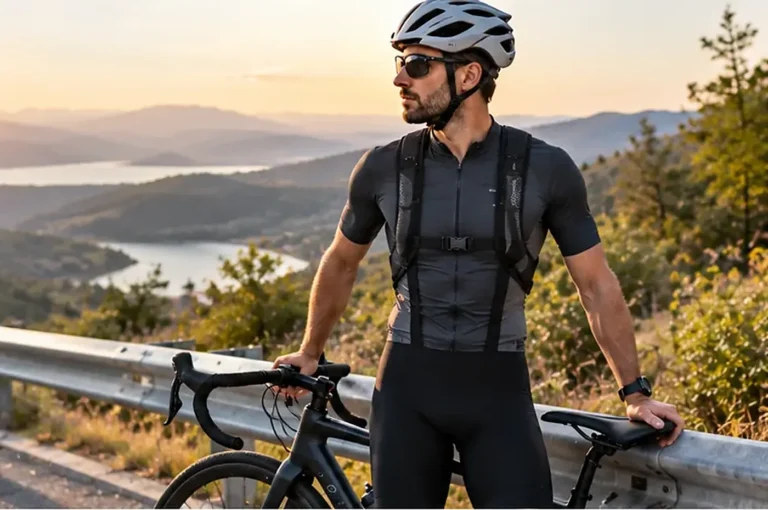
For decades, cyclists have relied primarily on helmets, gloves and sensible riding habits to reduce the consequences of a fall. In October 2026, wearable cycling airbags moved further into the public spotlight after Belgian company Aerobag earned recognition in TIME’s Best Inventions of 2026. The idea is appealing: clothing-mounted technology that senses a likely crash and rapidly inflates a protective cushion around vulnerable parts of the upper body.
That raises useful questions for everyday riders. How does a cycling airbag recognize a crash? What does it actually protect? Can someone wear one under a jersey, replace its cartridge or use it after a fall? Most importantly, how much confidence should buyers place in a young technology? Here is a practical look at the emerging category and the questions worth asking before an upgrade.
Why Cycling Airbags Are Trending in 2026
Recent attention is not simply about futuristic equipment. Brújula Bike’s October 2026 report describes Aerobag’s appearance on TIME’s innovations list, while Cyclingnews documents interest from professional teams and apparel partners. The attention comes amid a wider conversation about preventing serious injuries when riders fall at speed.
The sport’s governing body is also looking at the issue. In February 2026, the Union Cycliste Internationale announced a consultation on protective equipment, including airbag systems and technical clothing. That is a step toward discussing design and integration standards, not proof that every available product is certified for racing.
How the Aerobag System Detects a Possible Crash
Unlike an ordinary padded jersey, an electronic airbag must decide when to deploy. According to Aerobag’s product information, its system uses nine sensors sampling body movement approximately 200 times each second. Software monitors patterns that can indicate an abnormal movement or imminent crash, then activates the gas-inflation mechanism when its conditions are met.
The company states that deployment takes about 100 milliseconds. That figure describes the product’s claimed response; it does not guarantee that every real-world fall will be detected early enough or that an inflated bag will prevent injury. Different falls occur at different speeds, angles and contact points. A system that works in one scenario may face limitations in another.
Readers interested in the distinction between preventing a hazard and reacting to an accident can also explore our guide to AI bicycle safety systems. Wearable airbags have a different purpose: they attempt to reduce harm at the moment a crash unfolds, rather than warn the rider about nearby traffic.
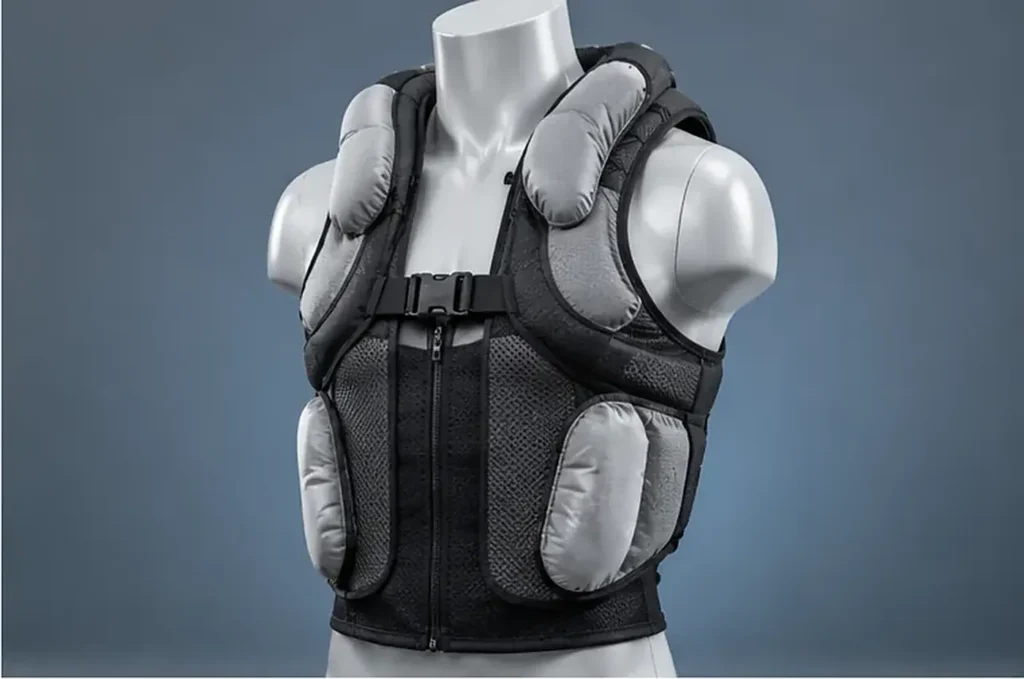
Which Parts of the Body Are Intended to Be Protected?
Aerobag describes protection around the back, neck, front of the torso and hips. The placement is significant because cyclists often wear relatively little impact protection over these areas. A helmet concentrates on the head, while other pieces of kit are generally designed for abrasion resistance, comfort or visibility.
However, intended coverage is not the same as proven reduction in specific injury outcomes. A meaningful evaluation would consider independent tests, deployment reliability, inflation pressure, impact locations, fit and performance across different crash types. Riders should seek published test methods and precise claims rather than accepting broad statements such as “crash-proof” or “complete protection.”
Where Does the Airbag Fit on Cycling Clothing?
Aerobag’s original configuration is integrated into the shoulder straps of bib shorts, keeping much of the equipment relatively discreet beneath a cycling jersey. The manufacturer also describes a commuter configuration that uses a waist belt over ordinary clothing. These different formats matter because a road racer, gravel rider and daily commuter may have very different clothing needs.
A road cyclist might prioritize a close fit that stays stable during long efforts. A commuter may prefer equipment that can be worn over several layers without changing their work clothes. Gravel and mountain bike riders need to consider compatibility with hydration packs, jackets and protective pads. Excessively tight outer layers or misplaced straps could interfere with the product’s operation, so manufacturer instructions should govern every clothing combination.
What Happens After the Airbag Deploys?
Traditional protective equipment often needs replacement after a significant impact. Reusable airbag designs may instead allow certain parts, such as a gas cartridge, to be replaced. Reporting by Belga News Agency via Qazinform says Aerobag is designed for reactivation using a replacement CO2 cartridge, subject to the system’s condition.
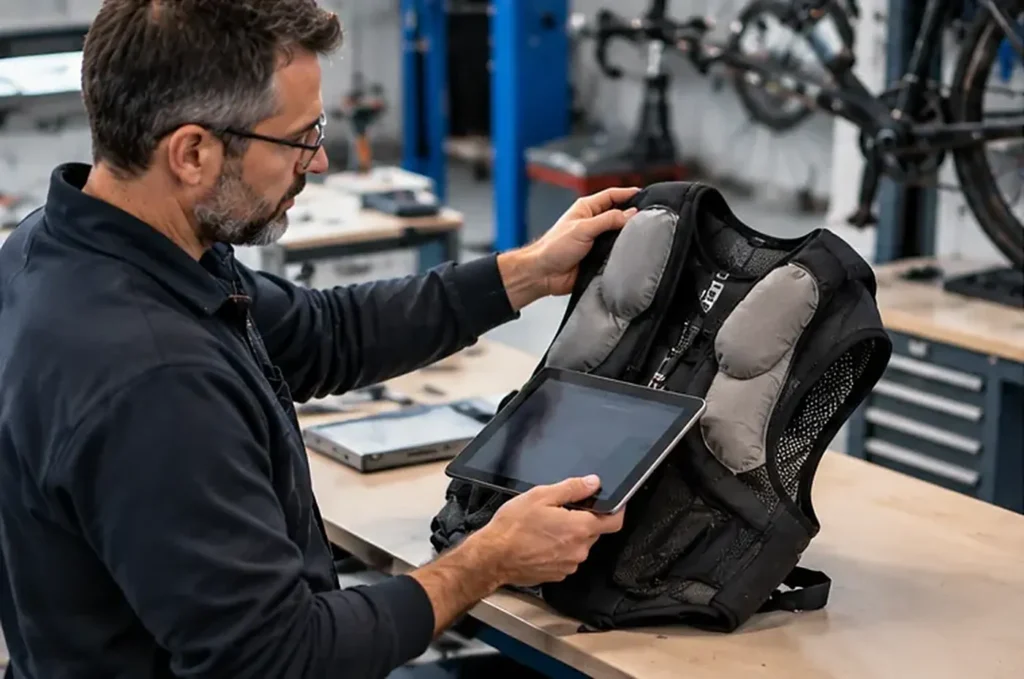
That does not mean a rider should assume the product is ready after every accident. Inspect the clothing, attachment points, sensor housing and inflatable sections; follow the official reset procedure; and contact the manufacturer or an authorized specialist when there is any sign of damage. A previously deployed unit should not be treated as serviceable merely because it looks normal from the outside.
Can a Wearable Airbag Replace a Bicycle Helmet?
No. Wearable airbag systems are an additional form of protection, not a reason to stop wearing a suitable helmet. The National Highway Traffic Safety Administration recommends a properly fitted bicycle helmet and emphasizes visibility, predictable riding and choosing safer routes. Likewise, the Centers for Disease Control and Prevention identifies helmet use and safer road environments as important aspects of bicycle safety.
No wearable device eliminates the risk created by excessive speed, vehicle traffic, unsafe intersections or poor road surfaces. Technology should supplement established precautions, not encourage riders to take risks they would otherwise avoid. A helmet, working brakes, lights, attentiveness and appropriate road choices remain important regardless of what clothing a cyclist wears.
Why Testing and Standards Matter
Electronic crash detection brings difficult engineering questions. If an algorithm is too sensitive, it may inflate during a harmless sudden movement. If it is insufficiently sensitive, a real fall might not trigger deployment. Temperature, moisture, battery condition, positioning and changes to the rider’s clothing can create additional variables.
That is why the UCI’s standards discussion deserves attention. Manufacturers, researchers and sporting authorities need ways to evaluate impact protection, false triggers, system maintenance and compatibility with racing rules. Until independent comparative evidence is available, shoppers should distinguish a manufacturer’s claims from documented third-party performance.
Questions to Ask Before Buying a Cycling Airbag
Start with how the product will fit into a normal week of riding, not just a demonstration video. A practical buying checklist should include the following:
- Coverage: Which body regions are protected, and what types of impact are excluded?
- Fit: Are sizes available for your body shape and clothing layers?
- Readiness: How does the device show battery, cartridge and operating status?
- Maintenance: What should happen after a crash, wash, firmware update or long storage period?
- Replacement parts: How much do cartridges and repairs cost, and where are they available?
- Evidence: Are independent tests, clear technical standards and limitations published?
- Compatibility: Will a backpack, jacket or protective vest interfere with deployment?
These questions also apply to other connected safety accessories. Our article on AI bicycle emergency response discusses systems that send alerts after a possible crash. An emergency-notification device and an impact airbag perform different functions; one does not automatically replace the other.
Who Might Benefit Most From This Technology?
For competitive riders, the appeal is additional protection without bulky, permanently inflated padding. For recreational road cyclists, comfort and compatibility with regular riding clothes could be more important than grams or aerodynamics. Commuters may value a device that fits alongside a jacket and everyday bag, provided it works as instructed in that configuration.
What Should Riders Watch for Next?
The most useful developments will be easier-to-verify protection data, straightforward maintenance instructions, accessible replacement cartridges and clear compatibility requirements. Prices and distribution may also change as the category grows. Aerobag’s own site describes an initial limited series, so availability should be checked directly instead of assumed.
Final Thoughts
Wearable cycling airbags are one of 2026’s most interesting developments because they address a familiar problem in a new way: protecting parts of the body that ordinary road-cycling clothing leaves exposed. Aerobag’s recognition and the UCI’s ongoing work suggest that the category is gaining attention, but buyers should keep expectations realistic.
Think of an airbag as a potentially useful additional layer, not a guarantee. Compare documented capabilities, confirm maintenance requirements and continue using a properly fitted helmet and dependable cycling habits. The best safety upgrade is one you understand, can operate correctly and can use consistently.