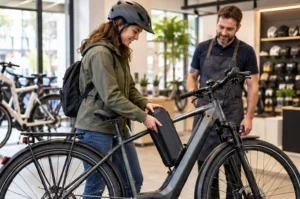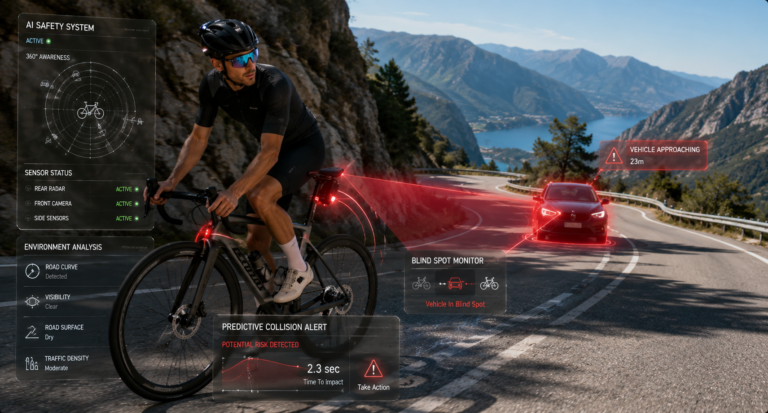
Cycling safety technology is entering a new era as artificial intelligence, cameras, radar sensors, and connected systems move from vehicles into bicycles. In 2026, AI bicycle safety systems 2026 are helping create smarter bikes that can detect potential hazards, analyze surrounding conditions, and provide riders with real-time safety information.
Traditional bicycle safety equipment has focused mainly on visibility, protective gear, and rider awareness. New AI-powered systems aim to go further by predicting risks before they become dangerous situations.
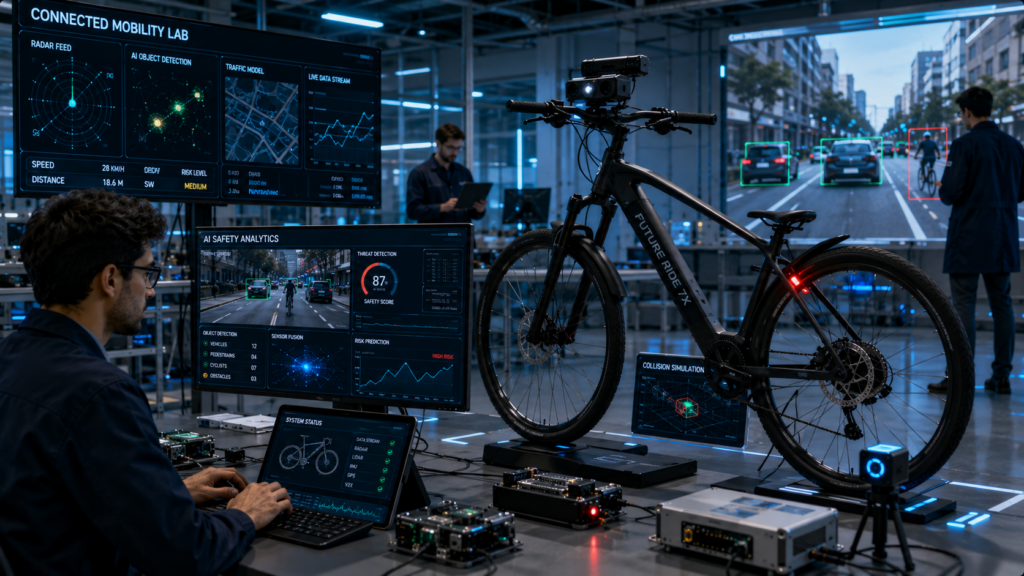
Recent cycling technology developments are exploring AI-enabled safety systems that combine cameras, radar, sensors, and onboard processing to detect obstacles and provide rider warnings.
The Evolution of Bicycle Safety Technology
For many years, bicycle safety improvements focused on traditional solutions such as helmets, lights, reflectors, mirrors, and protective equipment. While these remain important, connected technology is introducing new ways to improve rider awareness.
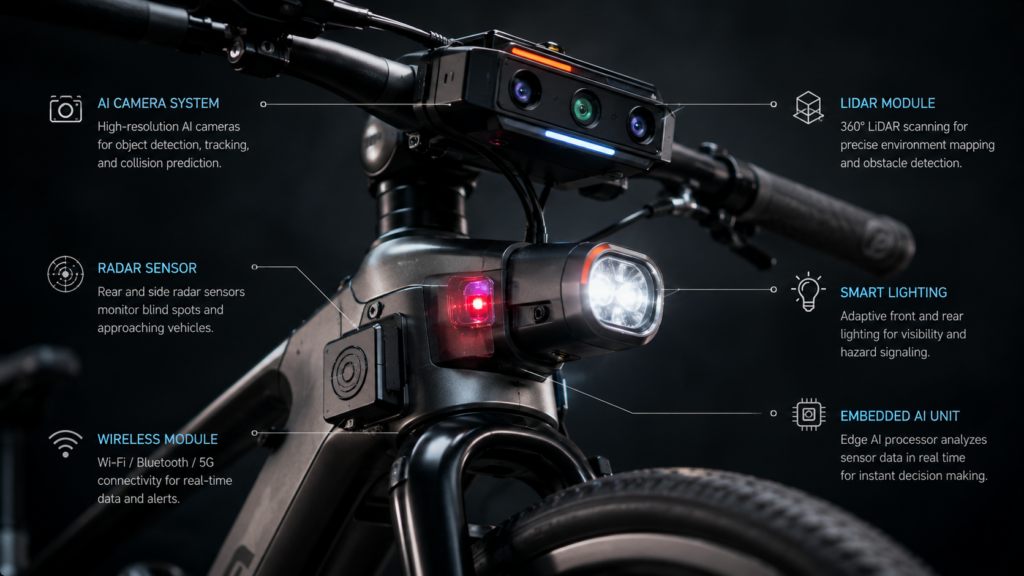
AI bicycle safety systems combine multiple technologies, including:
- Artificial intelligence
- Radar detection
- Computer vision cameras
- Motion sensors
- Connected displays
- Smart communication systems
Together, these systems allow bicycles to understand their surroundings and provide useful information to riders.
This connects with our article about Autonomous Cycling Technology 2026.
How AI Predictive Collision Detection Works
Traditional safety systems often react after a dangerous situation develops. AI-powered bicycle systems attempt to identify warning signs earlier.
Predictive collision detection uses sensors and artificial intelligence to analyze:
- Vehicle movement
- Distance between objects
- Rider speed
- Road conditions
- Traffic patterns
The AI system can estimate potential risks and alert the rider before a collision becomes unavoidable.
Some experimental systems are exploring camera and radar combinations that create a 360-degree view around the bicycle, allowing the bike to identify vehicles, obstacles, and changing road conditions.
Smart Radar Systems for Cyclists
Radar technology has become one of the most important developments in modern bicycle safety. Unlike traditional mirrors, radar systems continuously monitor approaching objects without requiring riders to turn around.
Smart bicycle radar systems may detect:
- Approaching vehicles
- Passing traffic
- Closing distances
- Potential blind spot risks
This information can be displayed through a cycling computer, smartphone, smart glasses, or audio alerts.
Modern radar systems are increasingly being used to improve cyclist awareness, particularly for riders traveling on roads with faster vehicle traffic.
This connects with our article about Connected Cycling Analytics & Predictive Safety Systems in 2026.
AI Cameras and Computer Vision Safety
AI cameras are another major component of future bicycle safety systems. Unlike traditional action cameras that only record video, intelligent cameras can analyze what they see.
AI bicycle cameras may identify:
- Vehicles approaching from behind
- Pedestrians entering a path
- Road obstacles
- Potholes
- Unsafe riding conditions
Computer vision allows bicycles to process environmental information and provide immediate feedback.
New AI-powered cycling cameras are being developed to detect hazards such as close vehicle passes, blind spots, and obstacles while providing real-time warnings to riders.
Smart Alerts and Rider Communication
Collecting information is only useful if riders can understand it quickly. AI safety systems must deliver alerts without distracting cyclists.
Future smart bicycles may use:
- Handlebar notifications
- Audio warnings
- Haptic vibrations
- Smart glasses displays
- LED indicators
This allows riders to receive important information while keeping their attention focused on the road.
This connects with our article about AI Cycling Companions 2026.
AI Safety Systems and Smart Infrastructure
The future of cycling safety may involve communication between bicycles, vehicles, and city infrastructure.
Connected safety networks could include:
- Smart traffic signals
- Connected intersections
- Vehicle-to-bike communication
- Digital hazard mapping
These systems could help create safer environments by allowing different transportation systems to share information.
This connects with our article about Smart Cycling Infrastructure 2026.
AI Safety Assistance for Electric Bikes
Electric bicycles may benefit significantly from AI safety systems because they often travel at higher speeds and contain advanced electronic components.
Smart e-bikes may integrate:
- Automatic hazard alerts
- Adaptive lighting
- Connected displays
- Emergency notifications
- Advanced rider assistance
Automotive-style safety features are increasingly being adapted for bicycles, including camera systems, radar assistance, and smart displays.
This connects with our article about Smart E-Bike Energy Ecosystems 2026.
Benefits for Different Cyclists
Road Cyclists
Road riders can benefit from improved awareness when sharing lanes with faster vehicles.
Urban Commuters
City cyclists may use AI alerts to better understand traffic movement and intersection risks.
Adventure Cyclists
Long-distance riders can benefit from environmental awareness and route safety information.
The Future of AI Bicycle Safety Systems
AI bicycle safety technology is moving toward a future where bicycles become active safety partners rather than passive machines.
Future developments may include:
- Fully integrated AI safety platforms
- Vehicle communication systems
- Advanced collision prediction
- Automatic emergency assistance
- Personalized safety recommendations
As artificial intelligence improves, bicycles may become better equipped to understand risks and help riders make safer decisions.
Conclusion
AI bicycle safety systems in 2026 represent a major shift in cycling technology. Through predictive collision detection, smart sensors, and connected alerts, future bicycles may provide riders with better awareness and improved protection.
While technology cannot replace responsible riding and safe infrastructure, intelligent bicycle systems may become an important tool for creating safer cycling experiences.