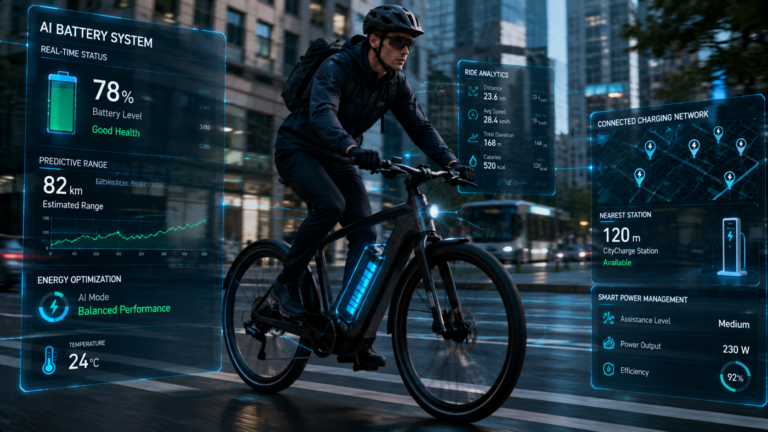
Electric bicycles are becoming more intelligent as battery technology evolves beyond simple energy storage. In 2026, smart e-bike energy ecosystems 2026 are transforming how electric bicycles manage power through artificial intelligence, predictive analytics, connected charging systems, and advanced battery management.
Instead of focusing only on larger batteries, future e-bikes are expected to become more efficient by understanding rider behavior, terrain conditions, energy usage, and charging patterns.
The Evolution of E-Bike Energy Management
Battery technology has always been one of the most important parts of electric bicycle development. Early e-bikes focused primarily on increasing battery capacity to extend riding distance.
Modern energy systems are shifting toward intelligent management, where software and sensors help maximize efficiency.
Smart e-bike energy ecosystems may include:
- AI battery management systems
- Predictive range calculations
- Connected charging networks
- Energy consumption analysis
- Adaptive motor control
These technologies allow electric bicycles to make smarter decisions about how energy is used.
This connects with our article about Smart Bicycle Operating Systems 2026.
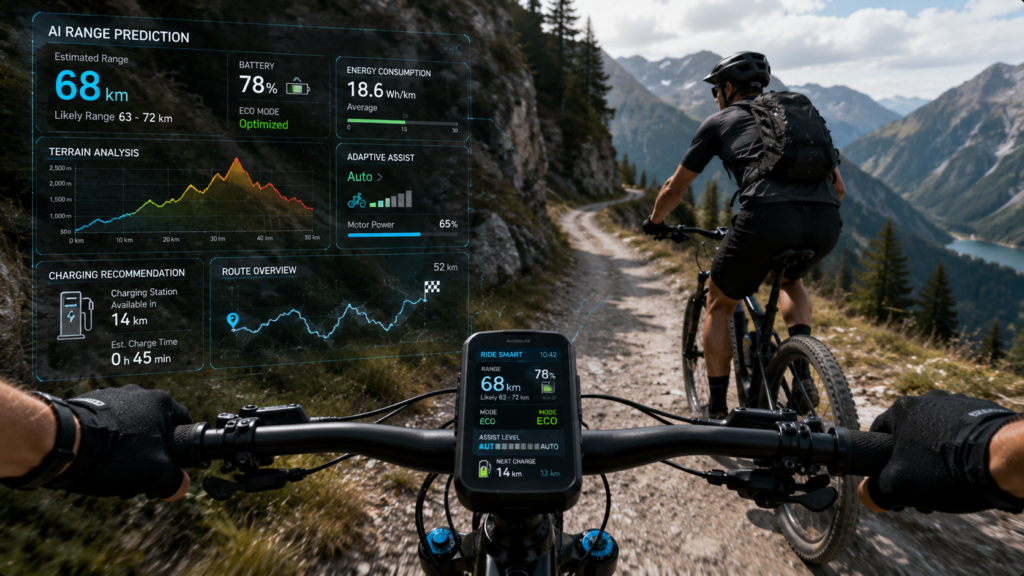
AI Battery Management Systems
Traditional battery systems provide basic information such as remaining charge percentage and estimated range. AI-powered systems go further by analyzing real-world usage patterns.
An intelligent battery system may monitor:
- Charging cycles
- Battery temperature
- Power demand
- Riding style
- Terrain conditions
Artificial intelligence can use this information to optimize battery performance and improve long-term battery health.
Predictive Range Technology
One of the biggest challenges for e-bike riders is accurately estimating remaining range. Traditional range calculations often rely mainly on battery percentage.
AI-powered range prediction can consider multiple factors, including:
- Elevation changes
- Rider weight
- Motor assistance level
- Weather conditions
- Previous riding patterns
This creates more accurate estimates that help riders plan longer journeys with greater confidence.
This technology connects with our article about AI Cycling Route Optimization 2026.
Adaptive Motor Assistance and Energy Efficiency
Future e-bikes may use AI to automatically adjust motor assistance based on riding conditions.
Instead of manually selecting assistance levels, smart systems may adapt according to:
- Climbing difficulty
- Rider effort
- Battery condition
- Desired range
For example, an AI system could reduce assistance on flat roads and increase support during steep climbs to improve overall efficiency.
Connected Charging Networks
As electric bicycle adoption grows, charging infrastructure is becoming increasingly important. Future e-bike ecosystems may connect bicycles with smart charging networks.
Connected charging systems may provide:
- Charging station availability
- Energy usage tracking
- Charging schedule optimization
- Battery health monitoring
This could make charging more convenient for commuters, travelers, and long-distance riders.
This connects with our article about Wireless Charging for E-Bikes 2026.
Battery Health Monitoring and Predictive Maintenance
Battery lifespan is one of the most important concerns for e-bike owners. Smart energy systems may help extend battery life by identifying potential issues before they become serious.
AI monitoring may analyze:
- Battery degradation patterns
- Cell performance differences
- Charging behavior
- Temperature changes
This approach allows riders to better maintain their electric bicycles.
This connects with our article about AI-Powered Bicycle Maintenance 2026.
Integration With Smart Cycling Technology
Future e-bike energy systems will likely communicate with other connected cycling technologies.
Possible integrations include:
- Smart cycling computers
- AI navigation systems
- Digital bicycle twins
- Smart security systems
- Mobile applications
A connected bicycle could combine energy data, route information, and rider preferences to create a more personalized riding experience.
This connects with our article about Smart Bicycle Digital Twins 2026.
Energy Management for Different Riders
Urban Commuters
City riders may benefit from optimized battery usage, charging recommendations, and reliable range estimates.
Adventure Cyclists
Long-distance riders can use predictive energy systems to plan routes and manage battery consumption in remote areas.
Performance Riders
Sport-focused e-bike users may benefit from intelligent assistance modes that balance power and efficiency.
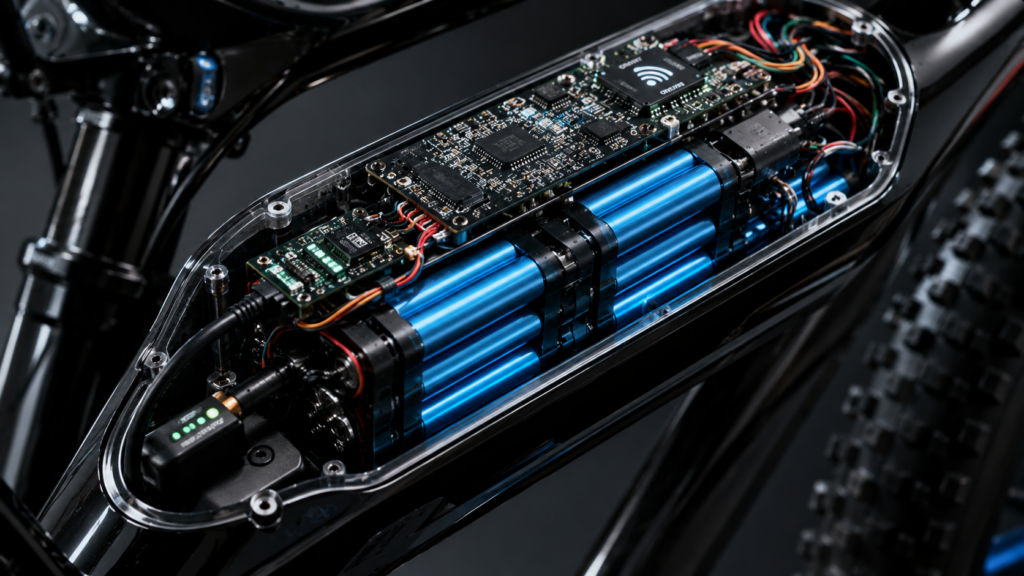
The Future of AI-Powered E-Bike Energy Systems
The future of electric bicycles will likely depend less on simply increasing battery size and more on improving intelligence.
Future developments may include:
- AI-powered energy prediction
- Self-optimizing battery systems
- Connected charging infrastructure
- Advanced thermal management
- Vehicle-to-grid charging possibilities
The e-bike of the future may actively manage energy throughout every ride, helping riders travel farther with improved efficiency.
Sustainability and Smart Energy Use
Intelligent energy systems may also support more sustainable transportation by improving battery efficiency and reducing unnecessary energy consumption.
Better energy management can help extend battery lifespan, reduce waste, and make electric bicycles more practical for everyday transportation.
This connects with our article about Sustainable Cycling Tech 2026.
Conclusion
Smart e-bike energy ecosystems in 2026 represent the next stage of electric bicycle development. Through AI batteries, predictive range technology, and connected power management, future e-bikes may become more efficient, reliable, and personalized.
As electric cycling continues growing, intelligent energy systems will play a major role in creating smarter and more sustainable mobility solutions.