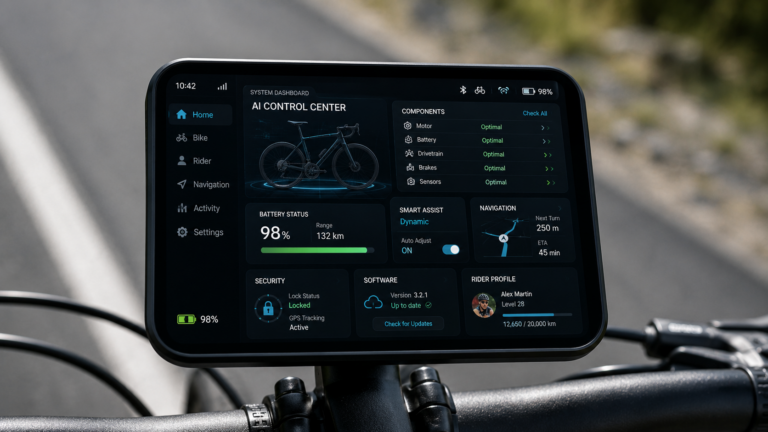
Bicycles are becoming more than mechanical machines. In 2026, the rise of smart bicycle operating systems 2026 is changing how riders interact with their bikes by connecting hardware, software, sensors, and artificial intelligence into one intelligent platform.
The future bicycle may operate more like a connected device, where motors, batteries, navigation systems, security features, and performance sensors communicate through a centralized software ecosystem. Smart and AI-enabled bicycles are becoming a major focus in the cycling industry as manufacturers explore more connected riding experiences.
The Rise of the Software-Defined Bicycle
Traditional bicycles rely mainly on mechanical components. While modern bikes have introduced electronic shifting, smart motors, and connected accessories, each system often operates separately.
A smart bicycle operating system changes this approach by creating a central platform that manages different technologies together.
A future smart bike operating system may control:
- Motor assistance
- Battery management
- Navigation
- Component diagnostics
- Security systems
- Rider profiles
This creates a more integrated riding experience where different bicycle technologies communicate with each other.
This concept connects with our article about Connected Cycling Analytics 2026.
How Smart Bicycle Operating Systems Work
A bicycle operating system combines hardware sensors with software intelligence. Sensors collect information from different parts of the bicycle while artificial intelligence analyzes the data.
The system may monitor:
- Rider performance
- Battery condition
- Motor output
- Component health
- Route conditions
- Environmental data
The operating system then uses this information to adjust settings, provide recommendations, and improve the overall riding experience.
AI-Controlled Riding Modes
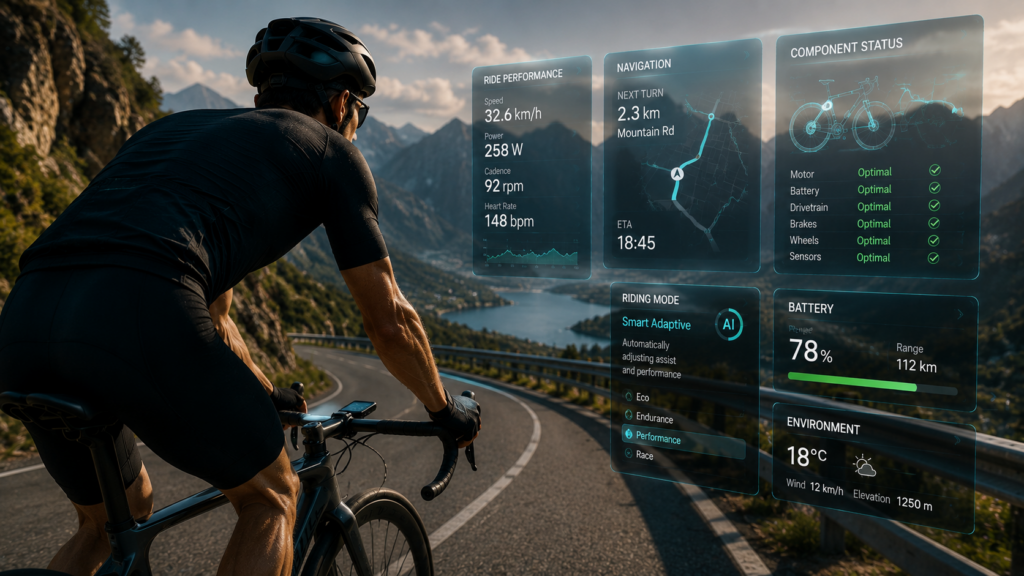
One of the biggest advantages of software-defined bicycles is intelligent riding customization.
Instead of manually adjusting settings, AI systems may automatically adapt based on:
- Terrain changes
- Rider fatigue
- Battery range
- Weather conditions
- Training goals
For example, an electric bike system could adjust assistance levels based on climbing difficulty or remaining battery capacity.
This technology builds on concepts discussed in our article about AI Cycling Assistants 2026.
Connected Components Through One Platform
Future bicycles may rely on a unified software platform where every connected component communicates together.
This may include:
- Smart drivetrains
- Electronic suspension
- Power meters
- Smart frames
- Battery systems
- Wearable devices
Instead of managing multiple apps and devices, riders may access everything through one bicycle operating system.
This approach follows the same direction as modern smart e-bike ecosystems, where motors, displays, batteries, and smartphone applications work together.
Smart Navigation and Digital Ride Services
Navigation is becoming a major feature of connected bicycle systems. A smart bicycle operating system can combine GPS information with rider preferences, traffic data, weather conditions, and battery status.
Possible navigation features include:
- Automatic route suggestions
- Battery-aware routing
- Terrain analysis
- Weather adjustments
- Safety alerts
This connects with our article about AI Cycling Route Optimization 2026.
Software Updates and Bicycle Improvements
One major difference between traditional bicycles and software-defined bicycles is the ability to improve through updates.
Future smart bicycles may receive software improvements that add:
- New riding modes
- Improved battery management
- Better navigation features
- Enhanced security functions
- Updated performance analytics
This means a bicycle could continue evolving after purchase through software improvements rather than only physical upgrades.
Smart Security and Protection Features
A bicycle operating system can also manage security features through connected technology.
Potential security functions include:
- GPS tracking
- Motion detection
- Remote locking
- Theft alerts
- Owner authentication
This connects with our article about Smart Bicycle Security Systems 2026.
Digital Bike Profiles and Personalization
Future bicycles may create personalized rider profiles that remember individual preferences.
A smart bike could store:
- Preferred assistance levels
- Training settings
- Navigation preferences
- Maintenance history
- Riding patterns
This creates a more customized experience for different riders using the same bicycle.

The Role of AI in Future Bicycle Systems
Artificial intelligence will likely become one of the most important parts of future bicycle operating systems.
AI can help analyze:
- Performance trends
- Mechanical conditions
- Energy usage
- Rider behavior
The combination of AI and connected bicycle hardware is helping create smarter cycling platforms that provide more assistance and information during rides.
The Future of Smart Bicycle Operating Systems
As bicycles become more connected, software may become just as important as mechanical engineering. Future bikes may include operating systems that manage performance, safety, comfort, and personalization from one intelligent platform.
Possible future developments include:
- AI-powered automatic adjustments
- Cloud-connected bicycle profiles
- Advanced predictive diagnostics
- Smart city integration
- Vehicle communication systems
Concept bikes and prototypes are already exploring deeper integration between sensors, AI, and rider safety systems.
Conclusion
Smart bicycle operating systems in 2026 represent a major shift toward software-defined cycling. By connecting components, sensors, and artificial intelligence, future bicycles may become more responsive, personalized, and intelligent.
As cycling technology continues advancing, software will play a growing role in shaping how riders experience performance, safety, and everyday mobility.