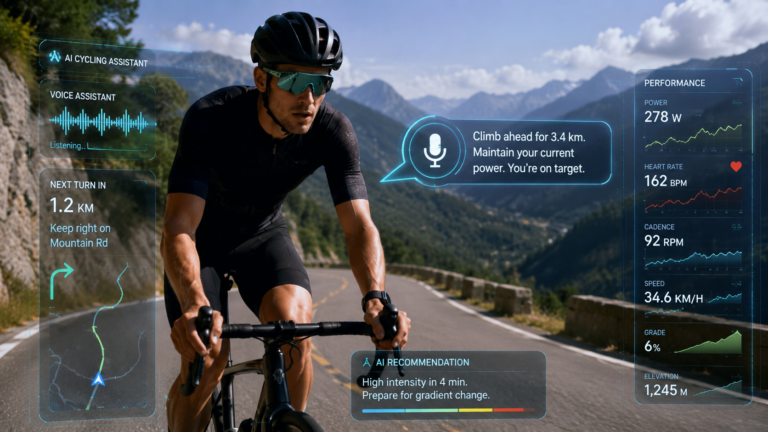
Cycling technology is entering a new phase where artificial intelligence is becoming an active riding companion. In 2026, AI cycling assistants 2026 are transforming how cyclists train, navigate, and interact with their bikes by combining voice control, performance analytics, navigation intelligence, and connected device integration.
Instead of simply recording data after a ride, AI assistants provide real-time guidance that helps cyclists understand their performance and make decisions while riding.
AI coaching platforms are increasingly using rider data such as power output, recovery metrics, heart rate, and training history to adjust recommendations dynamically.
The Rise of AI as a Cycling Companion
Traditional cycling computers have focused on displaying information such as speed, distance, cadence, and power. AI cycling assistants expand this role by interpreting data and providing useful feedback.
A connected AI assistant can analyze:
- Current riding effort
- Training progress
- Route conditions
- Fatigue levels
- Weather information
- Performance trends
This creates a more interactive riding experience where the cyclist receives guidance instead of only viewing statistics.
This technology connects with our previous article about Connected Cycling Analytics 2026.
Virtual AI Coaches for Personalized Training
One of the biggest applications of AI cycling assistants is virtual coaching. These systems analyze past rides and current performance data to create more personalized training suggestions.
AI coaching features may include:
- Workout recommendations
- Training intensity adjustments
- Performance analysis
- Recovery-based suggestions
- Goal tracking
Unlike fixed training plans, AI systems can adapt based on changing conditions, including fatigue, missed sessions, or unexpected schedule changes.
This builds on the concepts covered in our article about AI-Powered Cycling Training 2026.
Voice Control for Hands-Free Cycling
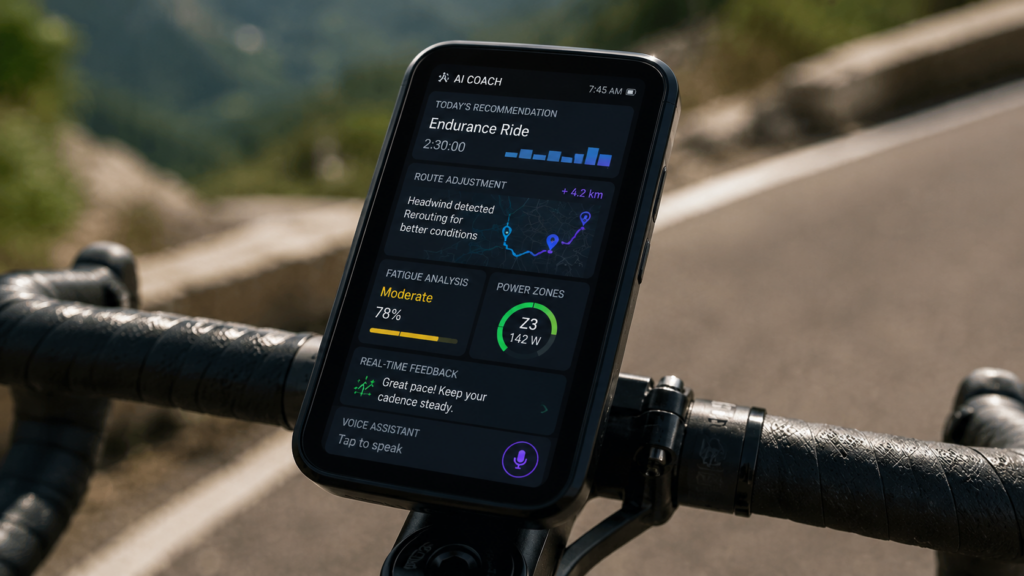
Voice interaction is becoming an important feature in future cycling technology. Riders often need to keep their hands on the handlebars and their attention focused on the road.
Voice-controlled AI assistants allow cyclists to:
- Request route updates
- Check performance information
- Adjust navigation settings
- Receive training feedback
- Control connected devices
This creates a safer and more convenient way to interact with cycling technology.
AI Navigation and Real-Time Route Guidance
AI cycling assistants are also improving navigation by combining route data with real-time conditions.
Instead of following a fixed GPS route, AI systems may analyze:
- Elevation changes
- Traffic conditions
- Weather updates
- Road surfaces
- Rider ability
The assistant can provide route suggestions based on the cyclist’s current goals, such as improving fitness, reducing difficulty, or reaching a destination efficiently.
This complements our article about AI Cycling Route Optimization 2026.
Integration With Smart Cycling Devices
AI assistants become more powerful when connected with other smart cycling technologies.
Future AI systems may communicate with:
- Smart cycling glasses
- Wearable sensors
- Power meters
- Smart helmets
- Electronic drivetrains
- Smart bike frames
For example, an AI assistant could analyze power output from a smart power meter and recommend pacing adjustments during a climb.
Explore related technology in our article about Smart Cycling Power Meters 2026.
AI Safety Assistance While Riding
Future AI cycling assistants may also improve rider awareness by connecting with safety systems.
Potential safety features include:
- Hazard notifications
- Vehicle awareness alerts
- Weather warnings
- Route risk analysis
AI-powered cycling safety systems are also being explored through connected cameras, sensors, and smart bike technologies.
Benefits for Different Cyclists
Competitive Riders
Athletes can use AI assistants to analyze training data, optimize workouts, and monitor performance changes.
Adventure Cyclists
Long-distance riders can benefit from navigation support, route planning, and environmental awareness.
Everyday Riders
Commuters can use AI guidance for easier navigation, safety information, and ride organization.
The Future of AI Cycling Assistants
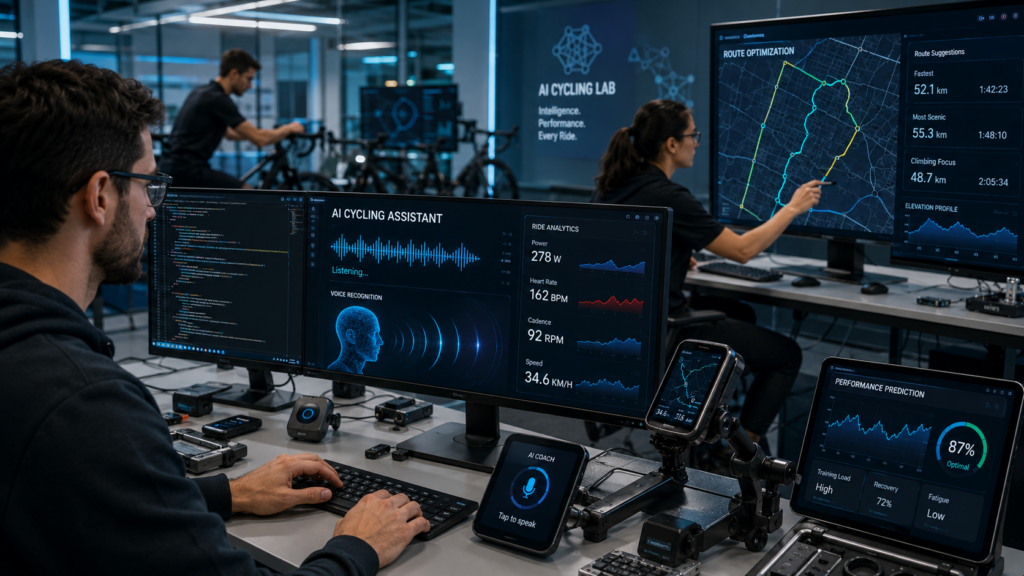
AI cycling assistants are expected to become more integrated into everyday riding experiences. As connected devices improve, these systems may provide more natural communication and personalized support.
Future developments may include:
- Advanced voice conversations
- Predictive training adjustments
- AI-generated routes
- Smart bike integration
- Real-time riding strategies
The bicycle of the future may include an intelligent digital companion that understands both the rider and the environment.
Conclusion
AI cycling assistants in 2026 represent a major shift in connected cycling technology. By combining artificial intelligence, voice interaction, navigation, and performance analysis, these systems provide riders with smarter support during every journey.
As cycling technology continues evolving, AI assistants may become an important part of how cyclists train, explore, and enjoy their rides.