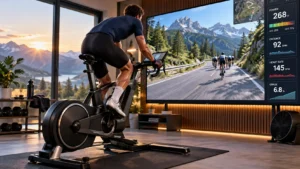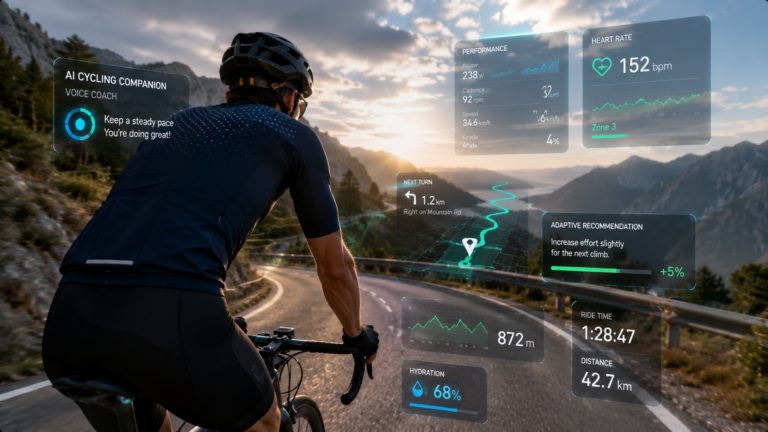
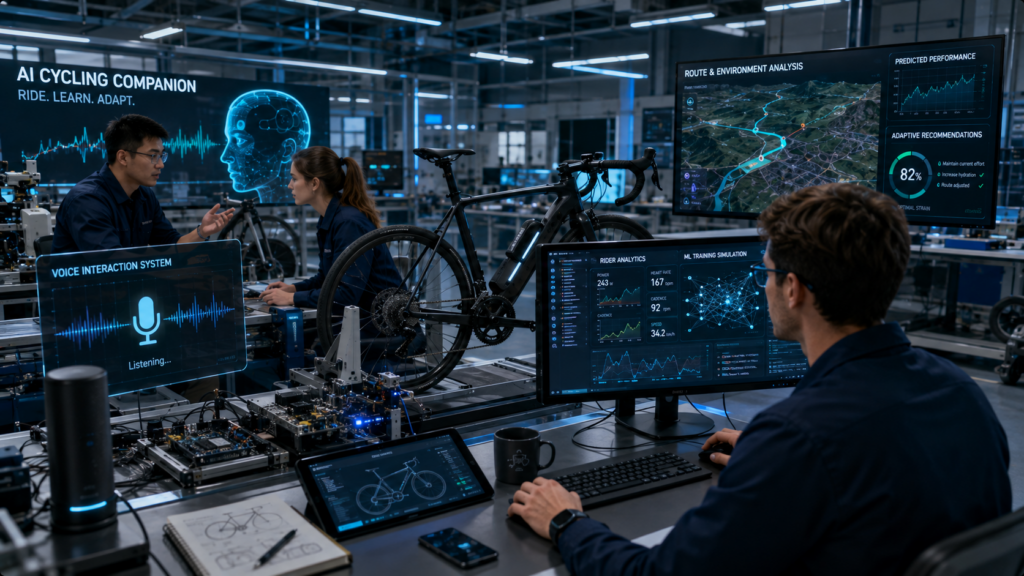
Cycling technology is moving beyond simple data collection. In 2026, AI cycling companions 2026 are emerging as digital riding partners that analyze performance, provide voice coaching, adapt recommendations, and help cyclists make smarter decisions during every ride.
Instead of only showing numbers such as speed, distance, and power, future AI systems are designed to understand the rider, interpret data, and provide meaningful guidance in real time.
AI-enabled bicycles are increasingly combining sensors, software, and rider information to create more personalized cycling experiences. Industry discussions around smart bikes highlight the growing role of AI in motors, safety systems, performance tracking, and connected services.
The Rise of AI as a Cycling Partner
Traditional cycling computers were designed mainly to display information. Riders had to interpret the data themselves and decide how to adjust their effort, route, or training plan.
AI cycling companions introduce a different approach. These systems analyze information and provide recommendations based on the rider’s current condition and goals.
An AI cycling companion may evaluate:
- Power output
- Heart rate trends
- Training history
- Fatigue levels
- Route conditions
- Weather information
This creates a more interactive relationship between the cyclist and technology.
This connects with our article about AI Cycling Assistants 2026.
Voice Coaching During Real-Time Riding
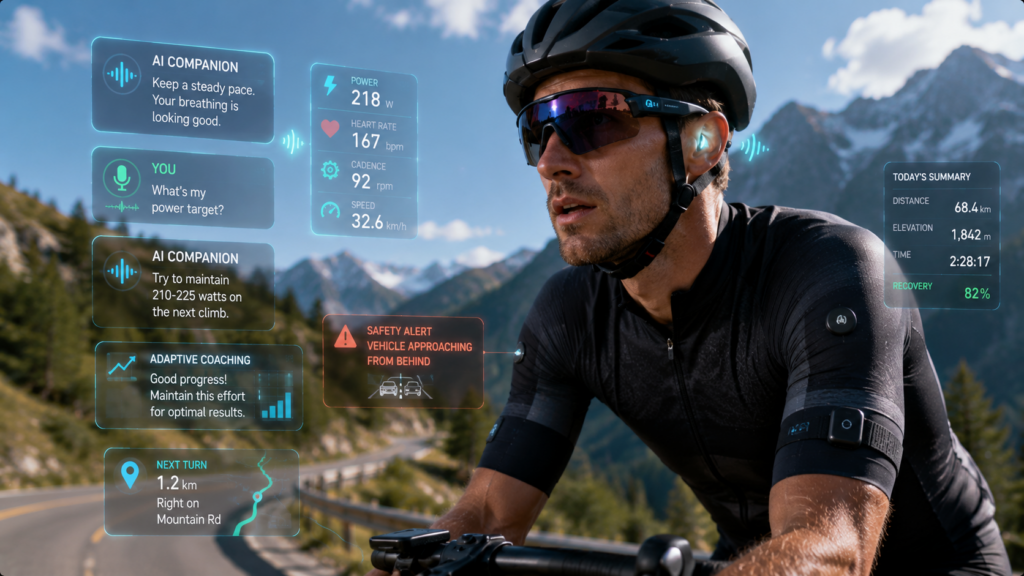
One of the most important features of future AI cycling companions is natural voice interaction. Cyclists often cannot safely look at screens while riding, especially during high-speed training or challenging terrain.
Voice-based AI coaching may provide:
- Pacing recommendations
- Navigation instructions
- Training feedback
- Safety notifications
- Performance updates
Instead of stopping to check data, riders can receive information while keeping their attention focused on the road.
Adaptive Training Recommendations
AI cycling companions can transform training by creating adaptive plans based on real-time performance.
Traditional training plans often follow fixed schedules, but AI systems can adjust recommendations based on changing conditions.
For example, an AI companion may recognize:
- Higher than expected fatigue
- Improved fitness levels
- Changing weather conditions
- Unexpected route difficulty
The system can then suggest adjustments to intensity, pacing, or recovery.
This connects with our article about AI-Powered Cycling Training 2026.
Personalized Performance Analysis
Every cyclist has different goals, abilities, and riding styles. AI companions can create personalized recommendations by learning from previous rides.
A digital cycling partner may analyze:
- Climbing performance
- Power efficiency
- Recovery patterns
- Training consistency
- Riding preferences
Over time, the AI system can better understand how the rider responds to different training situations.
Integration With Smart Bicycle Ecosystems
AI cycling companions become more powerful when connected with other smart bicycle technologies.
Future integrations may include:
- Smart bicycle operating systems
- Power meters
- Smart clothing
- AI cameras
- Digital bicycle twins
- Smart cycling glasses
This connected ecosystem allows different devices to share information and create a more complete picture of the rider.
This connects with our article about Smart Bicycle Operating Systems 2026.
AI Companions for Safety Assistance
AI cycling companions are not limited to performance improvement. They may also help riders become more aware of potential hazards.
Safety-related features may include:
- Vehicle proximity warnings
- Obstacle alerts
- Route risk notifications
- Weather warnings
- Emergency assistance
Modern smart cycling systems are already exploring combinations of cameras, radar, sensors, and AI processing to improve rider awareness.
This connects with our article about Connected Cycling Analytics & Predictive Safety Systems in 2026.
AI Companions and E-Bike Intelligence
Electric bicycles may benefit significantly from AI companions because they already include motors, batteries, and electronic controls.
An AI companion could help manage:
- Motor assistance levels
- Battery efficiency
- Range predictions
- Energy consumption
Future e-bikes may use AI systems that automatically adjust assistance based on terrain, rider effort, and travel goals.
This connects with our article about Smart E-Bike Energy Ecosystems 2026.
Benefits for Different Cyclists
Professional Riders
Competitive cyclists can use AI companions to analyze performance, optimize training, and improve race preparation.
Adventure Cyclists
Long-distance riders can benefit from navigation support, pacing guidance, and route assistance.
Everyday Riders
Casual cyclists can use AI companions for safer navigation, fitness tracking, and personalized recommendations.
The Future of AI Cycling Companions
AI cycling companions represent a shift from passive technology toward active assistance. Future systems may become more conversational, predictive, and personalized.
Possible developments include:
- Natural voice conversations
- AI-generated training plans
- Real-time performance strategies
- Advanced safety prediction
- Connected smart city integration
As bicycles become more intelligent, AI companions may become an important part of the modern riding experience.
Conclusion
AI cycling companions in 2026 represent the next stage of connected cycling technology. By combining artificial intelligence, voice interaction, sensors, and rider data, these systems can provide cyclists with smarter guidance and personalized support.
The future cyclist may not ride alone but with an intelligent digital partner that helps improve performance, safety, and enjoyment on every journey.