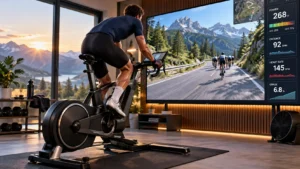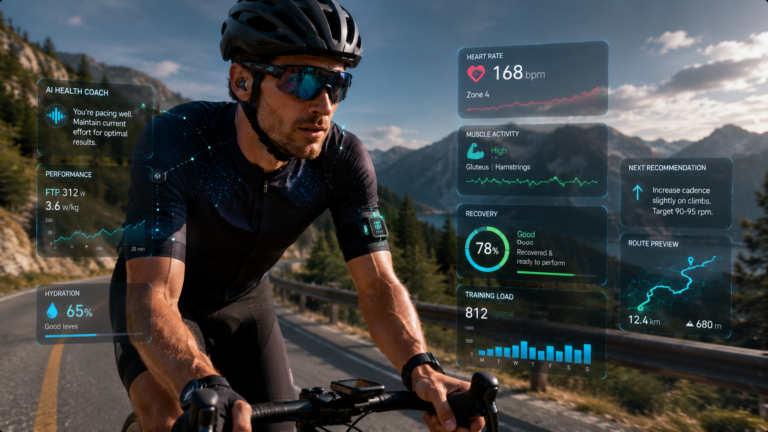
Cycling technology is becoming increasingly connected as wearable devices move beyond individual tracking tools. In 2026, connected cycling wearable ecosystems 2026 are bringing smart clothing, biometric sensors, cycling computers, smart glasses, and health platforms together into unified systems designed to understand the rider.
Instead of collecting separate pieces of information, future wearable ecosystems may combine health, performance, recovery, and environmental data to create a complete picture of each cyclist’s condition.
The growth of connected devices is creating new opportunities for personalized sports technology, where wearable sensors and digital platforms work together to provide deeper performance insights.
The Evolution of Cycling Wearable Technology
Cyclists have used wearable technology for years, including heart rate monitors, cycling computers, and fitness watches. However, many devices traditionally operated separately.
The next generation of cycling wearables focuses on integration, allowing multiple devices to communicate through a shared digital ecosystem.
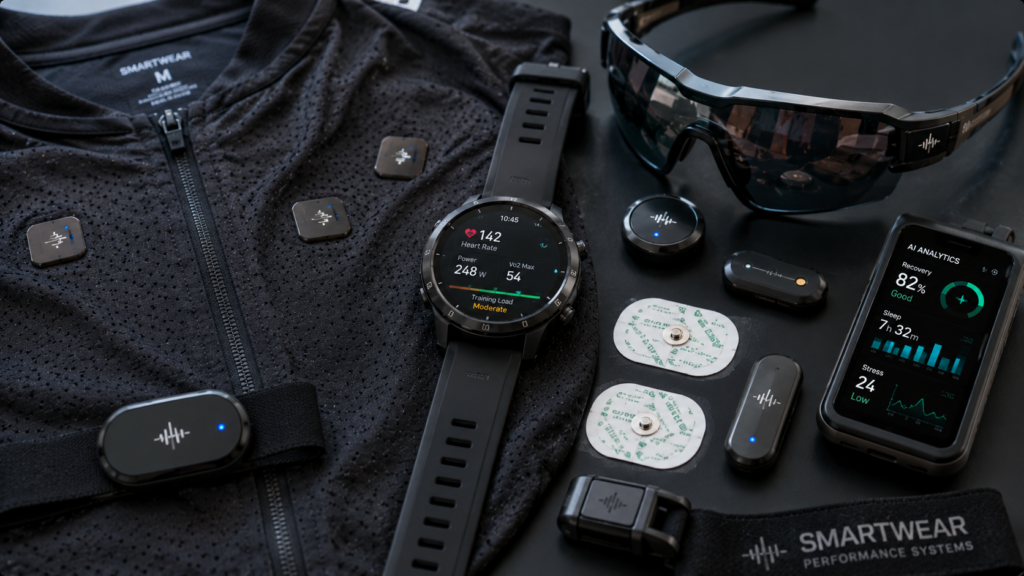
A connected cycling wearable ecosystem may include:
- Smart cycling jerseys
- Biometric sensors
- Smart watches
- Smart cycling glasses
- AI training platforms
- Connected bike computers
Together, these technologies create a more complete understanding of the rider.
This connects with our article about Smart Cycling Clothing 2026.
How Connected Wearable Ecosystems Work
Connected wearable systems rely on communication between different devices. Sensors collect information from the cyclist while software platforms analyze the data.
A unified wearable ecosystem may monitor:
- Heart rate
- Body temperature
- Muscle activity
- Hydration status
- Training load
- Recovery indicators
Artificial intelligence can then analyze this information to identify patterns and provide recommendations.
Smart Clothing as a Data Collection Platform
Smart cycling clothing is becoming one of the most important parts of connected wearable ecosystems. Unlike traditional clothing, smart garments can include integrated sensors that collect information during movement.
Smart cycling apparel may monitor:
- Muscle activity
- Body temperature
- Movement patterns
- Posture changes
- Physical stress
This allows cyclists to receive information without wearing multiple separate devices.
This connects with our article about AI-Powered Custom Bike Fitting 2026.
Biometric Monitoring and Rider Health Data
One of the biggest advantages of connected cycling wearables is improved health monitoring.
Future systems may combine multiple biometric measurements to understand how the body responds during training.
Potential data points include:
- Heart rate variability
- Recovery status
- Sleep information
- Energy levels
- Stress indicators
This information can help riders better understand when to push harder and when additional recovery may be needed.
This connects with our article about AI Cycling Recovery Systems 2026.
AI-Powered Personalized Performance Insights
Artificial intelligence makes wearable ecosystems more valuable by converting raw information into useful recommendations.
AI platforms may analyze:
- Training history
- Current fitness level
- Riding intensity
- Recovery patterns
- Environmental conditions
The result is a more personalized approach to cycling performance.
Smart Glasses and Visual Data Integration
Smart cycling glasses represent another important part of connected wearable ecosystems. Instead of checking a handlebar computer, riders may receive information directly through a visual display.
Future smart glasses may display:
- Navigation instructions
- Performance metrics
- Safety warnings
- Training goals
- Environmental information
This creates a more natural interaction between cyclists and technology.
This connects with our article about Smart Cycling Glasses 2026.
Unified Rider Platforms
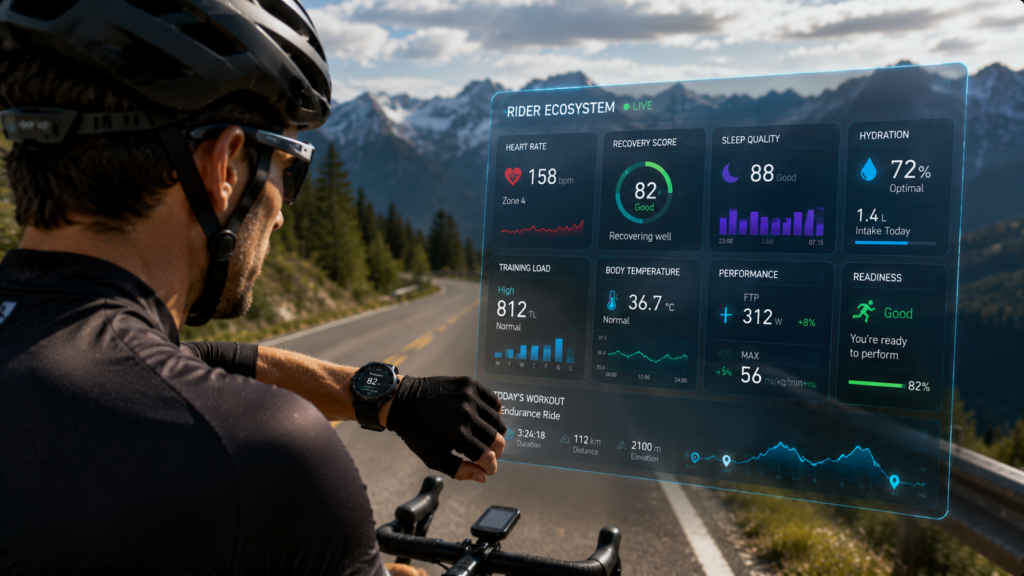
The biggest development in wearable technology is the movement toward unified platforms where all devices communicate together.
A future rider platform may combine:
- Wearable health data
- Bicycle performance information
- Training history
- Nutrition data
- Recovery information
This creates a complete digital profile of the cyclist.
This connects with our article about AI Cycling Nutrition Systems 2026.
Benefits for Different Cyclists
Professional Cyclists
Elite riders can use connected wearables to optimize training, recovery, and competition preparation.
Endurance Riders
Long-distance cyclists may benefit from monitoring hydration, energy, and fatigue during extended efforts.
Recreational Cyclists
Everyday riders can use wearable systems to improve fitness awareness and create healthier riding habits.
The Future of Connected Cycling Wearables
Connected wearable ecosystems are expected to become more intelligent as sensors become smaller and more powerful.
Future developments may include:
- AI health assistants
- Advanced smart fabrics
- Real-time biometric analysis
- Automatic training adjustments
- Complete rider digital profiles
The future cyclist may use a connected ecosystem where clothing, devices, and bicycles work together as one intelligent platform.
Conclusion
Connected cycling wearable ecosystems in 2026 represent the next step in personalized cycling technology. By combining smart clothing, biometric sensors, artificial intelligence, and connected platforms, cyclists can gain deeper insights into their performance and health.
As wearable technology continues evolving, the bicycle experience will become increasingly connected, personalized, and intelligent.