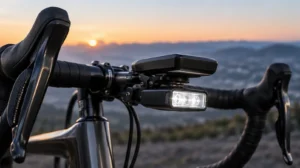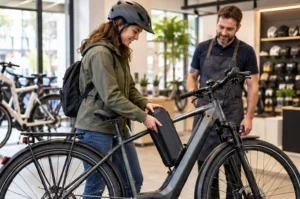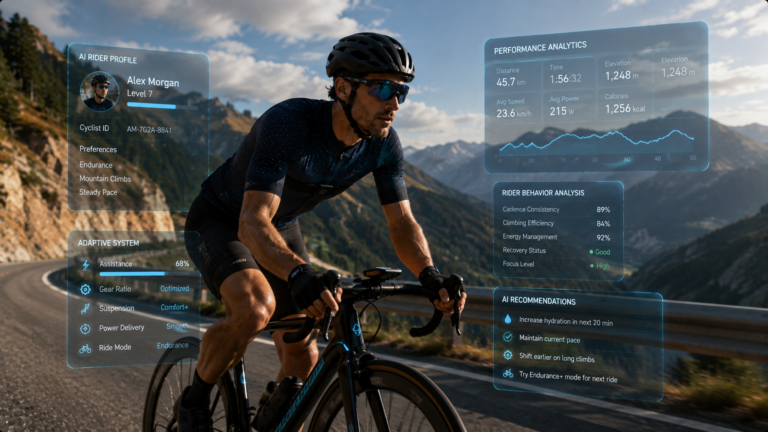
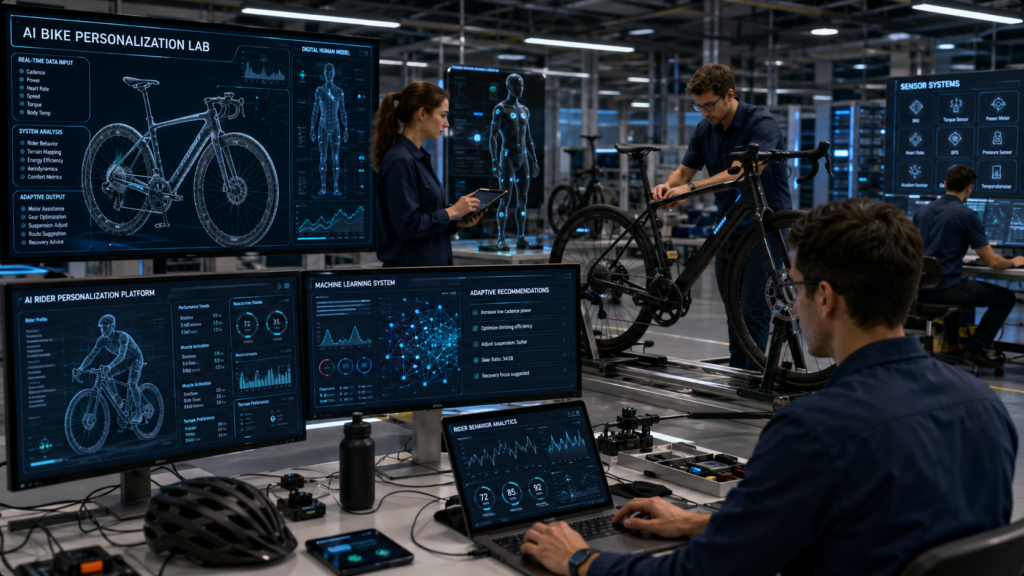
The future bicycle may become more intelligent than ever before. In 2026, AI bicycle personalization 2026 is transforming smart cycling by allowing bikes to learn from rider behavior, understand preferences, and automatically adjust settings for a more personalized experience.
Instead of requiring cyclists to manually configure every feature, future intelligent bicycles may analyze riding habits, terrain choices, performance patterns, and comfort preferences to create a customized ride experience.
Artificial intelligence is becoming a major focus in cycling technology, with connected bikes using sensors, software, and data analysis to provide adaptive training, safety features, and personalized assistance.
The Rise of Self-Learning Smart Bicycles
Traditional bicycles require riders to manually adjust components and settings based on experience. Gear selection, suspension adjustments, riding position, and assistance levels are usually controlled by the cyclist.
AI-powered bicycles introduce a new approach by learning how each person rides.
A personalized smart bicycle may analyze:
- Riding style
- Preferred speeds
- Terrain choices
- Power output patterns
- Comfort preferences
- Training goals
Over time, the bicycle can build a digital understanding of the rider and provide recommendations based on previous experiences.
This connects with our article about Smart Bicycle Operating Systems 2026.
How AI Learns Rider Behavior
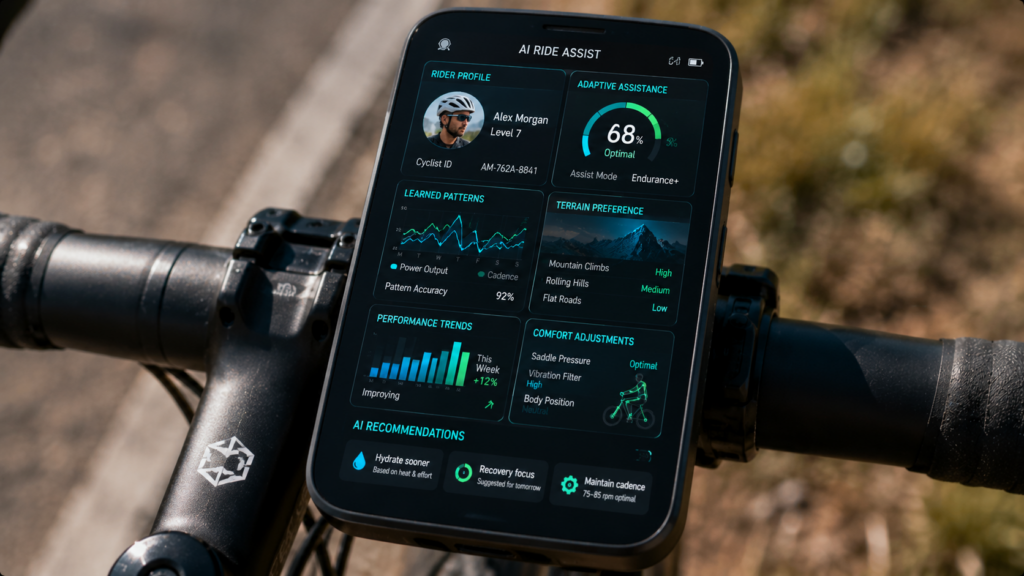
AI personalization depends on collecting and analyzing data from multiple bicycle systems. Sensors throughout the bicycle and connected devices provide information about how the rider interacts with the machine.
AI systems may evaluate:
- Pedaling patterns
- Acceleration habits
- Braking behavior
- Climbing performance
- Energy usage
- Route preferences
Machine learning algorithms can identify patterns and create recommendations that improve future rides.
Adaptive Riding Modes Based on Personal Preferences
Future smart bicycles may move beyond fixed riding modes. Instead of simple settings such as Eco, Sport, or Turbo, AI systems could create personalized modes for individual riders.
Examples may include:
- Long-distance endurance mode
- Mountain climbing assistance
- Urban commuting mode
- Recovery-focused riding mode
- Performance training mode
The bicycle could automatically adjust assistance levels based on the rider’s current goals.
For example, a cyclist preparing for a long event may receive efficiency-focused settings, while another rider may receive comfort-oriented adjustments.
Personalized E-Bike Assistance
Electric bicycles are especially suited for AI personalization because they already contain motors, batteries, and electronic control systems.
AI-powered e-bikes may adjust:
- Motor assistance levels
- Battery consumption
- Power delivery
- Range calculations
- Acceleration response
Connected e-bike systems are increasingly exploring adaptive assistance that responds to rider movement, terrain conditions, and energy requirements.
This connects with our article about Smart E-Bike Energy Ecosystems 2026.
AI Personalization and Smart Bicycle Comfort
Performance is not the only area where AI personalization can improve cycling. Comfort is becoming an important part of smart bicycle development.
AI systems may analyze:
- Saddle pressure
- Body position
- Rider fatigue
- Suspension response
- Vibration levels
The bicycle could recommend adjustments that make longer rides more comfortable.
This connects with our article about AI-Powered Custom Bike Fitting 2026.
Personalized Navigation and Route Recommendations
AI personalization can also influence how cyclists choose routes. Instead of recommending routes only by distance, future systems may consider the rider’s experience and preferences.
A smart bicycle could learn whether a cyclist prefers:
- Quiet roads
- Steep climbs
- Scenic routes
- Fast commuting paths
- Technical trails
This creates navigation systems designed around the individual rider rather than the average user.
This connects with our article about AI Cycling Route Optimization 2026.
AI Profiles and Connected Cycling Ecosystems
Future bicycles may store rider profiles that connect across multiple devices and platforms.
A digital rider profile could include:
- Fitness information
- Bike settings
- Training history
- Maintenance records
- Preferred riding styles
This creates a seamless experience where the bicycle understands the cyclist regardless of the ride type.
This connects with our article about Connected Cycling Wearable Ecosystems 2026.
Benefits for Different Cyclists
Professional Riders
Competitive cyclists can use AI personalization to optimize performance, improve efficiency, and fine-tune equipment settings.
Adventure Cyclists
Long-distance riders may benefit from personalized navigation, energy management, and comfort adjustments.
Daily Commuters
Urban riders can receive customized assistance based on traffic conditions, routes, and daily riding patterns.
The Future of AI Personalized Bikes
AI bicycle personalization represents a shift from bicycles that simply respond to commands toward bicycles that understand the rider.
Future developments may include:
- Automatic performance optimization
- AI-generated bike configurations
- Cloud-based rider profiles
- Real-time adaptive adjustments
- Fully connected bicycle ecosystems
The bicycle of the future may become a personalized mobility platform that continuously learns and improves.
Conclusion
AI bicycle personalization in 2026 represents the next evolution of smart cycling technology. By combining artificial intelligence, sensors, and connected systems, future bicycles may provide riders with experiences tailored specifically to their habits, goals, and preferences.
As smart bicycles continue developing, the relationship between rider and machine may become more interactive, adaptive, and personalized than ever before.