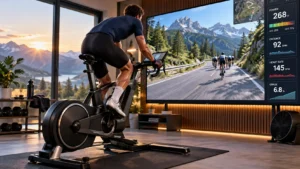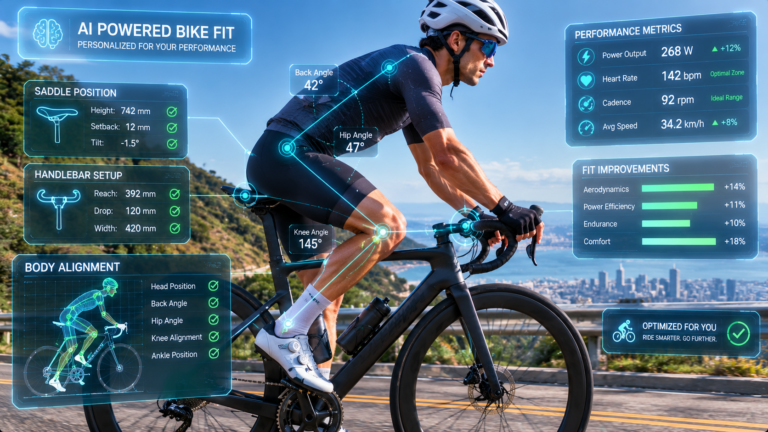
Bike fitting is becoming more advanced as artificial intelligence, motion tracking, and digital modeling transform how cyclists optimize their riding position. In 2026, AI-powered custom bike fitting 2026 combines 3D scanning, biomechanics analysis, smart sensors, and performance data to create more personalized bicycle setups.
Instead of relying only on manual measurements, future bike fitting systems may analyze rider movement in real time and provide data-driven adjustments for comfort, efficiency, and performance.
The Evolution of Bike Fitting Technology
Traditional bike fitting relies on measurements such as height, leg length, flexibility, and riding goals. Professional fitters use this information to adjust components including saddle height, handlebar position, and cleat alignment.
AI-powered fitting introduces a new level of analysis by combining multiple technologies into one connected system.
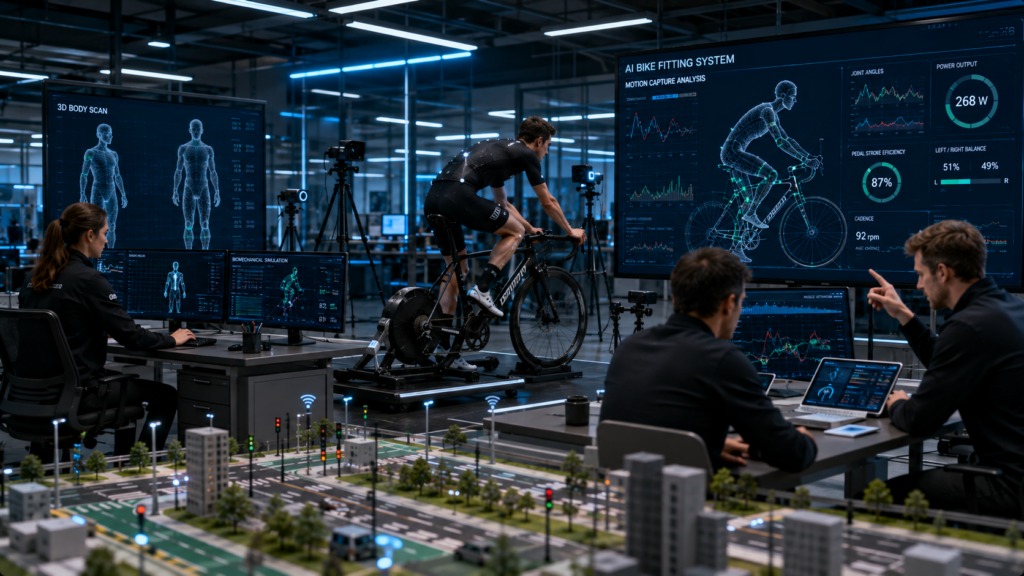
Modern bike fitting systems may use:
- 3D body scanning
- Motion capture cameras
- Pressure mapping
- Smart sensors
- Artificial intelligence analysis
These technologies create a detailed digital profile of how a rider interacts with their bicycle.
This connects with our article about Smart Bicycle Digital Twins 2026, where digital models are used to analyze real-world performance.
How AI Bike Fitting Systems Work
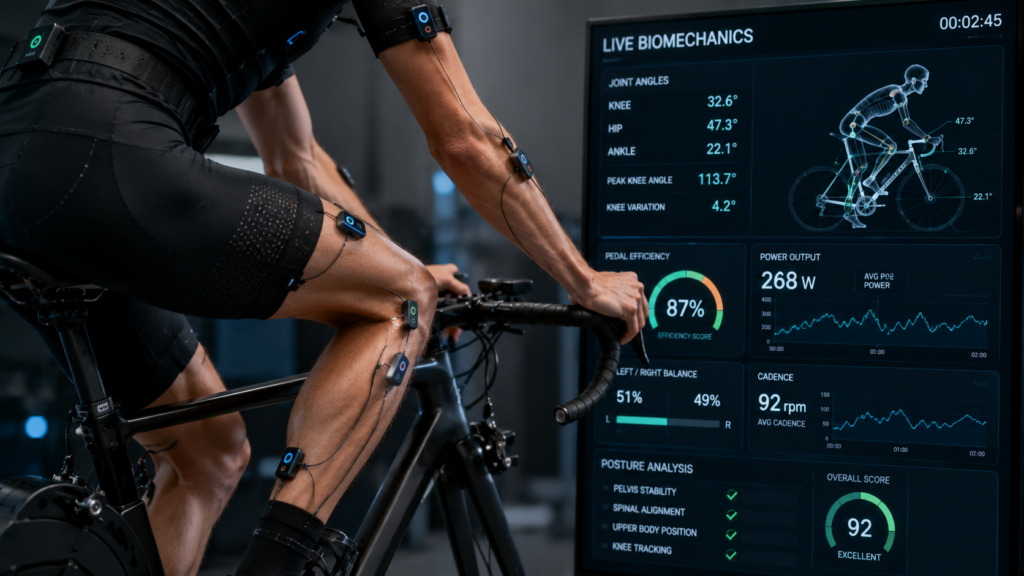
AI bike fitting systems collect movement data while cyclists ride on smart trainers or testing platforms.
Sensors and cameras can analyze:
- Pedaling movement
- Body position
- Joint angles
- Weight distribution
- Muscle movement
- Riding efficiency
Artificial intelligence then processes this information to identify patterns and recommend adjustments.
Instead of analyzing a single measurement, AI systems can evaluate the complete interaction between rider and bicycle.
3D Scanning for Personalized Bicycle Setup
One of the biggest developments in modern bike fitting is the use of 3D scanning technology.
A 3D scan can create a digital representation of a rider’s body, allowing fitting systems to analyze proportions and movement characteristics.
Potential applications include:
- Frame size recommendations
- Saddle positioning
- Handlebar adjustments
- Reach optimization
- Cleat positioning
This creates a more personalized approach compared with standard sizing methods.
Biomechanics Analysis and Riding Efficiency
Biomechanics is a major part of advanced bike fitting. It focuses on how the human body moves during cycling and how that movement affects performance.
AI systems may analyze:
- Pedal stroke patterns
- Hip movement
- Knee alignment
- Upper body stability
- Power transfer
These insights can help cyclists better understand their riding mechanics and equipment setup.
This connects with our article about AI-Powered Cycling Training 2026.
AI Bike Fitting and Performance Data Integration
The future of bike fitting will likely combine body analysis with existing cycling data.
AI fitting systems may connect with:
- Power meters
- Heart rate sensors
- Smart cycling clothing
- Smart trainers
- Digital bike platforms
By combining position data with performance metrics, AI can provide a more complete understanding of how adjustments affect riding.
This connects with our article about Smart Cycling Power Meters 2026.
Personalized Bike Adjustments Through AI
Future AI bike fitting platforms may provide recommendations based on individual riding styles and goals.
A system could analyze whether a cyclist focuses on:
- Long-distance endurance
- Competitive racing
- Gravel riding
- Daily commuting
- Mountain cycling
The recommended setup may differ depending on how the bicycle is used.
Benefits for Different Cyclists
Professional Cyclists
Competitive riders can use AI fitting technology to analyze small adjustments that may affect aerodynamics, efficiency, and comfort.
Endurance Riders
Long-distance cyclists may benefit from personalized setups designed around comfort and sustainable riding positions.
Recreational Cyclists
Casual riders can use AI fitting systems to better understand bicycle sizing and improve overall riding comfort.
AI Bike Fitting and Smart Bicycle Technology
As bicycles become more connected, AI fitting may become part of a larger smart cycling ecosystem.
Future systems could communicate with:
- Smart bicycle operating systems
- Digital twin platforms
- AI cycling assistants
- Connected training applications
This could allow bicycle settings to adapt based on rider data and changing goals.
This connects with our article about Smart Bicycle Operating Systems 2026.
The Future of AI-Powered Bike Fitting
AI bike fitting technology is expected to become more accessible as sensors, cameras, and software continue improving.
Future developments may include:
- Real-time position adjustments
- AI-generated frame recommendations
- Virtual bike fitting sessions
- Automatic component suggestions
- Connected rider profiles
Some professional cycling technologies are already exploring AI-designed and customized equipment using advanced modeling methods. ([techradar.com](https://www.techradar.com/pro/tadej-pogacar-is-riding-for-tour-de-france-glory-on-an-individually-specced-3d-printed-saddle-and-an-ai-designed-helmet-for-good-measure?utm_source=chatgpt.com))
Conclusion
AI-powered custom bike fitting in 2026 represents a major advancement in personalized cycling technology. By combining 3D scanning, biomechanics, and artificial intelligence, future fitting systems may create more precise bicycle setups based on each rider’s unique movement patterns.
As cycling technology continues evolving, personalized bike fitting may become an essential part of building a smarter and more connected riding experience.