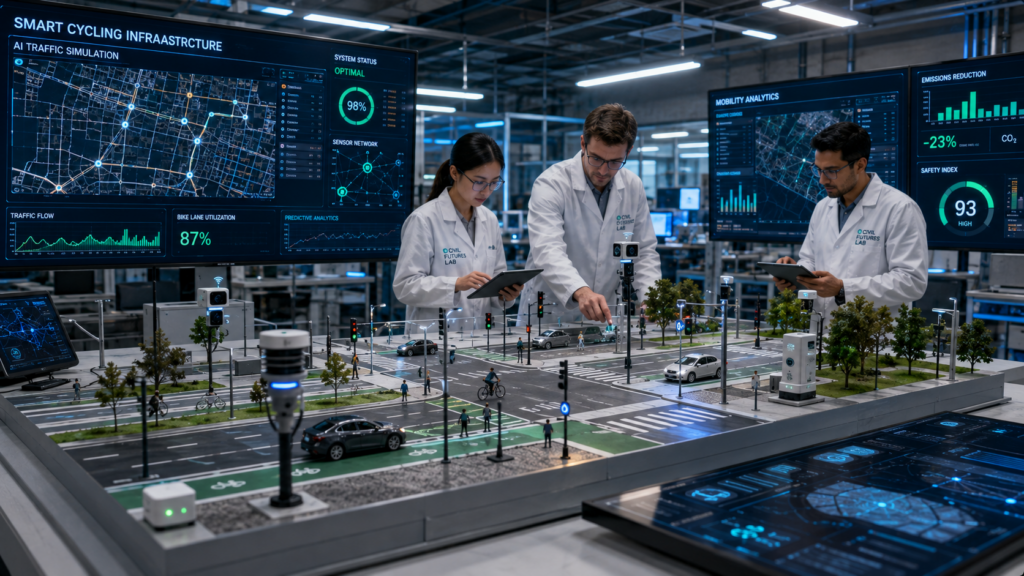
Cycling technology is expanding beyond the bicycle itself. In 2026, smart cycling infrastructure 2026 is transforming roads, bike lanes, and urban mobility systems through artificial intelligence, connected sensors, digital mapping, and intelligent traffic networks.
The future cycling experience may depend not only on smarter bikes but also on smarter environments that communicate with riders and improve how people move through cities.
Smart mobility research increasingly highlights the role of connected infrastructure, real-time data, and IoT systems in creating safer and more efficient cycling networks.
The Evolution of Smart Cycling Infrastructure
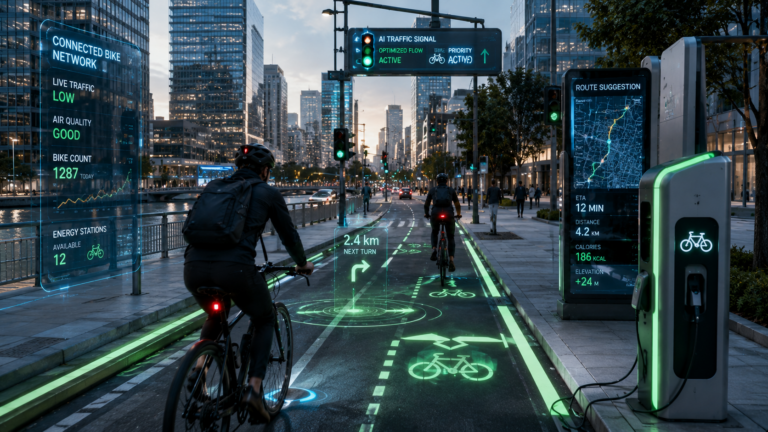
Traditional cycling infrastructure focuses mainly on physical design, including bike lanes, signs, intersections, and protected routes. Smart cycling infrastructure adds a digital layer that allows roads and bicycles to exchange information.
Connected cycling systems may include:
- AI-powered traffic signals
- Road condition sensors
- Smart lighting systems
- Digital navigation networks
- Connected safety alerts
- Electric bike charging stations
These technologies create a more responsive cycling environment where infrastructure can adapt based on real-time conditions.
This connects with our article about Autonomous Cycling Technology 2026, where bicycles use AI systems to better understand their surroundings.
AI-Powered Bike Lanes and Traffic Management
Artificial intelligence is becoming an important tool for managing urban cycling networks. Instead of treating bike lanes as static infrastructure, cities can use digital systems to monitor usage and improve planning.
AI-powered bike lane systems may analyze:
- Cyclist traffic patterns
- Peak riding periods
- Dangerous intersections
- Road conditions
- Near-miss locations
This information can help cities improve cycling routes and identify areas where additional safety improvements may be needed.
AI-based systems are being explored to analyze cycling paths, identify infrastructure problems, and support smarter urban planning decisions.

Connected Roads and Bicycle Communication Systems
Future cycling networks may allow bicycles, vehicles, and infrastructure systems to communicate with each other.
Connected road technology may include:
- Vehicle-to-bike communication
- Smart intersection alerts
- Digital traffic coordination
- Real-time hazard notifications
For example, a connected bicycle could share location information with nearby systems to improve awareness between cyclists and other road users.
This development connects with our article about AI-Powered Cycling Cameras 2026.
New bicycle concepts are already exploring vehicle-to-everything communication systems that allow bikes and vehicles to exchange safety information.
Smart Navigation Through Digital Cycling Networks
Navigation is becoming more intelligent as cycling infrastructure becomes connected. Future systems may combine route data, traffic information, weather conditions, and rider preferences.
Smart cycling networks may provide:
- Real-time route updates
- Traffic-aware navigation
- Road condition alerts
- Charging location information
- Safer route recommendations
This creates a more dynamic experience compared with traditional GPS navigation.
This connects with our article about AI Cycling Route Optimization 2026.
Smart Signals and Adaptive Intersections
Intersections remain one of the most challenging areas for cyclists. Smart traffic systems may help improve these locations through connected signals and real-time detection.
Future smart intersections may include:
- Cyclist detection cameras
- Adaptive traffic signals
- Priority crossing systems
- Connected warning displays
These systems may help create smoother interactions between bicycles, pedestrians, and vehicles.
Electric Bike Infrastructure and Charging Networks
The growth of electric bicycles is increasing demand for connected charging infrastructure. Smart cycling networks may include charging solutions integrated into urban mobility systems.
Future charging networks may provide:
- Wireless charging locations
- Battery monitoring
- Energy management
- Charging availability updates
This connects with our article about Wireless Charging for E-Bikes 2026.
Data Collection and Smart City Planning
One of the biggest advantages of connected cycling infrastructure is improved data collection.
Cities can use cycling data to understand:
- Popular routes
- Traffic patterns
- Infrastructure conditions
- Safety concerns
This information may support better decisions when designing future cycling networks.
Smart cycling roadmaps emphasize the importance of connected devices, real-time traffic information, and infrastructure data for improving cycling systems.
The Role of AI in Safer Cycling Environments
AI can help transform cycling infrastructure from passive structures into active systems that monitor and respond to changing conditions.
Possible future applications include:
- Predictive hazard detection
- Automatic infrastructure maintenance alerts
- AI traffic optimization
- Connected emergency systems
This approach supports a more connected relationship between riders, bicycles, and urban environments.
The Future of Smart Cycling Networks
Smart cycling infrastructure in 2026 represents a major shift toward connected transportation. Future cycling systems may combine AI, sensors, digital mapping, and communication technologies to create more intelligent mobility networks.
Future developments may include:
- AI-managed cycling corridors
- Connected vehicle communication
- Smart city bike networks
- Digital cycling ecosystems
- Automated safety assistance
As bicycles become smarter, the environments around them may evolve into equally intelligent systems.
Conclusion
Smart cycling infrastructure 2026 is changing the way cities think about bicycles. Connected roads, AI-powered bike lanes, and digital mobility networks may create more efficient, safer, and more enjoyable cycling experiences.
The future of cycling will not only depend on smarter bikes but also on smarter environments designed to support connected mobility.