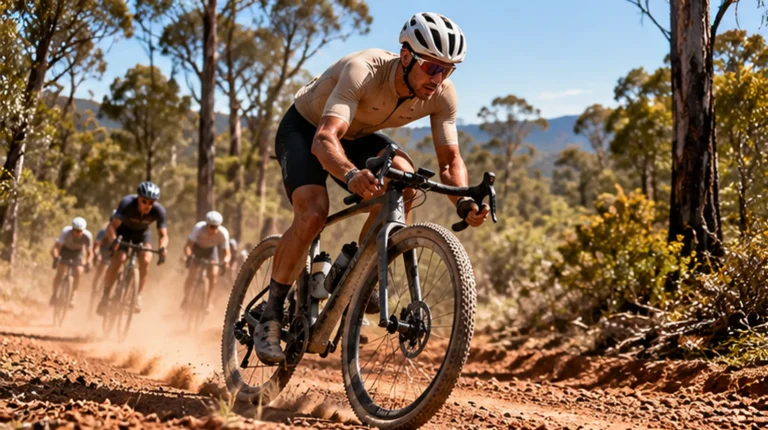
Gravel racing has evolved into one of cycling’s most demanding equipment disciplines. Modern racers need bicycles that combine road-bike efficiency, mountain-bike traction, aerodynamic performance, and the ability to survive long distances without mechanical assistance. In 2026, gravel racing technology reached another milestone at the UCI Gravel World Championships in Nannup, Western Australia.
Held on October 10 and 11, the championships featured challenging forest roads, technical descents, relentless climbing, and large stretches of loose gravel. Rather than relying on narrow road-style tires, many competitors arrived with wider rubber, aerodynamic gravel frames, deep carbon wheels, specialized drivetrains, and compact emergency repair systems.
The equipment demonstrated an important shift in competitive gravel cycling: riders are no longer choosing between speed and rough-terrain capability. Manufacturers are increasingly developing complete racing systems intended to deliver both.
Why the 2026 Gravel World Championships Matter
The 2026 championships represented an important moment for the discipline because they were the first UCI Gravel World Championships held outside Europe.
According to the Union Cycliste Internationale’s official championship recap, Marianne Vos won the elite women’s race, while Denmark’s Magnus Bak Klaris claimed the elite men’s title.
The gravel-heavy Australian courses provided a particularly demanding environment for testing equipment. Racers faced extended unpaved sections, steep climbs, uneven surfaces, and loose material that challenged traction and handling.
This made bike selection especially important. Equipment designed primarily for smooth gravel might struggle where the course became rougher, while heavy mountain-bike-style components could sacrifice speed on faster sections.
Gravel Tires Are Becoming Much Wider
Perhaps the clearest equipment trend was the continued growth of gravel tire width.
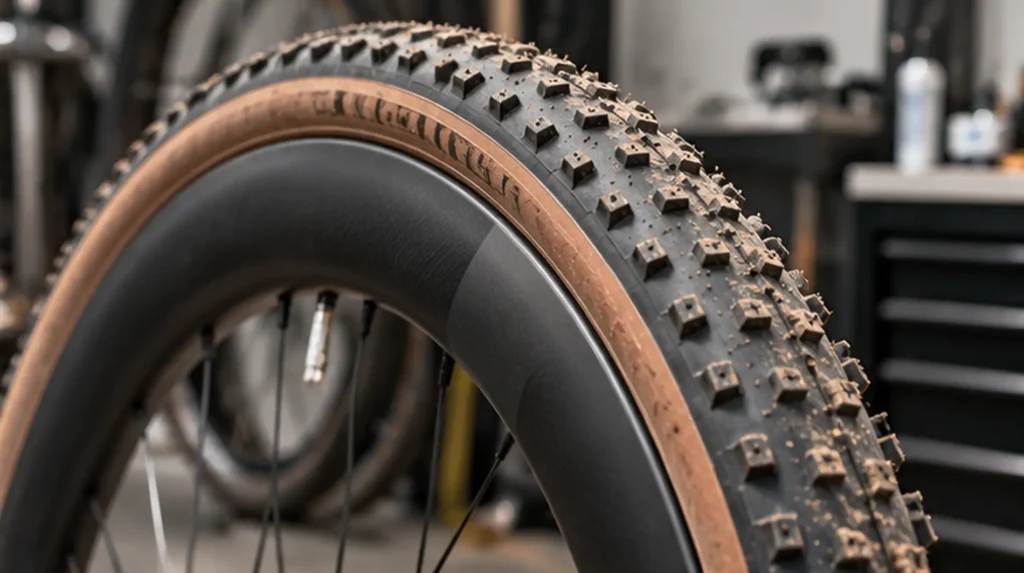
For years, race-focused gravel bikes often used tires measuring approximately 35mm to 42mm. Modern performance frames increasingly accept 50mm or wider rubber, with some new race models designed around tires approaching 57mm.
Wider tires provide greater air volume, allowing riders to operate at lower inflation pressures. On loose or uneven gravel, that can improve comfort, traction, and the tire’s ability to maintain contact with irregular surfaces.
Our Bike Tire Technology and Tread Pattern Innovations 2026 article explores how casing design, tread patterns, and tire pressure influence cycling performance.
The Factor Elara Demonstrates the New Direction
One of the most significant bicycles associated with the championships was the Factor Elara, the model ridden by men’s elite champion Magnus Bak Klaris.
Introduced in September 2026, the Factor Elara combines aggressive racing geometry with clearance for tires up to 57mm.
Rather than developing a conventional endurance gravel bike, Factor sought to preserve road-bike responsiveness while increasing off-road capability.
The company used computational aerodynamic development and integrated frame storage to balance speed with practical race requirements.
Importantly, a frame’s maximum advertised tire clearance does not mean every tire marked with that width will fit. Actual dimensions depend on rim width, tire construction, and available frame clearance.
The Canyon Grail Also Reaches 57mm Clearance
Factor is not alone in rethinking gravel-racing dimensions.
The latest Canyon Grail race platform also offers clearance for tires up to 57mm.
Canyon combines that capability with aerodynamic development, integrated storage, race-oriented handling, and a one-by drivetrain layout that provides additional space around the rear tire.
These developments illustrate how gravel racing has moved beyond adapting road bicycles for dirt roads.
Modern gravel frames are designed specifically around wider tires, variable traction, aerodynamic demands, and the practical requirements of long-distance competition.
Deep Aero Wheels Are No Longer Just for Road Racing
Another interesting trend is the growing use of deep carbon rims with large-volume gravel tires.
Traditionally, deep aerodynamic wheels were associated with narrow road tires and smooth pavement. In gravel racing, wide tires complicate airflow because they create a large leading profile at the front of the wheel.
However, manufacturers are now designing the rim and tire as a complete aerodynamic system.
The Factor Elara platform can be equipped with Black Inc SIXTY FOUR Gravel wheels, which combine deep aerodynamic profiles with a 30mm internal rim width.
The design attempts to support wide tires while limiting the aerodynamic penalty associated with large tire volume.
Why Rim Width Matters
Rim width changes the installed shape of a tire. The same nominal tire can measure differently on different rims.
Wide internal rims may support high-volume gravel tires more effectively, but they can also influence sidewall shape, handling, compatibility, and maximum permitted pressure.
The best combination depends on the tire manufacturer’s approved rim-width range and the wheel manufacturer’s specifications.
This connects with our Bike Wheel Technology and Aerodynamic Rim Design 2026 guide, which explains why modern wheel engineering increasingly considers the complete tire-and-rim profile.
Loose Pea Gravel Changes Tire Selection
The Australian championship course included loose, rounded gravel commonly described as pea gravel.
Unlike firmly packed dirt, this surface can move beneath the tire, reducing predictable traction when braking, accelerating, or cornering.
Cycling Weekly’s pre-race analysis of the Nannup terrain highlighted the handling challenges created by these loose surfaces.
Riders need to balance tire width, pressure, and tread pattern rather than assuming the smoothest tire will always be fastest.
More aggressive shoulder tread may improve cornering confidence, while a faster center tread can reduce rolling resistance on firmer sections.
Tire Pressure Is a Race Strategy
The correct tire pressure is not simply the highest pressure that feels fast on smooth pavement.
On rough gravel, excessive pressure can increase vibration, reduce compliance, and make the bike harder to control.
Lower pressure may improve grip and comfort, but excessively low inflation introduces risks involving tire instability, rim impacts, and punctures.
Riders should consider body weight, tire casing, rim dimensions, terrain, and whether they are using inserts.
Actual pressure choices should stay within the tire and rim manufacturers’ specified limits.
One-By Drivetrains Dominate Many Race Builds
Single-chainring drivetrains have become increasingly popular in competitive gravel cycling.
A one-by configuration eliminates the front derailleur and can simplify shifting during rough riding. It may also allow frame designers to increase rear tire clearance.
Modern wide-range rear cassettes provide climbing ratios suitable for long, steep gravel courses, although riders must still choose a front chainring that matches their expected terrain.
Our Electronic Shifting Revolution guide explains how electronic drivetrains have helped riders manage increasingly specialized gear systems.
Mixed Drivetrains Remain Part of Gravel Innovation
Despite the popularity of complete groupsets, gravel racing continues to encourage unusual component combinations.
Some racers combine components to achieve their preferred gearing, cockpit layout, or mechanical characteristics.
Such combinations require careful compatibility checks. A component arrangement that works for a sponsored professional rider may not be officially supported or appropriate for an everyday bicycle.
Puncture Repair Equipment Is Becoming More Accessible
Gravel racing involves greater puncture exposure than most smooth-road competitions.
Even tubeless tires can suffer punctures too large for liquid sealant to close immediately.
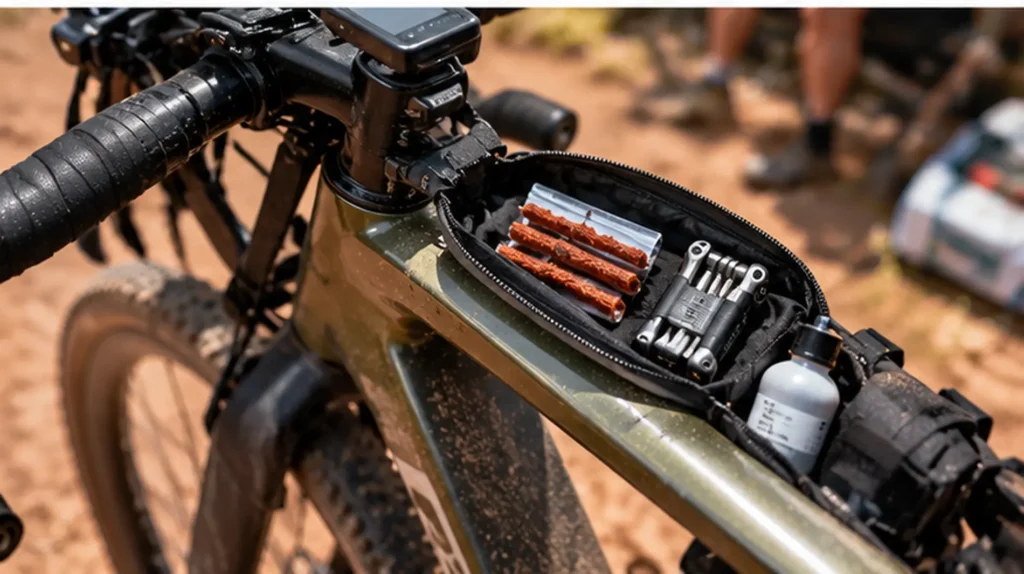
The championship equipment gallery showed riders carrying compact repair tools and tire plugs in easily accessible positions.
A practical gravel repair kit may include:
- Tubeless tire plugs
- A compact insertion tool
- A miniature inflator or pump
- A spare tube
- A multitool
- A compatible valve tool
Having the correct equipment available quickly can be more valuable than saving a small amount of weight by leaving essential items behind.
Race-Day Storage Is Becoming More Integrated
Modern gravel frames increasingly include storage compartments inside the downtube or streamlined bags designed to fit the frame.
This helps riders carry tools, nutrition, and emergency equipment without significantly disrupting aerodynamics.
Unlike a typical road race, gravel competitors may spend long periods on remote roads where outside assistance is limited.
Integrating storage into the bicycle makes it easier to balance accessibility, equipment security, and riding efficiency.
Why Losing a Water Bottle Can Be Serious
Rough terrain places substantial vibration loads on bottle cages.
Loose bottles can fall from the bike during impacts, potentially leaving riders without the fluids they planned to use later in the event.
Racers therefore need cages with reliable retention rather than choosing solely on low weight.
The same principle applies to frame bags, repair tools, pumps, and computers. All accessories must remain secure when the bicycle encounters repeated rough surfaces.
The Future of Gravel Racing Technology
The equipment seen at Nannup points toward increasingly specialized gravel race bicycles.
Frames will likely continue balancing wider tire clearance with aerodynamic development. Wheels may grow more sophisticated as manufacturers optimize them for large-volume tires.
Drivetrains, storage systems, and repair equipment will also become more integrated into the racing platform.
These developments build on the trends described in our 2026 Gravel Bike Trends and Technology Innovations article.
Conclusion
Gravel racing technology in 2026 demonstrates that speed on rough terrain is no longer determined by weight or aerodynamics alone.
The latest racing equipment combines wider tires, aerodynamically optimized wheels, specialized drivetrain configurations, secure storage, and accessible puncture-repair tools.
The 2026 UCI Gravel World Championships provided a demanding environment for these developments, showing how real off-road conditions influence equipment choices at the highest level.
For everyday gravel riders, the most useful lesson is not that everyone needs a professional race bike. It is that tire selection, pressure, reliability, comfort, and practical preparation can be just as important as expensive aerodynamic upgrades.