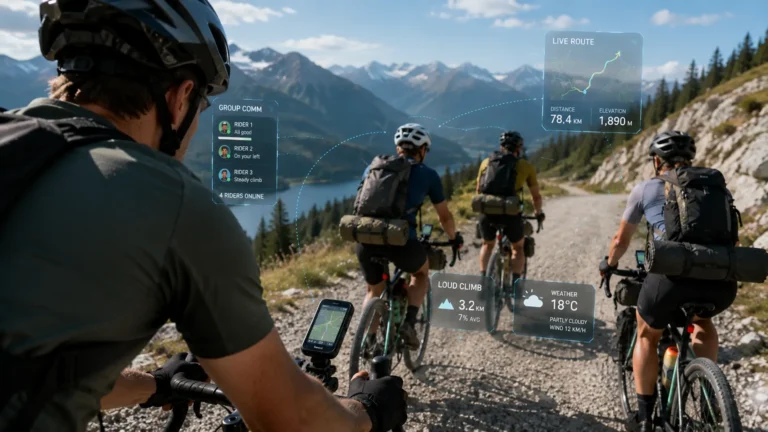
Bikepacking equipment has traditionally been judged by weather resistance, capacity, fit, and weight. In 2026, another question is becoming harder for brands to avoid: what environmental impact comes from producing a bag, shipping it, maintaining it, and eventually replacing it? Bikepacking carbon footprints are becoming a measurable part of product design rather than a vague promise that cycling gear is environmentally friendly.
The discussion is especially timely after the October 2026 sustainability issue of BikeBiz highlighted Apidura’s approach to product impact information, repair, and transparency. The change matters because a bicycle journey may be low-carbon transport while the equipment used for the trip still requires raw materials, textile processing, manufacturing energy, and international freight.
BikeBiz’s October coverage provides a timely starting point for examining a more practical kind of sustainability: data riders can compare and products that remain useful for years.
What Is a Bikepacking Product Carbon Footprint?
A product carbon footprint is an estimate of greenhouse-gas emissions associated with stages of a product’s life. Figures are commonly expressed in kilograms of carbon-dioxide equivalent, or kg CO2e, so emissions from different gases can be represented on a comparable basis.
For a bikepacking bag, the footprint may consider fabric production, buckles, straps, waterproof coatings, cutting, welding, sewing, packaging, delivery, use, repairs, and end-of-life handling. The result is an estimate based on a chosen methodology and set of assumptions, not a precise measurement of every molecule emitted.
Apidura’s product climate-footprint page explains its cradle-to-grave approach and openly identifies activities its current estimates do not fully capture. That transparency about limitations is as useful as publishing a headline number.
Why an Impact Receipt Is More Useful Than a Green Slogan
Terms such as eco-friendly, sustainable, and planet-positive can sound reassuring but say little about what was measured. An impact receipt or product footprint helps readers ask better questions. Does the figure cover only manufacturing or the whole lifecycle? Which materials dominate emissions? How long is the product expected to last? Is repair available? Are there exclusions?
Good disclosures should explain the calculation boundary, units, data sources, and uncertainty. Without that context, two published CO2e numbers may not be directly comparable.
This topic is a practical companion to our Sustainable Smart Bicycles 2026 article, which considers circular materials and manufacturing across complete bicycles.
The Hidden Impact of Technical Textiles
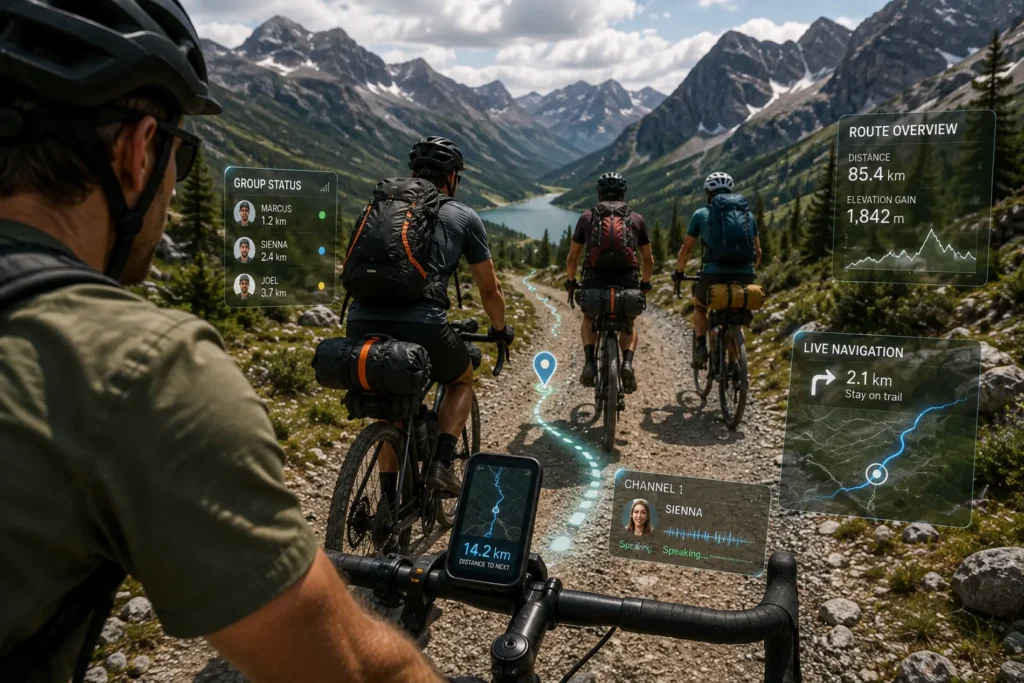
Bikepacking bags must be lightweight, durable, and often waterproof. Achieving all three can require specialized laminates, coatings, reinforcement layers, adhesives, and complex assembly processes. More technical is not automatically worse, but improved performance does not erase manufacturing impacts.
Apidura describes its precision-crafted manufacturing, including material development, optimized cutting plans, and production practices intended to reduce waste. Designing a bag that lasts and using material efficiently can address different parts of the lifecycle at once.
Why Production Often Dominates the Calculation
Emissions from textile manufacturing can occur long before a customer opens the package. Fiber production, coatings, hardware, industrial equipment, electricity, and transport all contribute. Apidura states that producing a pack accounts for a significant share of its estimated footprint.
That finding helps explain why the lowest-impact choice is not always buying a newly advertised recycled-material bag. If an existing bag still works, continuing to use it can avoid the immediate production of a replacement. This is a broad lifecycle principle, not a claim that every repair always has a lower footprint than every new item.
Repair-First Design Makes the Numbers Practical
Footprint reporting is most valuable when it changes product decisions. A bag with replaceable buckles, accessible straps, and repairable panels may remain functional after damage that would otherwise lead to disposal. A long usable life spreads its manufacturing impact across more trips and years.
Apidura’s sustainability program emphasizes products built to last, designed for repair, and returned to use through its Revive initiative. The company also discusses reducing fabric wastage and unnecessary transportation.
Riders should look for actual repair instructions and spare parts, not just a general durability slogan.
What Other Bag Makers Are Doing
Repair-first design is not unique to one brand. ORTLIEB’s repair program offers professional servicing, dealer options, and do-it-yourself guidance for appropriate products. That matters because a broken buckle or damaged panel should not necessarily end a waterproof bag’s usable life.
Repair options vary by location and product, so check whether the manufacturer supports service in your country and whether the damage is economical to fix.
What Is a Digital Product Passport?
Carbon-footprint reporting is part of a wider trend toward product information that follows an item throughout its life. A digital product passport, or DPP, is a structured record that may provide information about materials, origin, environmental performance, repairability, reuse, and recycling.
The European Commission explains the DPP framework under the Ecodesign for Sustainable Products Regulation. The framework is being introduced progressively for selected product categories, with product-specific requirements and transition periods.
That does not mean every bicycle bag must already carry a mandatory passport in 2026. Voluntary brand disclosures and future legal requirements should not be confused.
QR Codes Could Make Maintenance Easier
A future bag label could lead to a digital record identifying fabric construction, approved cleaning methods, compatible replacement buckles, repair instructions, and end-of-life options. For riders, that could be more useful than a static marketing description.
Digital records might also reduce confusion when a bag is sold secondhand. However, such features only help when data remains accessible, accurate, and understandable. A broken link or unsupported app is not a substitute for durable physical construction.
Why Comparisons Need a Common Method
Suppose one brand publishes a factory-gate footprint while another includes customer delivery and disposal. The second number may appear larger even if the product itself is similar. Comparisons also change according to expected lifespan, shipping routes, electricity sources, and repair assumptions.
The EU’s Ecodesign for Sustainable Products Regulation shows why standardized product information matters. Specific requirements will differ by product group. Riders should resist comparing numbers without checking what each figure includes.
Second-Life Gear Has a Role
Not every good product needs to be sold brand-new. A repaired or lightly used frame bag can still protect equipment for thousands of kilometers. Second-life marketplaces may keep functional products circulating while giving budget-conscious riders more options.
Apidura’s impact report discusses its Revive second-life program and product-lifecycle initiatives. As with any used gear, buyers should inspect attachment points, seams, waterproofing, and wear before relying on a pack in remote terrain.
How to Evaluate a Bag Before Buying
Start with fit and function. A poorly fitting bag may rub the frame, interfere with bottle access, or affect steering. Then investigate the materials, repair policy, spare parts, and product information. A published carbon footprint can add useful context, but the bag still needs to perform its intended job safely.
Consider whether the design accommodates common repairs and whether a damaged strap can be replaced without buying another complete bag. Our Sustainable Cycling Manufacturing article explores related approaches to reducing material and production impacts.
Why Longer Ownership Often Beats Frequent Upgrades
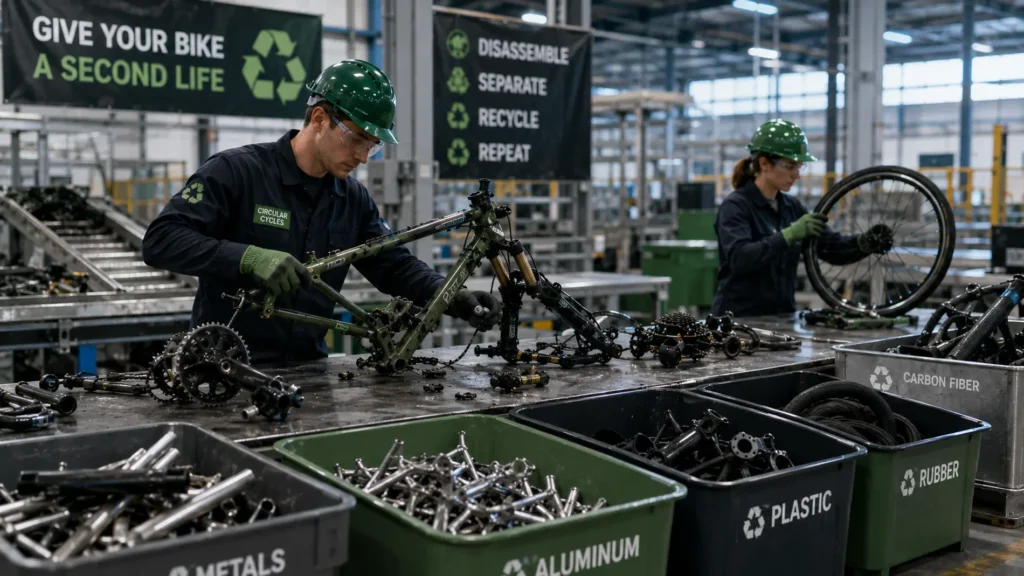
Equipment marketing encourages riders to replace products when newer fabrics or lighter designs appear. Yet a dependable bag may provide years of additional service with occasional cleaning and small repairs. For most noncompetitive riding, a modest weight saving may offer less practical benefit than dependable waterproofing and durability.
Long ownership also helps riders understand how their setup performs. They learn where straps rub, where load distribution works best, and which parts need preventive attention before a long trip.
Challenges for Transparent Cycling Gear
Better environmental disclosure requires suppliers to share information that may be difficult to obtain. Small brands can face costs for data collection and lifecycle assessments, while complicated global supply chains introduce uncertainty.
Companies must also avoid exaggerated claims. An estimated footprint does not demonstrate that a product has zero impact or is automatically better than alternatives. Reporting limitations clearly is a sign of credible work, not necessarily a weakness.
The Future of Measurable Bikepacking Sustainability
Expect more cycling brands to publish clearer materials information, repair instructions, and lifecycle estimates as customer expectations and product regulations evolve. Some may introduce digital product records or QR-linked service guidance. The most meaningful progress will combine transparent information with bags that can actually be maintained and kept in service.
Conclusion
Bikepacking carbon footprints in 2026 are bringing a welcome dose of measurable detail to cycling sustainability. Apidura’s impact disclosures, repair programs across the industry, and the EU’s evolving digital-product framework show how environmental information can become more useful. The best outcome is not simply more labels. It is better-informed purchases, genuinely repairable equipment, and longer product lives on the road and trail.