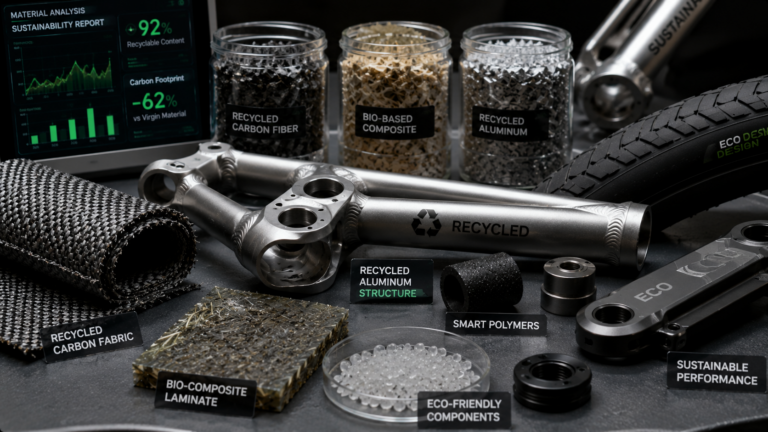
The future of cycling is becoming smarter and more sustainable as manufacturers explore new ways to reduce environmental impact while improving performance. In 2026, sustainable smart bicycles 2026 are combining artificial intelligence, recycled materials, advanced manufacturing, and connected technology to create a new generation of eco-friendly bicycles.
Future bicycles will not only focus on speed, weight reduction, and performance. Manufacturers are increasingly exploring how bicycles can be designed, produced, maintained, and recycled more responsibly.
Sustainability has become a major focus across the cycling industry, with companies exploring recycled materials, improved manufacturing efficiency, and circular approaches to bicycle production.
The Rise of Sustainable Smart Bicycle Design
Traditional bicycle manufacturing has always focused on creating lightweight and durable products. However, future bicycle development is expanding beyond performance by considering the complete lifecycle of a bicycle.
Sustainable smart bicycle design focuses on:
- Lower environmental impact
- Longer component lifespan
- Efficient manufacturing
- Material recycling
- Digital lifecycle tracking
By combining sustainability with intelligent technology, manufacturers can create bicycles that are better optimized from production to disposal.
This connects with our article about Smart Bicycle Materials 2026.

AI-Powered Sustainable Manufacturing
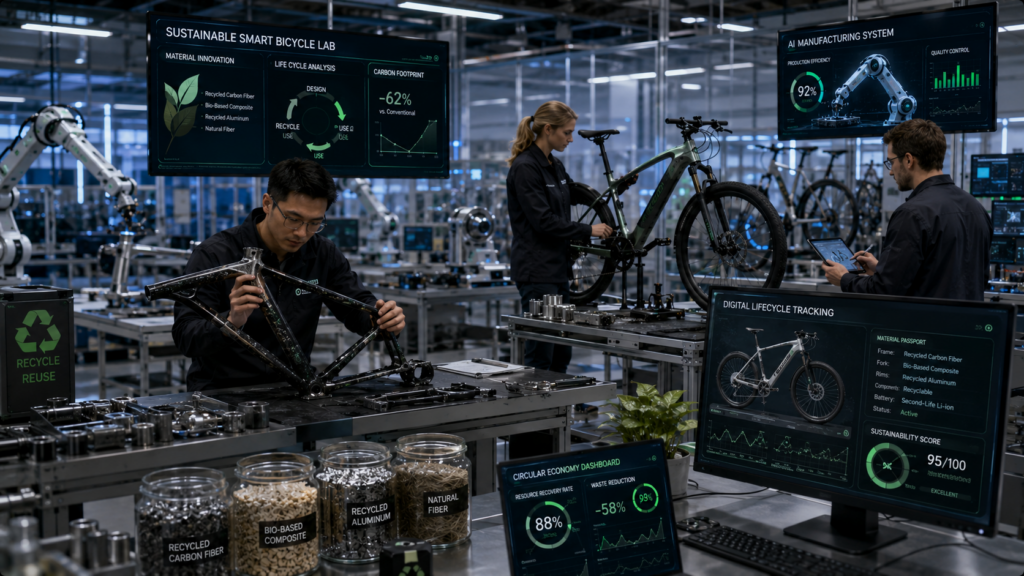
Artificial intelligence is becoming an important tool in bicycle manufacturing. AI systems can analyze designs, optimize production processes, and reduce unnecessary material usage.
AI manufacturing systems may help improve:
- Material efficiency
- Production accuracy
- Energy consumption
- Quality control
- Design optimization
Instead of relying only on traditional manufacturing methods, future factories may use AI-powered systems to create bicycles with less waste.
This connects with our article about Software-Defined Bicycles 2026.
Recycled Carbon Fiber and Advanced Composites
Carbon fiber has become one of the most popular materials in performance bicycles because of its strength and lightweight properties. However, recycling carbon fiber has become an important challenge.
Future sustainable bicycles may use:
- Recycled carbon fiber composites
- Bio-based materials
- Recycled aluminum
- Advanced sustainable polymers
- Reusable components
These materials aim to maintain performance while reducing environmental impact.
Research into recycled composites and advanced materials continues influencing the future of lightweight bicycle manufacturing.
Circular Economy in Bicycle Manufacturing
The circular economy approach focuses on designing products that can be reused, repaired, upgraded, and recycled instead of discarded.
For bicycles, this could include:
- Replaceable components
- Upgradeable software systems
- Recyclable materials
- Digital maintenance records
- Extended product lifecycles
Smart technology can help manufacturers understand how bicycles are used and when components need replacement or refurbishment.
This connects with our article about Digital Bike Ownership 2026.
AI Lifecycle Tracking for Smart Bicycles
Connected bicycles may eventually include digital lifecycle information that tracks environmental impact, maintenance history, and material usage.
A smart bicycle platform may monitor:
- Manufacturing information
- Component replacements
- Energy usage
- Repair history
- Recycling options
This creates greater transparency throughout the bicycle’s lifetime.
Sustainable Smart E-Bike Technology
Electric bicycles represent an important area for sustainable transportation, but battery production and lifecycle management remain important considerations.
Future sustainable e-bike systems may focus on:
- Longer-lasting batteries
- Improved energy efficiency
- Battery recycling
- Smart charging systems
- Reduced material waste
AI-powered energy management can help riders use power more efficiently while extending battery lifespan.
This connects with our article about Smart E-Bike Energy Ecosystems 2026.
AI Optimization of Bicycle Components
Artificial intelligence can also help create more efficient bicycle components by analyzing thousands of design possibilities.
AI-assisted design may optimize:
- Frame structures
- Component strength
- Aerodynamics
- Material distribution
- Manufacturing processes
This approach can reduce waste while improving performance.
This connects with our article about 3D Printed Bicycle Components 2026.
Environmental Benefits of Smart Bicycles
Sustainable smart bicycles can provide environmental benefits by improving transportation efficiency and reducing manufacturing waste.
Potential advantages include:
- Lower production waste
- Longer product lifespan
- Improved repairability
- Efficient energy usage
- Reduced resource consumption
As cities focus more on sustainable transportation, intelligent bicycles may become an important part of future mobility systems.
Benefits for Different Cyclists
Urban Commuters
Sustainable smart bicycles can provide efficient transportation while reducing environmental impact.
Adventure Cyclists
Durable materials and intelligent systems can improve reliability during long-distance travel.
Performance Riders
Advanced sustainable materials can provide lightweight performance while supporting responsible manufacturing.
The Future of Sustainable Smart Bicycles
The next generation of bicycles will likely combine sustainability, artificial intelligence, and connectivity into one integrated platform.
Future developments may include:
- AI-designed sustainable frames
- Fully recyclable bicycle components
- Smart recycling programs
- Digital environmental tracking
- Carbon-neutral manufacturing processes
As bicycle technology continues evolving, sustainability will become just as important as performance and innovation.
Conclusion
Sustainable smart bicycles in 2026 represent the future of responsible cycling innovation. By combining artificial intelligence, recycled materials, circular manufacturing, and connected technology, future bicycles may become more efficient and environmentally friendly.
The bicycle industry is moving toward a future where smart technology and sustainability work together to create better transportation solutions.