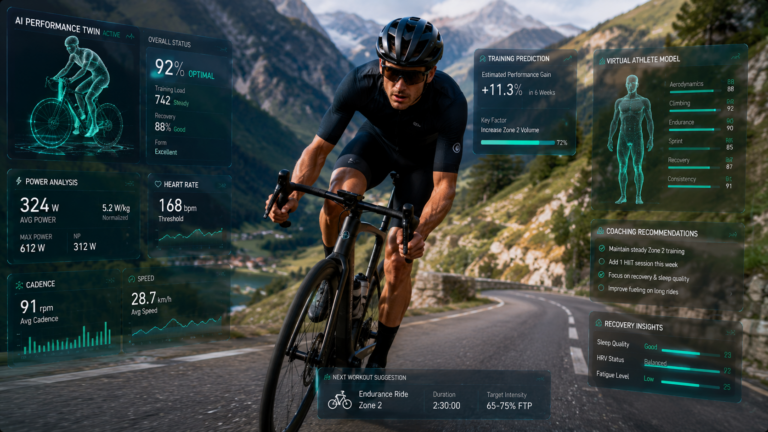
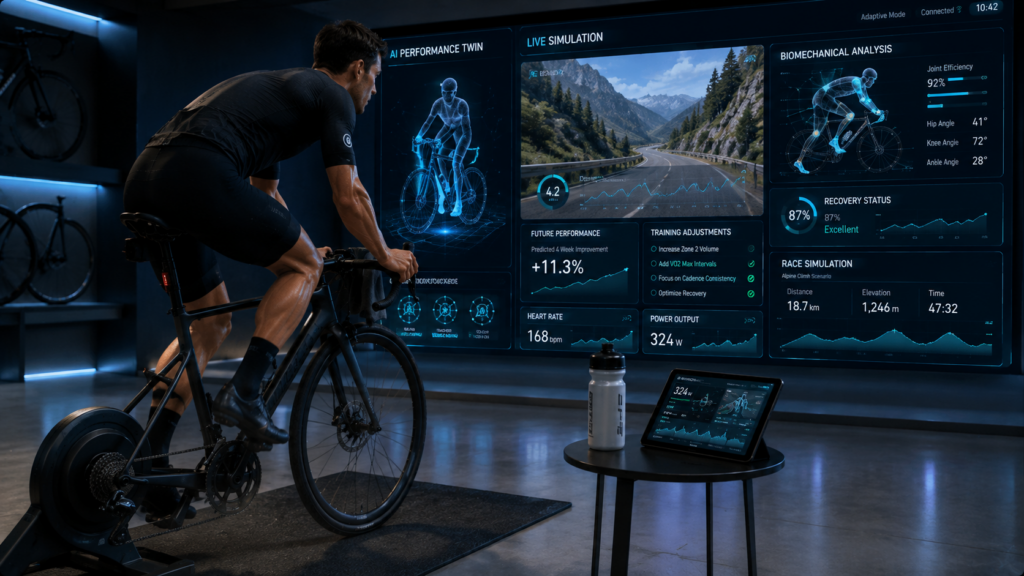
Cycling performance analysis is entering a new era where artificial intelligence can create digital representations of athletes. In 2026, AI cycling performance twins 2026 are transforming how riders train, recover, and prepare by combining biometric information, training history, equipment data, and artificial intelligence simulations.
Unlike traditional performance dashboards that only display past results, AI performance twins aim to predict future outcomes by creating a virtual model of how a cyclist responds to different training conditions.
Digital twins are gaining attention in sports science because they can combine information such as power output, heart rate, sleep, nutrition, training load, and environmental factors to model an individual athlete.
The Evolution From Data Tracking to Digital Athletes
For years, cyclists have relied on technology such as cycling computers, heart rate monitors, and power meters to collect performance data. These tools provide valuable information, but riders and coaches still need to interpret the data manually.
AI cycling performance twins introduce a more advanced approach by creating a virtual model of the cyclist.
This digital athlete model may analyze:
- Power output trends
- Heart rate response
- Training history
- Recovery patterns
- Biomechanical movement
- Equipment performance
The goal is not only to understand what happened but also to predict what may happen in future rides.
This connects with our article about Smart Bicycle Digital Twins 2026.
How AI Cycling Performance Twins Work
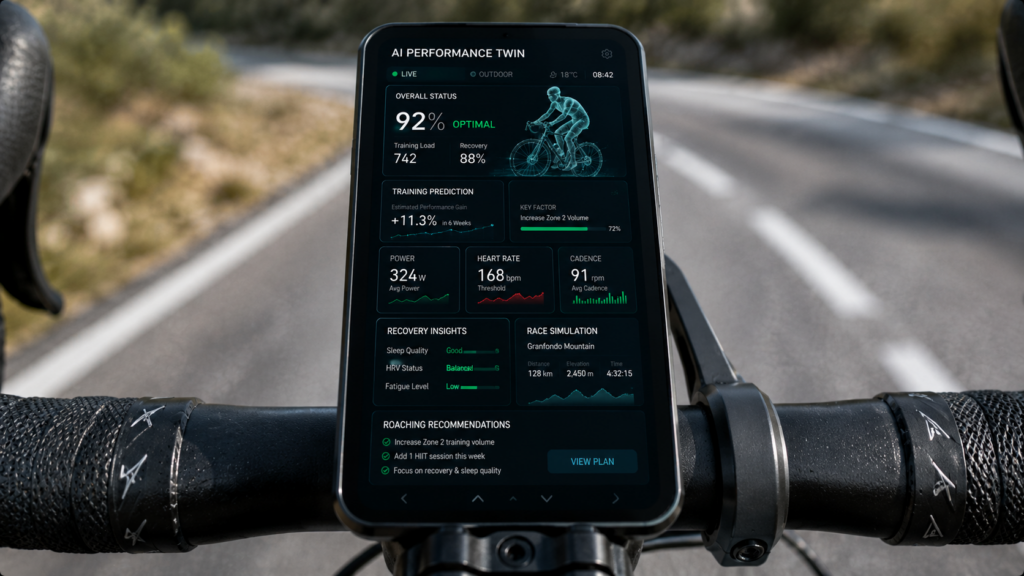
An AI performance twin collects information from multiple sources and creates a personalized digital representation of the rider.
Data sources may include:
- Power meters
- Heart rate monitors
- Smart watches
- Smart cycling clothing
- Training applications
- Bike sensors
Artificial intelligence then identifies patterns that humans may overlook.
For example, an AI system may recognize that a cyclist performs better after specific recovery periods, struggles under certain conditions, or benefits from specific training intensities.
Predictive Training With Virtual Riders
One of the most important benefits of AI cycling performance twins is predictive training.
Instead of simply recording completed workouts, an AI system may simulate different training strategies and estimate possible outcomes.
A virtual rider model could help answer questions such as:
- How will additional endurance training affect performance?
- What recovery period produces the best results?
- How will fatigue impact race performance?
- Which training approach improves efficiency?
This creates a more personalized training process based on the individual cyclist.
Research into machine learning approaches for cycling performance prediction has explored combining route characteristics and athlete training data to improve personalized forecasting.
AI Race Simulation and Strategy Planning
Professional cycling teams increasingly use advanced analytics to improve race preparation. AI performance twins may expand this by allowing riders to simulate different scenarios before competition.
A digital athlete model could analyze:
- Race routes
- Weather conditions
- Climbing demands
- Energy management
- Pacing strategies
A cyclist could test different approaches digitally before attempting them in the real world.
Professional cycling teams are already increasing their use of AI systems for performance analysis, motion tracking, and athlete monitoring.
Combining AI With Biomechanics
Performance depends on more than fitness. Body movement, efficiency, and riding position also influence results.
AI performance twins may integrate biomechanical information such as:
- Pedaling efficiency
- Body position
- Joint movement
- Muscle activation
- Aerodynamic position
This allows AI systems to provide recommendations beyond traditional training metrics.
This connects with our article about AI-Powered Custom Bike Fitting 2026.
AI Recovery Predictions and Training Balance
Recovery is becoming an important part of performance optimization. Training harder does not always produce better results if the body cannot adapt.
AI cycling performance twins may analyze:
- Sleep quality
- Heart rate variability
- Training stress
- Fatigue indicators
- Previous workouts
The system could recommend when to increase intensity, reduce workload, or prioritize recovery.
This connects with our article about AI Cycling Recovery Systems 2026.
Personalized Equipment Recommendations
A digital athlete model may also help cyclists understand how equipment choices affect performance.
AI systems could analyze:
- Bike setup
- Frame characteristics
- Component choices
- Tire selection
- Rider position
This creates a connection between athlete data and bicycle technology.
This connects with our article about AI Bicycle Personalization 2026.
Benefits for Different Cyclists
Professional Athletes
Elite cyclists can use AI performance twins to improve race preparation, training decisions, and performance analysis.
Endurance Riders
Long-distance cyclists may benefit from predictive pacing, recovery guidance, and personalized strategies.
Everyday Cyclists
Recreational riders may eventually use simplified AI models to improve fitness and understand personal progress.
The Future of AI Cycling Performance Twins
AI cycling performance twins represent a shift toward personalized digital coaching. Instead of every cyclist following similar training methods, future systems may create unique strategies based on individual data.
Future developments may include:
- Real-time digital athlete simulations
- AI race predictions
- Personalized training environments
- Virtual competition scenarios
- Automatic equipment optimization
As AI technology improves, digital athlete models may become one of the most advanced tools available for cycling performance development.
Conclusion
AI cycling performance twins in 2026 represent the next stage of data-driven cycling. By combining artificial intelligence, biomechanics, wearable technology, and predictive analytics, these systems may help cyclists better understand their bodies and improve performance.
The future cyclist may not only have a smart bicycle but also a virtual version of themselves that helps guide every training decision.