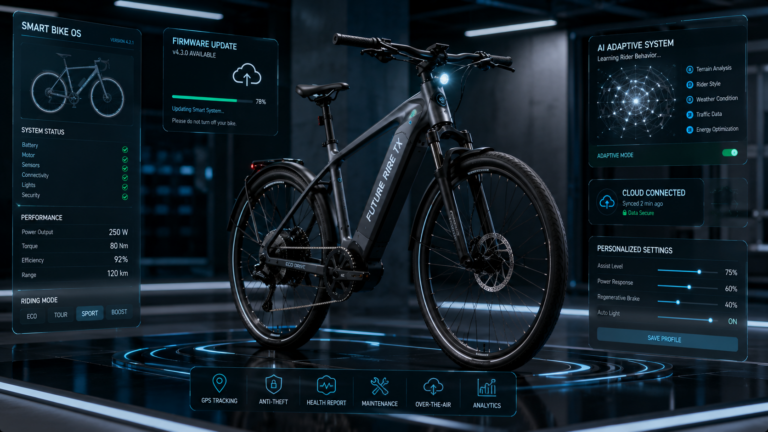
Bicycles are entering a new technological era where software is becoming just as important as mechanical engineering. In 2026, software-defined bicycles 2026 are transforming traditional bikes into connected platforms that can receive updates, improve performance, add new features, and adapt to rider needs over time.
Instead of remaining unchanged after purchase, future bicycles may continue evolving through firmware updates, artificial intelligence improvements, and connected digital services.
The cycling industry is increasingly exploring smart bikes that combine sensors, software, connectivity, and intelligent systems to deliver more personalized riding experiences.
The Rise of Software-Defined Bicycles
Traditional bicycles are primarily mechanical machines. Once components are manufactured and assembled, improvements usually require physical replacements or upgrades.
Software-defined bicycles introduce a different approach. These bikes use digital systems that allow manufacturers and riders to improve functionality through software.
A software-defined bicycle may include:
- Connected operating systems
- Firmware updates
- AI-based adjustments
- Cloud-connected services
- Digital rider profiles
- Remote diagnostics
This means the bicycle can become smarter throughout its lifespan.
This connects with our article about Smart Bicycle Operating Systems 2026.
How Firmware Updates Change Bicycle Technology
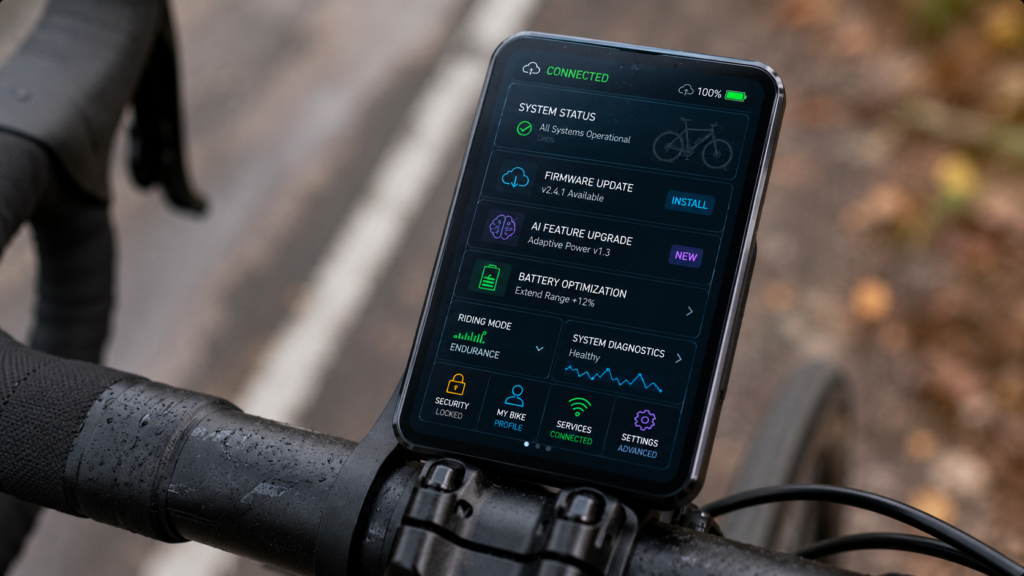
Firmware updates are already common in many electronic devices, including smartphones, vehicles, and smart appliances. Future bicycles may adopt similar approaches.
Firmware updates could improve:
- Motor performance
- Battery efficiency
- Sensor accuracy
- Navigation features
- Security functions
- Riding modes
Instead of purchasing a completely new bicycle to access improvements, riders may receive new capabilities through software updates.
AI Features Added Through Software
Artificial intelligence is one of the biggest advantages of software-defined bicycles. As AI systems improve, manufacturers may introduce new intelligent features after a bike has already been purchased.
Future AI upgrades may include:
- Personalized riding recommendations
- Adaptive motor assistance
- Predictive maintenance
- Smart navigation improvements
- Performance optimization
The bicycle becomes a continuously improving digital platform rather than a fixed product.
This connects with our article about AI Bicycle Personalization 2026.
Connected Bicycle Operating Systems
A major part of software-defined bicycles is the operating system that connects different components together.
A bicycle operating system may manage:
- Battery systems
- Motor controllers
- Electronic shifting
- Navigation devices
- Safety sensors
- Wearable technology
By connecting these systems, bicycles can make smarter decisions and provide more useful feedback to riders.
Personalized Features Through Digital Profiles
Software-defined bicycles may allow riders to create digital profiles that store preferences and riding information.
A rider profile could include:
- Preferred assistance levels
- Training goals
- Comfort settings
- Navigation preferences
- Performance history
When a rider connects with a smart bicycle, the system can automatically apply personalized settings.
This connects with our article about Connected Cycling Wearable Ecosystems 2026.
Cloud Connectivity and Remote Bicycle Services
Future software-defined bicycles may connect to cloud platforms that allow remote monitoring and service management.
Cloud-connected services may provide:
- Remote diagnostics
- Software downloads
- Maintenance alerts
- Performance reports
- Security monitoring
This creates a relationship between the bicycle, manufacturer, and rider long after the initial purchase.
Software Updates and Electric Bicycle Development
Electric bicycles are likely to benefit significantly from software-defined technology because they already rely heavily on electronic systems.
Software updates could improve:
- Battery management
- Motor efficiency
- Range prediction
- Power delivery
- Charging optimization
This connects with our article about Smart E-Bike Energy Ecosystems 2026.
Cybersecurity Challenges for Smart Bicycles
As bicycles become more connected, cybersecurity becomes an important consideration.
Future smart bikes may need protection against:
- Unauthorized software changes
- Data privacy issues
- Connected system attacks
- Identity theft
Secure software platforms will become increasingly important as bicycles store more personal and technical information.
This connects with our article about Digital Bike Ownership 2026.
Benefits for Different Cyclists
Professional Cyclists
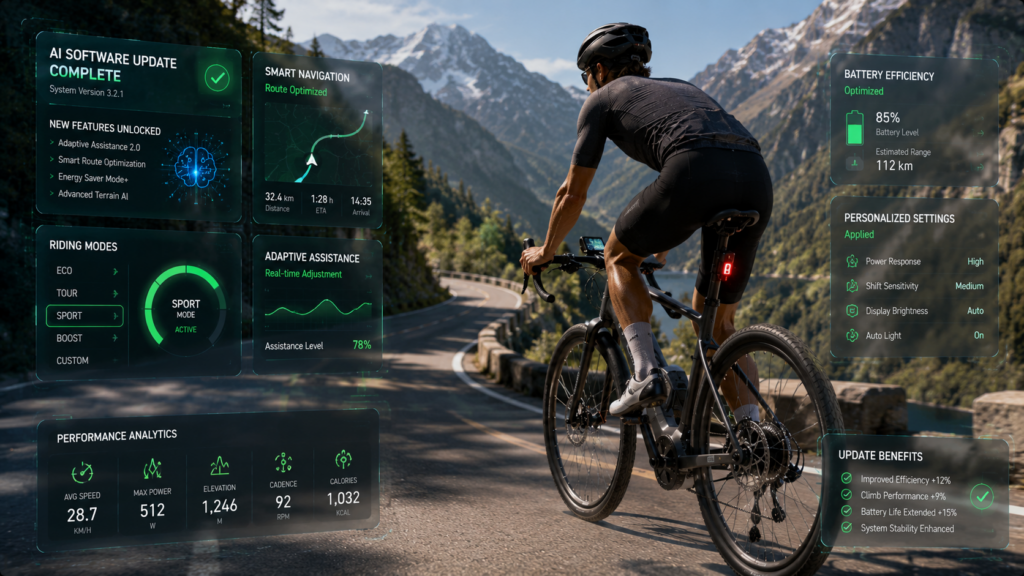
Athletes may benefit from continuous performance improvements, advanced analytics, and personalized settings.
E-Bike Riders
Electric bicycle owners may receive improved battery efficiency and smarter assistance features.
Everyday Cyclists
Casual riders may benefit from easier maintenance, improved navigation, and automatic updates.
The Future of Software-Defined Cycling
The bicycle industry is moving toward a future where software and hardware work together as one system.
Future developments may include:
- AI-generated riding features
- Automatic software optimization
- Connected bicycle ecosystems
- Digital marketplaces for upgrades
- Subscription-based smart services
The bicycle of the future may continue improving long after it leaves the factory.
Conclusion
Software-defined bicycles in 2026 represent a major change in how cyclists interact with technology. Through firmware updates, artificial intelligence, and connected services, future bikes may become smarter, more personalized, and continuously improved.
As cycling moves deeper into the digital era, software may become one of the most important components of the modern bicycle.