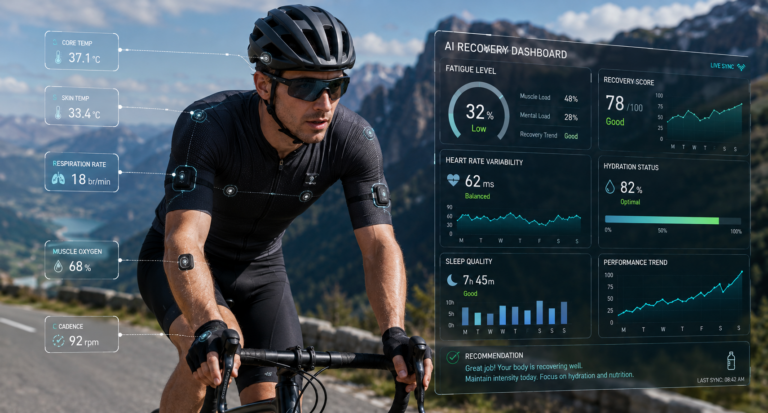
Cycling technology is expanding beyond speed, power, and performance tracking. In 2026, artificial intelligence is helping riders better understand recovery, fatigue, and training readiness. The latest AI-powered cycling recovery systems 2026 combine biometric sensors, wearable technology, and machine learning to analyze how the body responds before, during, and after rides.
These smart recovery platforms help cyclists understand training stress, monitor fatigue patterns, and make more informed decisions about their riding routines.
The Evolution of Cycling Recovery Technology
Recovery has always been an important part of cycling performance. Traditional methods rely on rider experience, scheduled rest days, and basic measurements such as heart rate.
Modern recovery systems are becoming more advanced by combining information from multiple connected devices.
AI recovery platforms can analyze:
- Heart rate variability
- Training load
- Sleep quality
- Muscle fatigue
- Hydration status
- Performance trends
This creates a more complete picture of how a cyclist responds to training.
This technology connects with our article about Wearable Cycling Biofeedback Tech 2026, where biometric monitoring plays an important role in connected cycling.
How AI Recovery Systems Analyze Rider Data
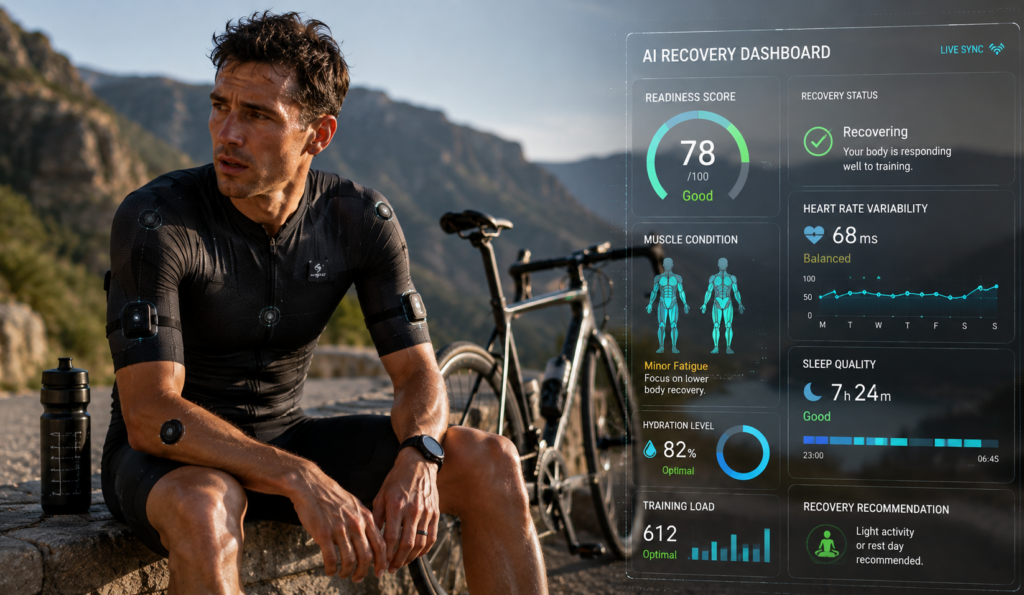
AI-powered recovery systems collect information from wearable sensors, cycling computers, smart clothing, and training platforms.
Machine learning algorithms analyze patterns across different data points to identify changes in rider condition.
The system may evaluate:
- Changes in resting heart rate
- Recovery trends
- Training intensity
- Power output changes
- Fatigue indicators
By comparing current information with previous rides, AI systems can provide insights into overall readiness.
Fatigue Tracking and Training Load Analysis
One of the biggest challenges for cyclists is balancing training intensity with adequate recovery. Too much training without enough recovery may reduce performance and increase fatigue.
AI systems help analyze training load by comparing:
- Recent workout intensity
- Weekly training volume
- Power output trends
- Heart rate response
This allows riders to better understand how their bodies respond to different training patterns.
These insights complement the performance technology discussed in our article about Smart Cycling Power Meters 2026.
Smart Clothing and Recovery Monitoring
Smart cycling apparel is becoming an important part of recovery technology. Clothing with embedded sensors can collect information while maintaining the comfort of traditional cycling gear.
Smart recovery clothing may monitor:
- Muscle activity
- Body temperature
- Movement patterns
- Recovery indicators
This information can be combined with AI platforms to create personalized recovery insights.
Recovery Scores and Readiness Tracking
Many modern fitness platforms use readiness scores to summarize complex health and performance information.
AI cycling recovery systems may provide information such as:
- Recovery status
- Recommended training intensity
- Fatigue levels
- Rest requirements
- Performance readiness
These insights help riders better plan training sessions and avoid unnecessary strain.
AI Recovery Technology for Different Cyclists
Professional Cyclists
Competitive riders can use AI recovery systems to manage demanding training schedules and improve preparation before important events.
Endurance Riders
Long-distance cyclists benefit from understanding fatigue patterns during extended training blocks and multi-day adventures.
Recreational Cyclists
Casual riders can use recovery insights to improve consistency and better understand their fitness progress.
Integration With Connected Cycling Ecosystems
The future of cycling recovery depends on communication between multiple smart devices.
AI recovery platforms may connect with:
- Smart cycling clothing
- Power meters
- Smart bike computers
- Heart rate monitors
- AI training applications
This connected approach creates a complete picture of rider performance and recovery.
Learn more about connected performance technology in our article about Connected Cycling Analytics 2026.
The Role of AI in Personalized Training
Artificial intelligence allows recovery systems to move beyond simple measurements. Future platforms may adjust training suggestions based on individual responses.
For example, AI systems may identify when a rider is ready for intense training or when additional recovery time may be beneficial.
This creates a more adaptive approach compared with fixed training schedules.
The Future of AI Cycling Recovery Systems
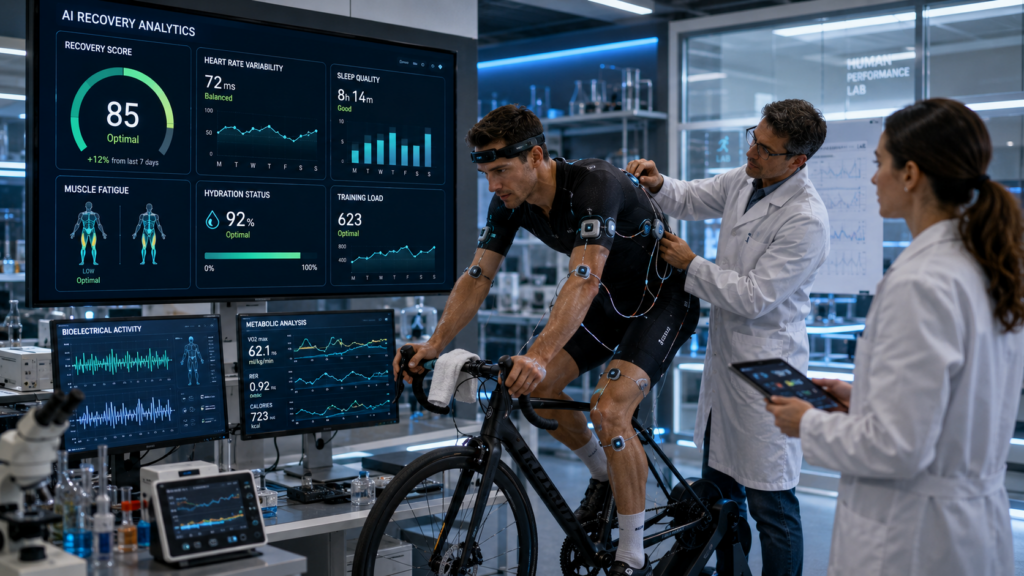
As wearable technology continues improving, recovery systems will become more accurate and integrated into everyday cycling.
Future developments may include:
- Real-time fatigue prediction
- Advanced muscle monitoring
- AI-generated recovery plans
- Improved biometric sensors
- Integration with smart bicycles
The future cyclist may have access to a complete digital recovery assistant that understands training history, current condition, and performance goals.
Conclusion
AI-powered cycling recovery systems in 2026 represent a major advancement in connected cycling technology. By combining biometric tracking, artificial intelligence, and wearable devices, these systems help cyclists better understand fatigue and recovery.
As cycling technology continues evolving, recovery analysis will become just as important as performance measurement for riders seeking smarter training approaches.