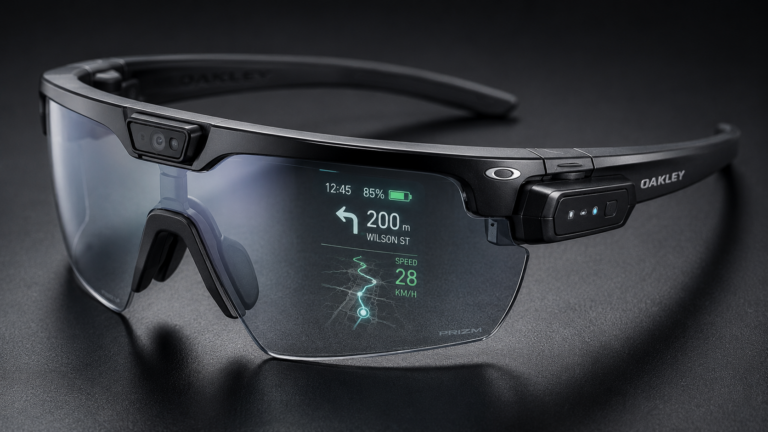
Cycling technology is moving beyond handlebar displays and smartphones. In 2026, smart cycling glasses are becoming one of the most advanced wearable devices for riders by combining augmented reality, navigation, safety alerts, and performance tracking directly into the cyclist’s view.
The latest smart cycling glasses 2026 transform traditional eyewear into connected cycling platforms that provide real-time information while allowing riders to maintain focus on the road or trail.
The Evolution of Cycling Eyewear
Cycling glasses have traditionally focused on eye protection, UV filtering, and improved visibility. New smart glasses add digital intelligence by integrating miniature displays, sensors, cameras, and wireless connectivity.
Modern AR cycling glasses can provide:
- Turn-by-turn navigation
- Speed and distance information
- Elevation updates
- Weather notifications
- Safety warnings
- Performance metrics
Instead of looking down at a cycling computer, riders can access important information directly within their natural field of vision.
This technology connects with other wearable innovations discussed in our article about Wearable Cycling Biofeedback Tech 2026.
How AR Displays Improve Cycling Navigation
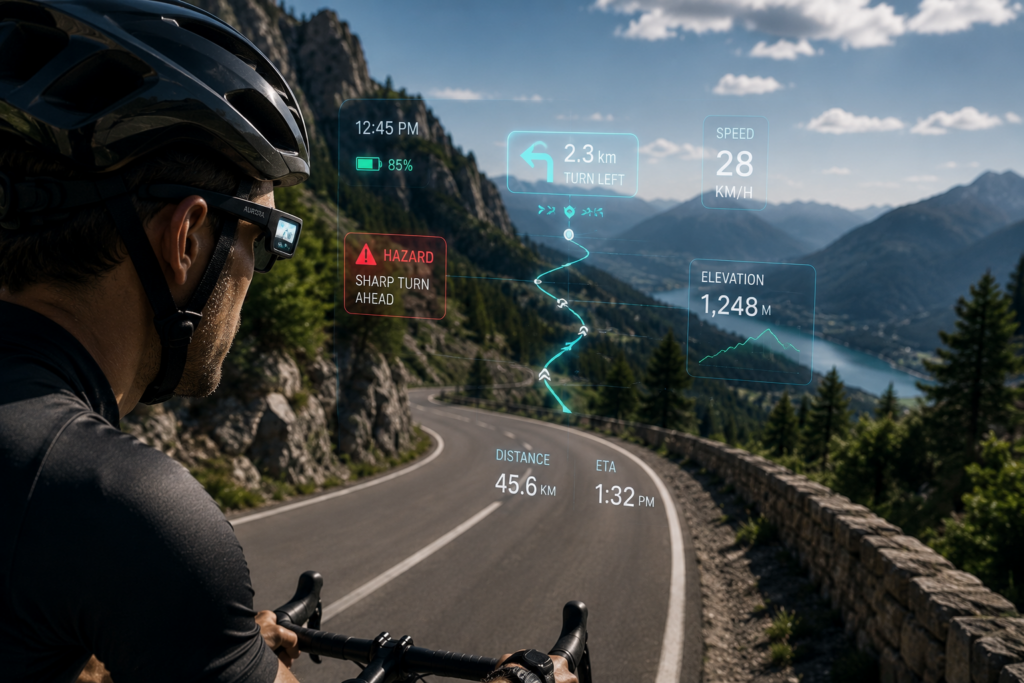
Navigation is one of the most useful applications of smart cycling glasses. Traditional GPS devices require riders to look away from the road, which may interrupt awareness during challenging sections.
AR displays solve this issue by projecting navigation information into the rider’s view.
Features may include:
- Floating route arrows
- Upcoming turns
- Climb information
- Distance remaining
- Route difficulty indicators
For example, a cyclist approaching a mountain climb could see elevation changes and upcoming gradients without removing attention from the road.
This technology works alongside AI navigation systems featured in our guide about AI Cycling Route Optimization 2026.
Vision Assistance and Safety Features
Beyond navigation, smart cycling glasses are becoming important safety tools. Integrated cameras and AI systems can analyze the riding environment and provide additional awareness.
Future systems may identify:
- Approaching vehicles
- Road obstacles
- Pedestrians
- Trail hazards
- Changing weather conditions
When combined with smart helmets and connected cycling cameras, AR glasses create a complete safety ecosystem.
Learn more about connected rider protection systems in our article about Smart Cycling Helmets 2026.
Real-Time Performance Monitoring
Smart cycling glasses are also changing how riders monitor performance. Instead of viewing metrics only on a bike computer, cyclists can see important information while riding.
Possible displayed data includes:
- Heart rate
- Power output
- Cadence
- Training zones
- Battery status
- Recovery information
When connected with power meters and wearable sensors, AR glasses can become part of a complete performance monitoring system.
This complements the technology discussed in our article about Smart Cycling Power Meters 2026.
Smart Glasses for Different Types of Cyclists
Road Cyclists
Road cyclists can use AR glasses for navigation, training data, and performance monitoring during long rides and competitive events.
Gravel Riders
Adventure cyclists benefit from trail navigation, route guidance, and environmental awareness when riding unfamiliar terrain.
Urban Commuters
City riders can use safety alerts and navigation assistance to better understand surrounding traffic conditions.
Integration With Connected Cycling Systems
The future of smart cycling glasses depends on integration with other devices. These glasses can communicate with:
- Smart helmets
- Bike computers
- Power meters
- Smart frames
- AI navigation platforms
This connected approach creates a unified cycling ecosystem where devices share information and provide more personalized riding experiences.
The Future of AR Cycling Glasses
As technology improves, AR cycling glasses are expected to become lighter, more efficient, and easier to use.
Future developments may include:
- Advanced AI vision assistance
- Improved battery efficiency
- Voice-controlled navigation
- Automatic hazard detection
- Real-time rider communication
The combination of artificial intelligence, wearable technology, and augmented reality may redefine how cyclists interact with information while riding.
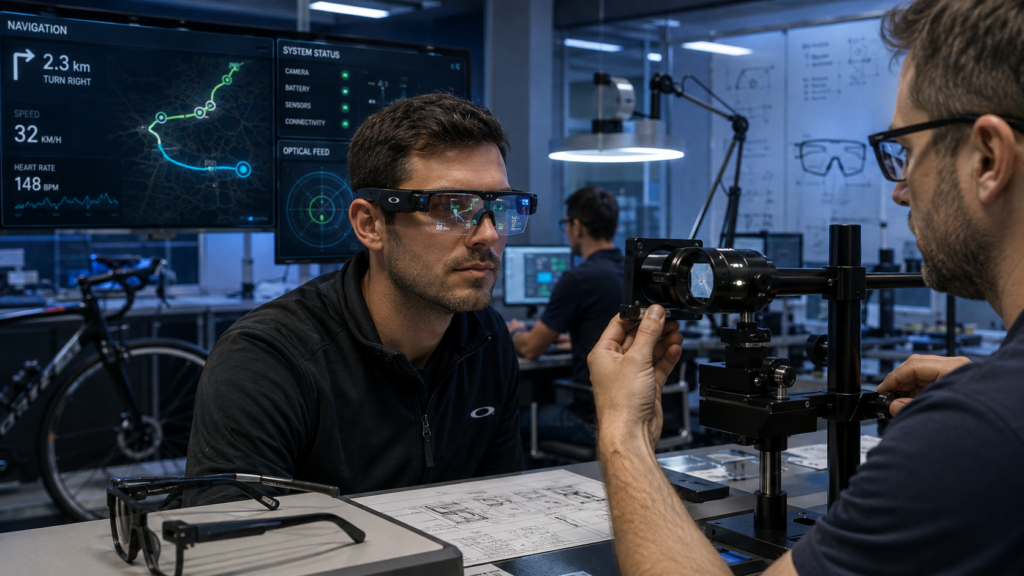
AR Cycling Glasses Development
Behind these devices are advanced engineering teams working on optics, software, artificial intelligence, and wearable hardware. Testing involves display clarity, environmental conditions, battery performance, and user interaction.
Conclusion
Smart cycling glasses in 2026 represent a major step forward in connected cycling technology. By combining AR displays, navigation assistance, safety alerts, and performance tracking, these devices provide riders with valuable information without interrupting their focus.
As cycling technology continues evolving, smart glasses may become one of the most important wearable tools for modern cyclists.