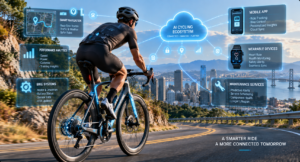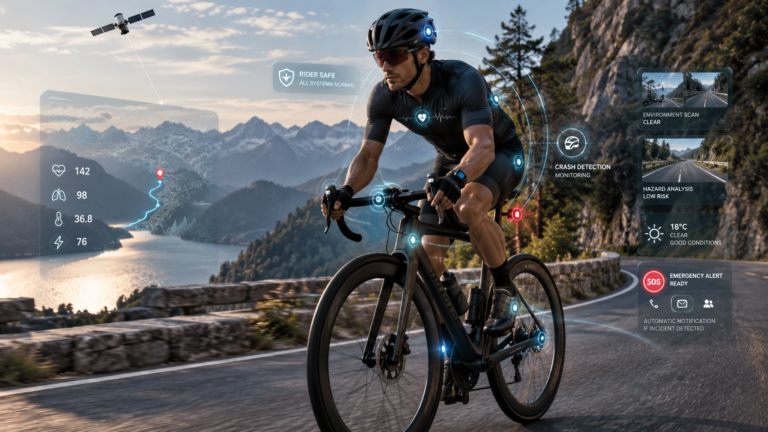
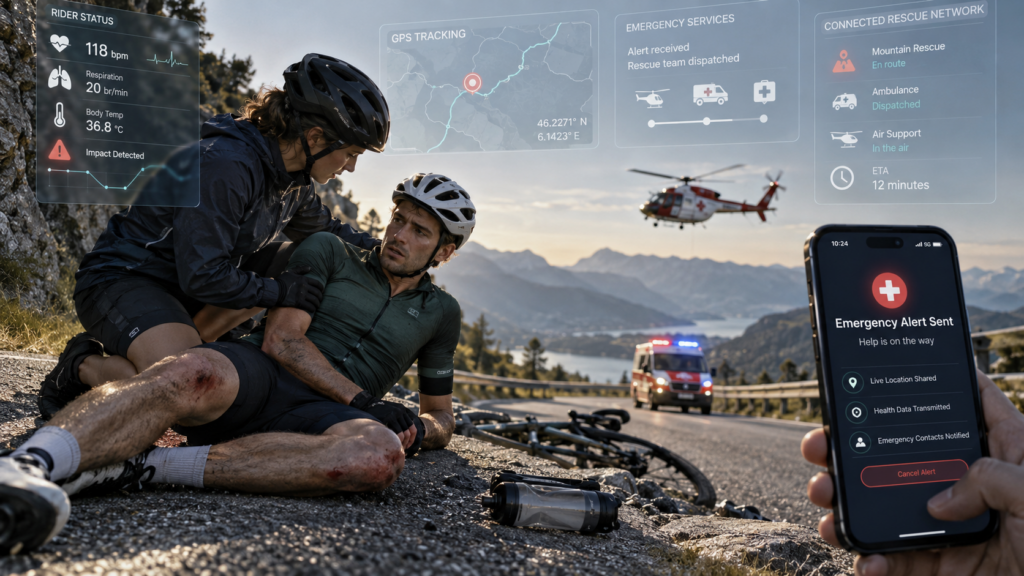
Cycling safety technology is evolving beyond prevention and awareness. In 2026, AI bicycle emergency response 2026 systems are introducing a new level of rider protection by combining artificial intelligence, biometric sensors, GPS tracking, connected communication networks, and automatic emergency notifications.
Future smart bicycles may not only help riders avoid hazards but also respond when accidents occur by detecting crashes, analyzing rider conditions, and communicating with emergency contacts or rescue services.
As bicycles become increasingly connected through sensors and digital platforms, safety systems are expanding from standalone devices into complete rider protection ecosystems.
Connected mobility research continues exploring how smart sensors, communication systems, and artificial intelligence can improve transportation safety and emergency response capabilities.
The Evolution of Bicycle Emergency Technology
Traditional bicycle safety equipment has focused mainly on prevention. Helmets, lights, reflective gear, and awareness tools help reduce risks, but they cannot always assist after an accident happens.
AI emergency response systems introduce a different approach by allowing bicycles to actively monitor situations and respond when necessary.
Future emergency systems may include:
- Automatic crash detection
- Emergency location sharing
- Rider health monitoring
- Connected communication systems
- AI accident analysis
This connects with our article about AI Bicycle Safety Systems 2026.
How AI Crash Detection Works
Crash detection is one of the most important features of future smart bicycle emergency systems.
AI systems can analyze multiple signals to determine whether a serious incident has occurred.
Potential crash detection inputs include:
- Sudden speed changes
- Impact forces
- Bicycle movement patterns
- Sensor readings
- Rider position changes
Artificial intelligence can compare these signals with normal riding behavior and determine whether an emergency response may be needed.
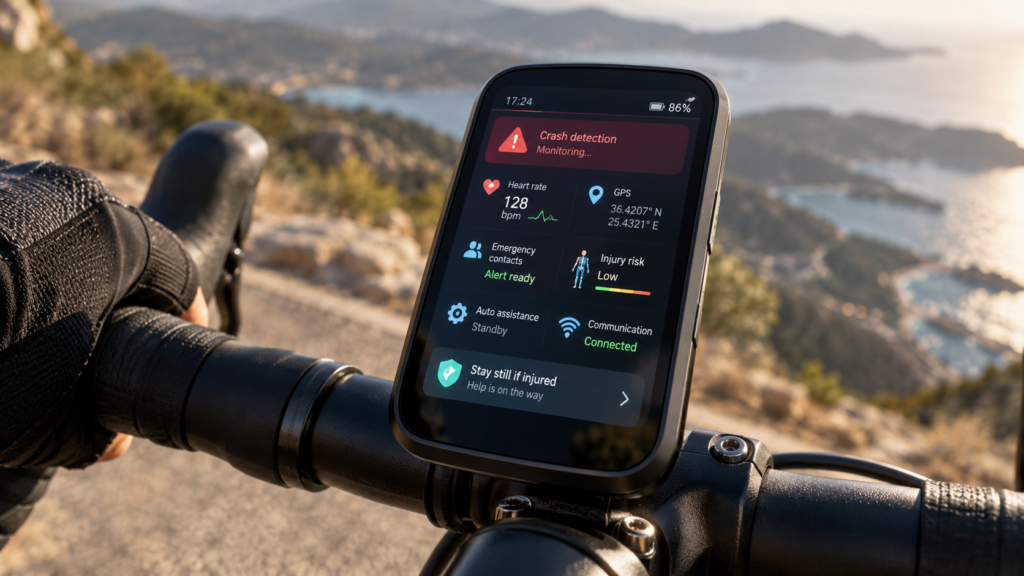
Automatic Emergency Notifications
After detecting a possible crash, connected bicycles may automatically send alerts to selected contacts or emergency services.
An emergency notification system may include:
- Rider location
- Time of incident
- Crash severity information
- Health information
- Communication status
This can be especially valuable for cyclists riding alone in remote locations.
AI Health Monitoring After an Accident
Future emergency response systems may combine crash detection with health monitoring technology.
Connected sensors may analyze:
- Heart rate changes
- Body temperature
- Movement response
- Consciousness indicators
- Physical stress signals
This information could help determine whether immediate assistance is required.
This connects with our article about AI Bicycle Health Monitoring 2026.
GPS Tracking and Location Sharing
Location accuracy is critical during emergency situations. AI bicycle systems may use connected GPS technology to share precise rider locations.
Emergency location features may provide:
- Real-time coordinates
- Route history
- Elevation information
- Nearby emergency access points
- Ride information
This can help responders locate cyclists more efficiently.
This connects with our article about AI Cycling Route Intelligence 2026.
Connected Communication Networks
A major part of emergency response technology is communication between devices.
Future smart bicycles may connect with:
- Smartphones
- Cloud platforms
- Emergency services
- Smart city networks
- Connected vehicles
This creates a wider safety network around the cyclist.
Connected communication systems are becoming an important part of future smart mobility development, allowing transportation devices to exchange information more effectively.
AI Emergency Assistance for Remote Cycling
Adventure cyclists, mountain riders, and long-distance cyclists often travel in areas where immediate assistance may not be available.
AI emergency response systems could provide additional protection by monitoring:
- Remote locations
- Trail conditions
- Weather risks
- Rider status
- Communication availability
This technology could improve confidence for cyclists exploring unfamiliar environments.
Integration With Smart Bicycle Ecosystems
Emergency response technology will likely become part of larger bicycle ecosystems rather than existing as a separate feature.
A connected bicycle platform may combine:
- Safety monitoring
- Performance tracking
- Navigation
- Maintenance
- Emergency response
This creates a complete digital safety environment.
This connects with our article about AI Bicycle Digital Ecosystem 2026.
AI Emergency Response and Smart Infrastructure
Future cities may integrate bicycle emergency systems with smart infrastructure.
Connected urban networks may help provide:
- Faster emergency communication
- Improved location accuracy
- Traffic awareness
- Connected rescue coordination
This connects with our article about AI Bicycle Traffic Intelligence 2026.
Benefits for Different Cyclists
Solo Riders
Cyclists riding alone may benefit from automatic assistance when they cannot manually contact others.
Adventure Cyclists
Remote riders may gain additional safety support during long-distance trips.
Urban Cyclists
City riders may benefit from faster communication and connected emergency networks.
The Future of AI Bicycle Emergency Response
AI bicycle emergency response technology represents a major advancement in connected rider protection.
Future developments may include:
- Advanced crash prediction
- Automatic emergency calling
- AI injury assessment
- Connected rescue networks
- Smart city integration
As bicycles become more intelligent, they may not only help riders perform better but also provide support during unexpected situations.
Conclusion
AI bicycle emergency response in 2026 represents the future of connected cycling safety. By combining artificial intelligence, sensors, communication technology, and rider health monitoring, smart bicycles may provide faster assistance when accidents occur.
The future bicycle may become more than a transportation device. It may become an intelligent safety partner designed to protect the rider.