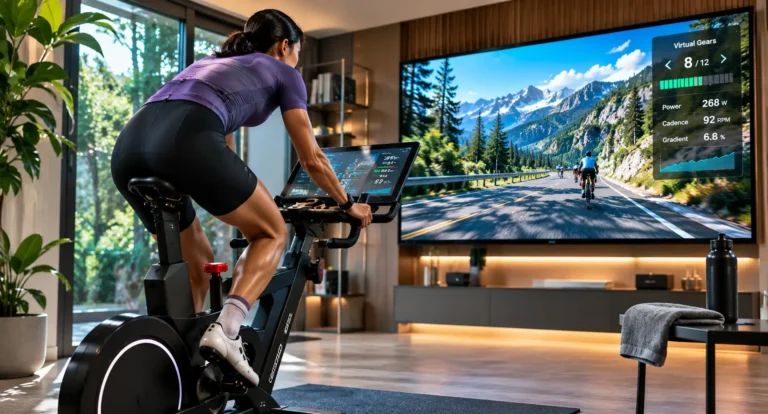
Cyclists have become very good at measuring the work they do on the bike. Power meters quantify output, training apps log intervals, and fitness platforms track weekly load. Until recently, however, the information collected while sleeping often remained separate from those workouts. In November 2026, cycling readiness became a more practical part of connected training with Wahoo’s new My Readiness feature and its integration with Oura Ring recovery data.
The system combines overnight signals such as heart rate variability, resting heart rate, and sleep with Wahoo’s record of recent training. Instead of evaluating sleep or exercise in isolation, it attempts to explain how the rider is responding to their workload and whether today’s session should be demanding or lighter.
That is a notable step for training technology, but readiness is still an estimate, not a medical diagnosis or a substitute for listening to how the body feels.
What Changed With Wahoo and Oura in November 2026?
Wahoo and Oura announced the integration on November 12. The official partnership announcement distributed through Endurance Sportswire explains that Oura’s overnight measurements now feed Wahoo’s My Readiness feature, which interprets them alongside recorded workouts.
The feature is available in the Wahoo App and SYSTM, with related access in Wahoo’s Apple Watch app. Oura is the first supported recovery-data provider at launch. The integration is intended to offer practical guidance based on a rider’s personal baseline rather than a single universal recovery threshold.
Our existing AI Bicycle Health Monitoring 2026 guide discusses the broader possibility of connected biometric feedback. The Wahoo-Oura launch makes that idea concrete through a specific consumer workflow.
What Does My Readiness Actually Measure?
Wahoo separates readiness into three major contributors: Recovery Response, Training Capacity, and Mental Capacity. Those three scores are combined into a daily readiness state.
Wahoo’s My Readiness support documentation explains how the components relate to one another and which inputs are required before the full score becomes available.
The goal is to distinguish ordinary fatigue after a hard training block from a recovery pattern that looks unusual for that cyclist.
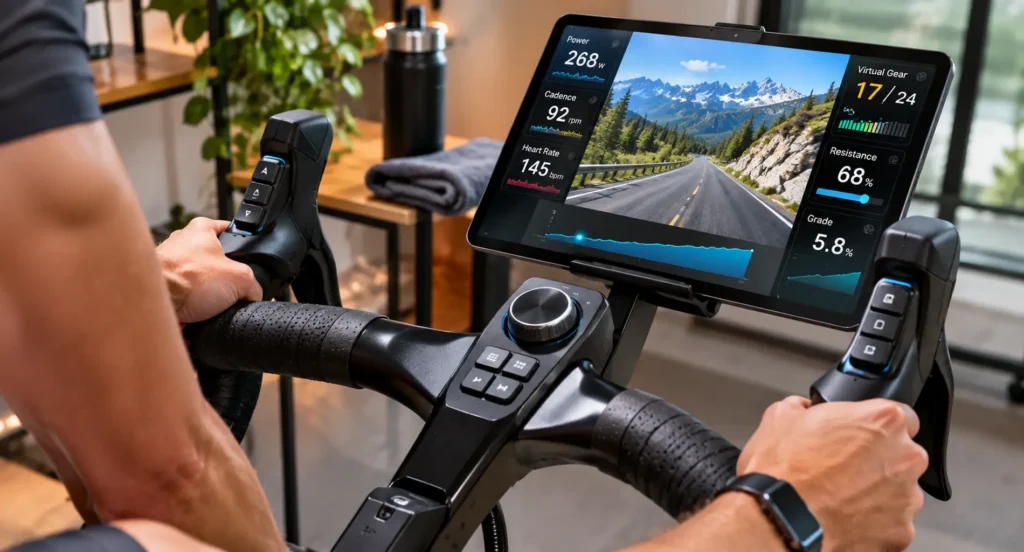
Recovery Response: Looking Beyond a Single HRV Number
Recovery Response draws on sleep, overnight heart rate variability, resting heart rate, and other available physiological signals from an authorized wearable. Wahoo compares them with the cyclist’s own historical range and the amount of training recently completed.
HRV is the variation in time between successive heartbeats. It changes in response to several influences, including workload, sleep, stress, and illness. A higher number is not automatically better than another person’s reading.
Oura’s official HRV guide specifically emphasizes comparing measurements with an individual’s baseline rather than using another athlete’s values as the benchmark.
This personal context is important. A rider may have low HRV after several demanding days without being unusually ill or overtrained; the overall trend matters more than one reading.
Training Capacity Explains the Workload Behind the Score
Wahoo’s Training Capacity compares shorter-term load with longer-term workload. In general, a heavy recent week may create more immediate fatigue than the rider’s habitual training supports, while a lighter period may allow additional recovery.
The calculation is based on Wahoo’s Dimensional Training Load methodology, which considers different types of cycling efforts rather than looking only at ride duration.
Wahoo’s Training Capacity documentation describes how short-term and long-term load contribute to the indicator.
This matters for interval training. An easy endurance ride and a session of intense repeated sprints can have very different physiological demands even when their total time is similar.
Mental Capacity Adds Another Dimension
Physical training is not the only factor affecting performance. Stress, cognitive fatigue and poor concentration can change how a ride feels and how confidently a cyclist makes decisions.
Wahoo’s Mental Capacity assessment combines a short reaction-time exercise with questions about rest, stress and perceived readiness. The result contributes to the broader assessment when enough personal data has been collected.
The company’s mental-assessment guide recommends taking the test consistently to develop a useful personal reference point.
That does not mean a short app exercise can capture every aspect of mental wellbeing. It offers one additional input rather than a complete psychological assessment.
Six Readiness States Make the Data More Understandable
Wahoo translates the numerical inputs into six descriptive states: Primed, Ready, Under Stress, Depleted, Rest Recommended, and Anomalies Detected.
These labels make the system easier to interpret than several independent charts. For example, a rider may be classified as ready for demanding work, or the app may advise caution because recovery markers are unexpectedly low.
The anomaly state is particularly important to describe accurately. It signals an unusual pattern in the available data; it cannot identify the cause or diagnose an infection or other medical condition.
Riders with persistent concerning symptoms should seek professional medical advice rather than relying on a cycling app’s interpretation.
How the Oura Ring Connection Works
Riders authorize an Oura account as the recovery data source in the Wahoo App. Wahoo can import up to 90 days of eligible historical information to help calibrate the baseline.
If a rider does not have sufficient wearable history, the system may display a calibration state until enough data has accumulated. Wahoo’s documentation describes a seven-day minimum for initial recovery analysis.
The integration currently depends on an Oura account with the required active membership. Not every wearable or smartwatch is interchangeable at launch, even if it tracks similar signals.
Cycling Industry News’ November 13 report confirms the feature’s arrival and Oura’s role as the initial partner.
How Could Readiness Change a Training Day?
Imagine that a cyclist planned hard threshold intervals for Tuesday. The previous evening involved poor sleep, and overnight recovery signals are lower than normal. The app may recommend an easier session or additional rest.
On another day, the same rider might have finished several demanding workouts but still show recovery within the expected range. The system could give a more encouraging interpretation.
These examples illustrate the intended use; the recommendation is not a guarantee that the suggested session is optimal for every athlete.
Our AI-Powered Cycling Coaching 2026 article discusses the broader trend toward adaptive workouts. Here, the distinguishing feature is the direct connection between a named wearable’s overnight measurements and a cycling platform’s accumulated training history.
What Is Free, and What Requires a Subscription?
Wahoo says the daily readiness state and Recovery Response information are available without a paid Wahoo subscription. Additional historical Training Capacity and Mental Capacity analysis is tied to Wahoo’s paid CORE or PRO offerings.
Separately, the Oura integration requires a qualifying Oura membership. So the phrase “free readiness feature” should not be interpreted as meaning the full wearable-data setup has no recurring costs.
App features and subscription terms can change. Riders should check both providers’ current terms before subscribing or buying hardware for this particular workflow.
Readiness Data Is Not the Same as Coaching Judgment
Training apps are valuable because they provide consistency. But they cannot fully understand every influence on a cyclist’s life, such as a demanding workday, travel, nutrition, motivation, or an emerging health issue.
Readiness scores may also be affected by missing data or imperfect sensor readings. A single unusual night does not always justify canceling an important session, and a reassuring score does not mean an exhausted rider must push harder.
The best use is as decision support alongside perceived exertion, symptoms, training goals and, when relevant, professional coaching.
Indoor and Outdoor Cycling Can Share the Same Recovery Picture
One reason the integration is useful is that a cyclist may train on several platforms. Indoor smart-bike sessions, outdoor endurance rides and racing efforts can all contribute to the workout history analyzed in Wahoo’s ecosystem when those sessions are successfully imported.
This complements our Smart Indoor Bikes 2026 coverage, which looks at the increasing flexibility of connected training hardware and software.
Combining the two perspectives creates a more complete workflow: devices measure the ride, a wearable tracks overnight recovery, and the training platform puts them in context.
Conclusion
Cycling readiness in 2026 is moving beyond simply reviewing power numbers and sleep charts separately. Wahoo’s My Readiness feature uses Oura data, training load, and a mental check-in to present a more contextual view of how the rider is responding to exercise.
It is a promising step, but not a substitute for judgment or medical advice. The best results will come from tracking consistent personal trends, understanding subscription and privacy requirements, and treating recommendations as one input into a thoughtful training plan. For cyclists balancing hard workouts with recovery, connected data is becoming more useful when it offers context rather than simply more numbers.