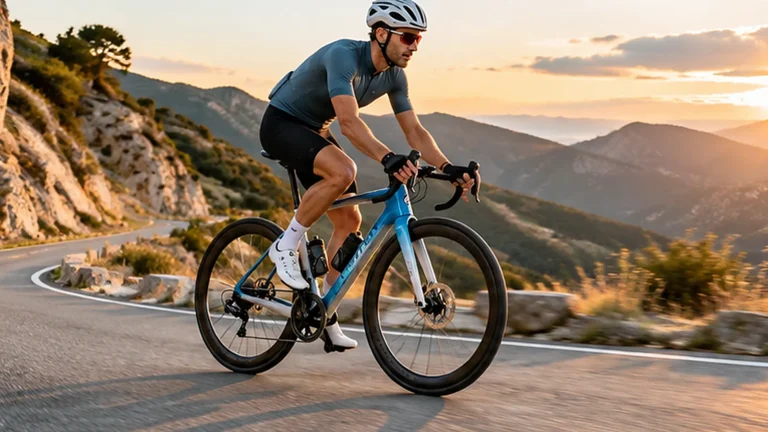
The Magene QED2 wireless groupset was officially unveiled on November 19, 2026, bringing a fully wireless 2×13-speed electronic road drivetrain to a market dominated by established component brands. Magene’s announced package includes electronic shifting, hydraulic braking components, carbon cranks, a P515 power meter, chainrings, cassette, and chain. The company quotes 2,190 g for the complete set, including the power meter.
Thirteen rear sprockets and wireless shifting make a striking specification sheet, but dependable braking, serviceability, and component fit matter more than an extra gear. This independent explainer examines what the manufacturer has confirmed, what remains uncertain for global buyers, and what to check before replacing an existing drivetrain. It is not a hands-on test.
What Is the Magene QED2?
QED2 is the second generation of Magene’s road electronic groupset. Its unveiling took place at the company’s brand event in Qingdao, China. Magene describes the product as a fully wireless electronic 2×13 road shifting platform developed with its own communications, motor-control, and braking technology.
Chinese cycling-industry launch coverage describes the system’s purpose and initial specifications. This is a launch announcement, not proof that long-term performance has been independently validated.
Magene QED2 2026 Specifications
| Feature | Announced detail |
|---|---|
| Shifting | Electronic, fully wireless communication |
| Gearing | 2 front chainrings × 13 rear sprockets |
| Published system weight | 2,190 g including P515 power meter |
| Power meter | P515 spider-based unit included in launch package |
| Quoted range of gear ratios | 441% overall |
| Quoted electronic battery endurance | About 2,000 km under company test conditions |
| Wireless protocol | Magene proprietary low-power 2.4 GHz |
| Package | Shifters, derailleurs, brake components, cranks, power meter, rings, cassette, chain |
| Global retail price | Not independently verified at publication |
Magene’s official November 19 launch post confirms 2×13 gearing, full wireless operation, the complete-system weight claim, and the power meter. Regional specifications and final shipping packages should be confirmed with a dealer before paying.
Why 2×13-Speed Gearing Matters
More sprockets do not produce speed by themselves. Their main benefit is allowing drivetrain designers to distribute ratios more precisely. With two front chainrings and 13 rear cogs, a rider may be able to retain a low climbing ratio and a useful high gear without accepting awkward cadence jumps between frequently used gears.
Magene quotes a 441% gearing range, but the usefulness of that number depends on actual chainring and cassette sizes. Riders should compare the lowest and highest available ratios with what they currently use rather than automatically assuming thirteen is superior to twelve.
For broader context, our 13-speed road drivetrains guide explains the move toward additional cassette sprockets, including the differences between production equipment and racing prototypes.
What Does Fully Wireless Mean Here?
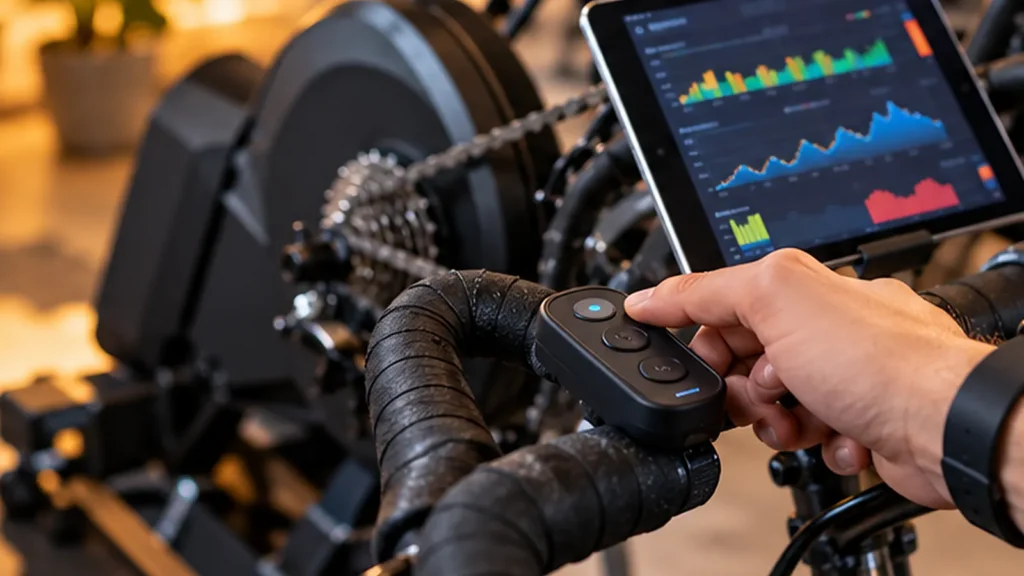
Electronic groupsets use electrical signals to command derailleurs. A fully wireless design eliminates the wired connection between shifters and shifting units, simplifying some frame-routing and installation work. Magene says QED2 uses its own low-power 2.4 GHz communication system, which it has evaluated during development.
As our battery-free drivetrain guide notes, wireless does not mean battery-free. Electronic shifting still relies on stored power, and riders should learn how to check charge levels, what happens when a battery runs low, and how each control pairs with the shifting components. Magene has quoted approximately 2,000 km of battery endurance, but real-world use may vary with temperature, shift frequency, storage conditions, and firmware.
Integrated Power Measurement Is a Major Selling Point
Magene includes a P515 power-meter crankset in its announced QED2 package. Power data can help cyclists pace climbs and structure interval sessions, which makes a bundled power meter a practical benefit rather than a decorative specification.
The manufacturer’s existing PES P515 product documentation describes a spider-based meter with claimed ±1% accuracy, ANT+ and Bluetooth data transmission, and rechargeable operation. However, buyers should verify the specifications of the P515 version actually included in QED2 rather than assume every existing P515 configuration is identical.
Why the Groupset Must Be Treated as a Complete System
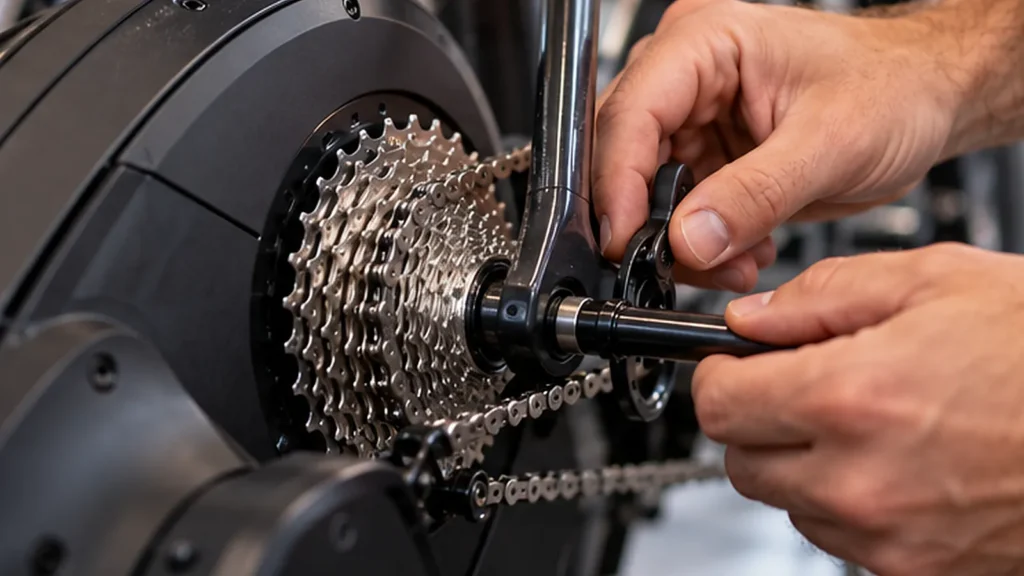
This is important because 13-speed road cassettes use closely spaced components. Substituting an unrelated chain or cassette may change shift quality or create mechanical clearance problems. Do not assume compatibility with Shimano, SRAM, or Campagnolo thirteen-speed parts merely because the gear count matches.
The same applies to freehub bodies, brake rotors, lever ergonomics, bottom-bracket standards, and frame interfaces. A mechanic should check the precise production documentation before attempting an upgrade.
How Does QED2 Compare With Existing 13-Speed Systems?
Thirteen-speed shifting is not exclusive to Magene. SRAM’s RED XPLR AXS already uses thirteen gears in a one-chainring gravel configuration. Its design emphasizes wide range, chain retention, and a specific frame-mount interface. That is a different use case from Magene’s two-chainring road system.
Campagnolo has also brought thirteen-speed equipment to road cycling, while several other brands have been exploring additional gears. The market trend matters, but a competitor’s proven features cannot be assumed to apply to QED2. The relevant comparison is shifting consistency, setup time, braking feel, replacement-part availability, software support, and total purchase cost.
The Most Important Question: Braking Confidence
A drivetrain upgrade is not just about shifting. Its brake levers, hydraulic system, hoses, calipers, and rotors must work reliably. Public discussions of Magene’s earlier QED platform have raised questions about braking trust, making careful independent testing particularly important for this generation.
Cyclists Hub’s prelaunch QED2 analysis explains why the previous model’s reputation makes the new product’s safety performance a central issue. That article was published before the November 19 unveiling, so its unspecified launch details should not supersede the manufacturer’s newer announcement.
Buyers should wait for controlled braking tests, follow official installation instructions, and confirm local support for bleeding, seals, pads, and replacement levers. A feature list cannot establish brake safety.
Weight, Battery Life, and Real-World Claims
The manufacturer quotes 2,190 g for the complete QED2 assembly including the P515 power meter. The number sounds competitive, but published system weights are only comparable when the included components and measurement methods match. Rotor size, crank length, cassette configuration, hoses, and hardware can all affect a full build.
The company also claims an electronic battery endurance of roughly 2,000 km. That is not a guarantee for every rider or weather condition. Long-term testers will need to assess discharge while stored, charging convenience, water resistance, and battery replacement options.
Updated Chinese industry coverage of the launch includes the published weight and wireless system claims. Independent measurements remain the next important evidence.
Is QED2 an Easy Upgrade for an Existing Road Bike?
Possibly, but the answer depends on the frame and wheels. Before purchasing, obtain a compatibility sheet covering the rear freehub, cassette, chain, crank spindle, bottom bracket, front derailleur mount, brake hoses, brake rotors, and any special tools.
If your bike already has dependable electronic 12-speed shifting, a full upgrade may produce only a small practical gain. The additional sprocket could be useful for maintaining cadence in particular terrain, but it does not automatically justify replacing otherwise functional components.
Magene QED2 Price and Availability
Magene publicly introduced the product in China on November 19. At the time of writing, a universally applicable retail price and complete country-by-country rollout were not independently confirmed. Avoid treating dealer rumors or converted Chinese prices as official U.S. pricing.
Ask a seller whether the price includes the cassette, chainrings, brakes, hydraulic lines, battery and charging equipment, as well as any taxes or shipping. If availability is limited, factor in the wait for warranty parts.
Should You Buy the Magene QED2 Immediately?
Riders building a new performance road bike may find the idea appealing: 2×13 gearing, fully wireless shifting, an integrated power meter, and a claimed low weight. Yet early adoption carries a larger uncertainty than buying a mature, widely serviced platform.
Anyone who races frequently, travels internationally, or relies on one bicycle for daily use should prioritize proven braking, predictable firmware, and available spare parts. Enthusiasts willing to test new equipment may take a different view, provided they have access to competent installation and service.
Final Verdict
The Magene QED2 2026 is a noteworthy arrival in electronic road shifting. The November 19 launch confirms an ambitious integrated design and a new 13-speed option, but the specifications alone cannot settle questions about braking, compatibility, or long-term durability.
For now, the sensible approach is to compare the complete cost against established systems, wait for independent ride testing, and verify that every part works with your frame before upgrading.