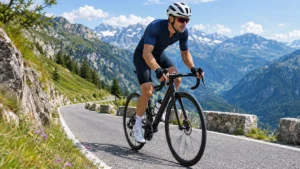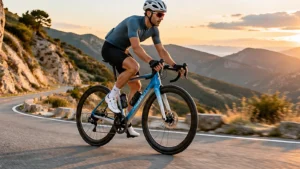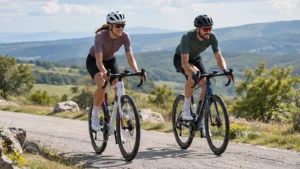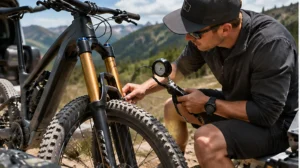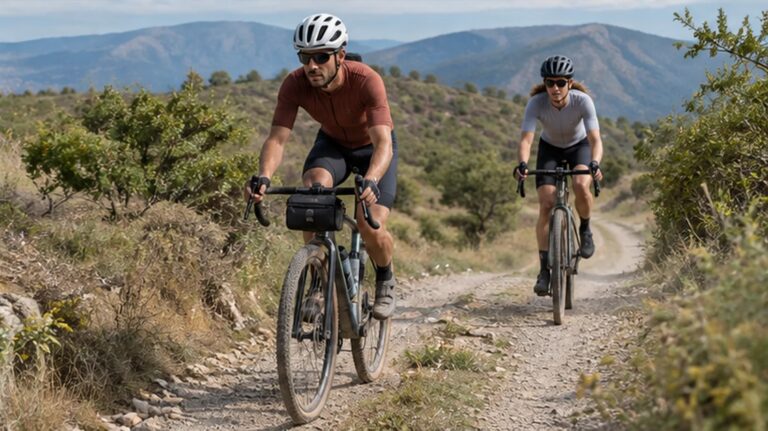
The Polygon Tambora 2027 gravel bike has arrived with a striking combination: space for 55mm tires, integrated frame storage, compatibility with short-travel gravel suspension, and multiple carbon builds aimed at different budgets. Revealed in November 2026, the redesigned Tambora follows the trend toward faster, more capable gravel machines without requiring every rider to buy a top-end race build.
Does that make it the right bicycle for long gravel events, mixed-surface adventures, or everyday riding? This guide examines Polygon’s published specifications, the practical value of the upgrades, and what buyers should check before ordering. It is a specification-based overview, not a hands-on ride review.
What Is New About the 2027 Polygon Tambora?
Polygon has repositioned the Tambora as a performance-oriented carbon gravel platform with more off-road capability. According to the official Tambora product information, the ACX carbon frame accepts both single- and double-chainring drivetrains and integrates a storage compartment in the downtube.
Coverage from BikeRadar’s launch report also highlights geometry changes intended to balance a lower, racier riding position with stability on rough surfaces. Polygon has not published independent comparative wind-tunnel results showing how much faster the new frame is, so its fastest-ever claims should be understood as manufacturer positioning.
Polygon Tambora 2027 Specifications at a Glance
| Feature | Announced detail |
|---|---|
| Frame and fork | Polygon ACX carbon |
| Maximum tire clearance | 700c × 55mm / approximately 2.2 inches |
| Suspension compatibility | Gravel fork up to 40mm travel; confirm 435mm axle-to-crown requirement |
| Storage | PolyPocket downtube compartment with zipped pouch |
| Drivetrain configurations | 1x and 2x options, mechanical and electronic |
| Other standards | T47 bottom bracket, UDH rear hanger, 27.2mm seatpost |
| Available frame sizes | XXS through XL |
| Maximum system weight | 125kg including rider, bicycle and equipment |
| Entry-level reported price | From about US$1,799, depending on market and retailer |
These are published specifications, not measurements from our own test bicycle. Build weights, prices, colors, component brands, and availability may change by region.
Why 55mm Tire Clearance Matters
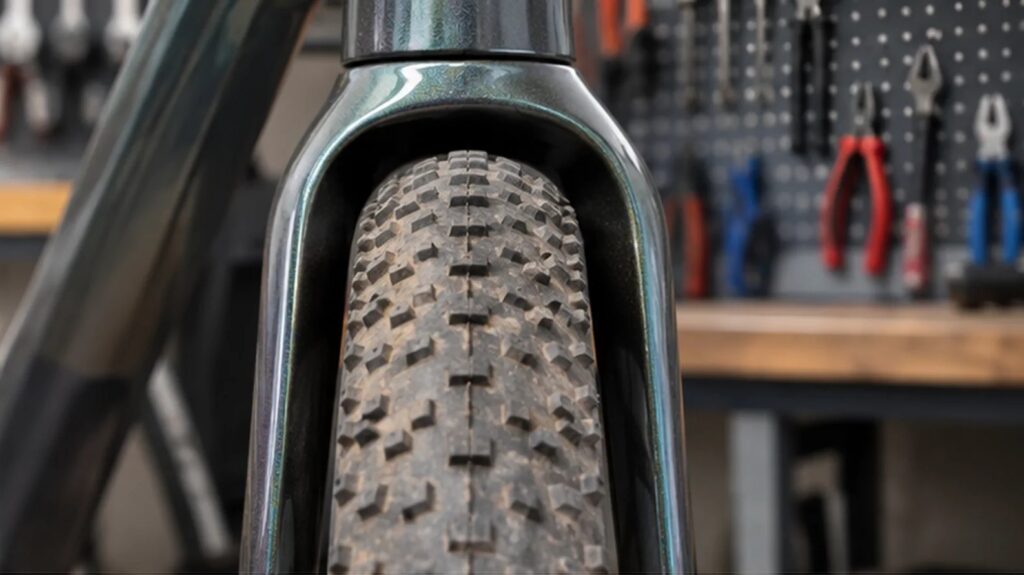
One of the Tambora’s most significant updates is clearance for 55mm tires on 700c wheels. That is much larger than the rubber traditionally fitted to road-derived gravel bikes. The extra volume creates room to lower inflation pressure within the tire and rim makers’ approved limits, potentially improving traction, control and comfort across loose stones and washboard roads.
However, a 55mm maximum does not mean that the widest possible tire will be fastest everywhere. Smooth hardpack may favor a lighter, faster-rolling setup, while deep gravel or rough forest roads may justify additional width and tread. Our gravel racing technology guide explains why tire choice has become a central performance decision.
Actual inflated width also varies with rim internal width and tire casing. Before fitting a near-limit tire, check side and vertical clearance with the wheel installed, and leave adequate space for mud, small stones, and wheel flex.
Can You Install a Gravel Suspension Fork?
Yes, with important qualifications. Polygon’s current product FAQ allows a short-travel suspension fork up to 40mm, with a specified axle-to-crown dimension of 435mm. This gives riders the option of more active front-wheel movement when tackling repeated rocks or rough descents.
That does not mean every 40mm suspension fork is compatible. Brake routing, steerer dimensions, wheel and axle standards, tire clearance, offset, and suspension-corrected length still have to match. A change in fork geometry can alter the bike’s steering and weight distribution.
Off-road.cc’s launch coverage describes the fork-ready platform as part of Polygon’s effort to combine racing speed with greater rough-terrain capability. For many riders, though, choosing an appropriate tire pressure and learning proper bike handling may provide a bigger immediate improvement than purchasing suspension.
How Has the Geometry Changed?
Polygon has lowered the frame’s stack compared with the previous Tambora while adjusting the steering angle and wheelbase. The idea is to help the rider achieve an efficient position without making the bicycle nervous on irregular ground. A longer wheelbase and slacker front-end geometry can encourage stability at speed, while a lower front end may ask more of the rider’s flexibility.
According to Bikerumor’s technical breakdown, the platform is offered in six sizes, with a claimed painted medium frame weight of around 1,200g including internal storage hardware.
Do not choose a frame using the label alone. Compare stack, reach, standover height, and the complete cockpit against your current bicycle. A professional fitting may be particularly helpful if you want to race and also remain comfortable for several hours. See our bike fit and geometry optimization guide for a clearer explanation of these measurements.
PolyPocket Frame Storage: Convenient or Complicated?
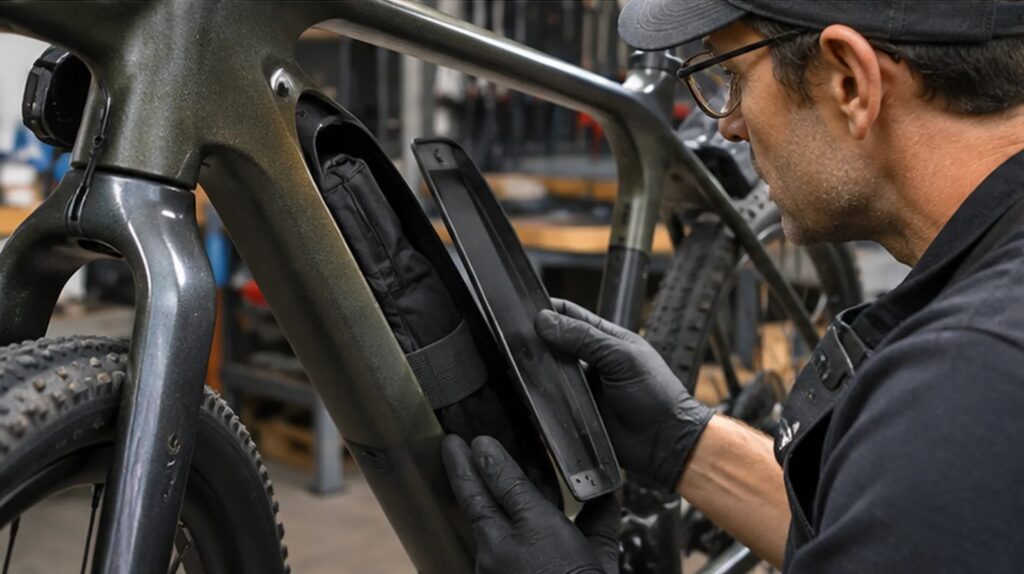
The new Tambora carries small essentials in a compartment inside the downtube. Polygon calls the feature PolyPocket and includes a zipped pouch that can hold items such as a compact tool, tire plug kit, tube, or inflator. A lower access feature is designed to help keep loose objects reachable rather than lost in the frame.
Built-in storage makes practical sense for gravel events where repairs may be needed far from a shop. It can reduce the number of bulky accessories attached to the outside of the bicycle. Still, it is worth checking the lid seal, the bag’s actual capacity, and how easily you can retrieve equipment with cold or muddy hands.
There are also mounting provisions for useful accessories, including top-tube bag options. However, Polygon’s current FAQ says the frame has no fixed mudguard mounts, so year-round commuters should check accessory fit rather than assuming full fenders will bolt straight on.
Comparing the Four Tambora Builds
The range includes four complete bicycles sharing the same basic carbon platform. That gives buyers a choice between more affordable mechanical shifting and pricier electronic components.
| Build | Main equipment | Best suited to |
|---|---|---|
| Tambora 4 | Shimano CUES mechanical 2x, alloy wheels | Value-oriented gravel riders |
| Tambora 6 | Shimano GRX mechanical 2x, alloy wheels | Long-distance riders seeking broader gearing |
| Tambora 7 Di2 | Electronic GRX Di2, carbon wheels | Riders wanting electronic shifting without the top-tier price |
| Tambora 9 AXS | SRAM Force XPLR AXS, integrated cockpit, carbon wheels | Race-focused buyers |
As an example, Polygon’s current U.S. pages list the Tambora 6 at $2,499 and the Tambora 7 Di2 at $3,199. Some launch reports quote different figures, so verify the specific regional listing before publication or purchase. Cycling Weekly’s comparison is useful for understanding how the builds differ.
Who Should Buy the New Tambora?
The strongest candidate is a rider who enjoys fast mixed-surface routes but also encounters rough gravel, short sections of singletrack and remote roads. The bike’s wide tire clearance, optional short-travel suspension and frame storage give it more flexibility than a narrow-tire race frame.
A rider mainly tackling smooth canal paths may not need every off-road feature. Likewise, someone loading heavy panniers for lengthy expeditions should examine a dedicated touring or bikepacking model. The 125kg total system limit applies to the combined weight of rider, bicycle, and luggage, not only the rider.
Our 2026 gravel bike trends guide offers additional context on tire sizes, handling, and suspension choices.
What to Verify Before Ordering
- Test the fit or compare a complete geometry chart with your current bike.
- Check the actual tire size and compatible rim specifications on the selected build.
- Confirm whether local service shops support the supplied groupset.
- Ask about replacement storage covers, derailleur hangers, and other proprietary parts.
- Check warranty terms, stock availability, delivery charges, and regional pricing.
Also consider long-term maintenance. Electronic gearing may improve convenience, but replacement components and batteries can cost more than mechanical parts. Carbon wheels save weight on certain builds, yet they do not remove the need for periodic spoke, bearing and tire checks.
Final Verdict: Is Polygon Tambora 2027 Worth It?
The Polygon Tambora 2027 looks compelling on paper because it packages increasingly premium gravel-racing features into a range with accessible entry points. Wide tire clearance, an integrated tool compartment, frame standards such as UDH and T47, and optional short-travel front suspension all make practical sense for modern mixed-terrain riding.
Its actual value will depend on fit, dealer support, and independent ride testing. For cyclists who want to race gravel but also explore rougher routes, it deserves a place on the shortlist.