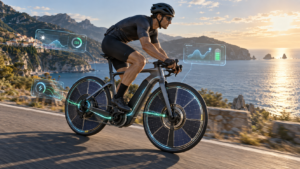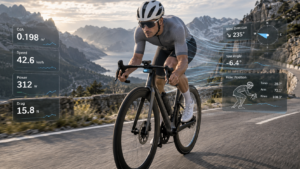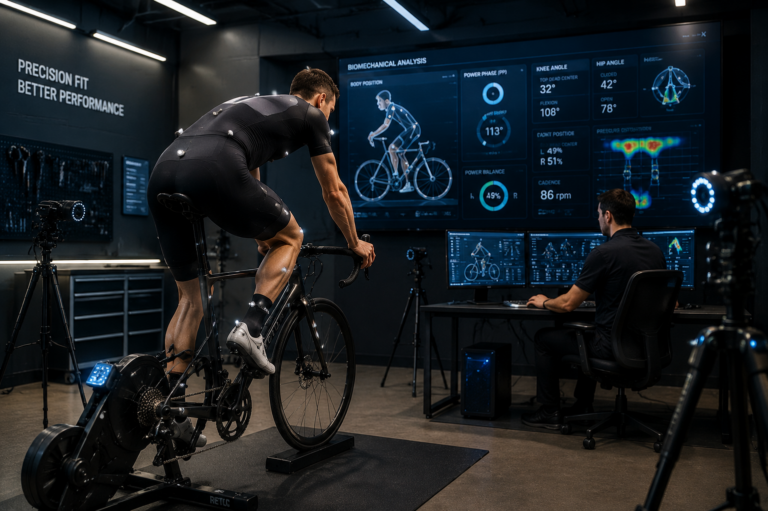
Cycling performance is becoming increasingly data-driven, and in 2026, artificial intelligence is transforming one of the most important parts of riding efficiency: bike fitting. Traditional bike fits rely heavily on manual measurements and expert observation, but AI-powered bike fit systems 2026 combine motion tracking, smart sensors, and machine learning to create highly personalized riding positions.
These intelligent systems analyze how cyclists move on the bike and provide recommendations designed to improve comfort, power transfer, aerodynamics, and injury prevention.
The Evolution of Bicycle Fitting Technology
Professional bike fitting has traditionally involved measuring body dimensions, adjusting saddle height, modifying handlebar position, and observing rider movement. While expert fitters remain valuable, AI technology is adding a new level of precision.
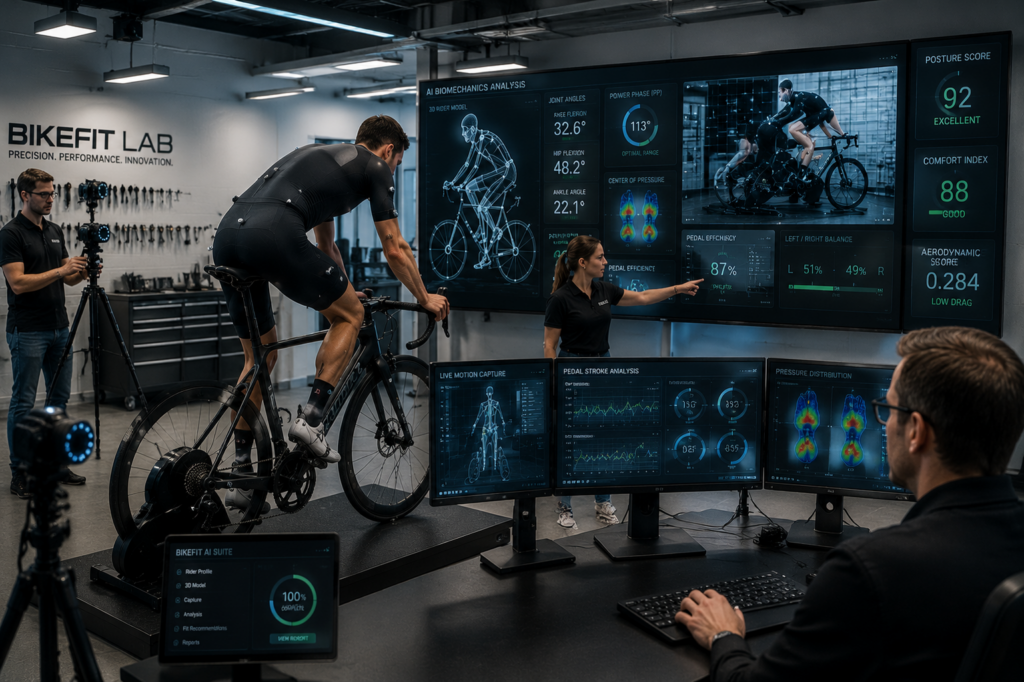
Modern AI fitting systems can analyze:
- Body position while riding
- Joint angles and movement patterns
- Pedaling symmetry
- Pressure distribution
- Aerodynamic positioning
Instead of relying only on visual assessment, AI systems process thousands of movement points to identify adjustments that may improve performance.
This technology connects with other smart cycling innovations discussed in our article about Wearable Cycling Biofeedback Tech 2026.
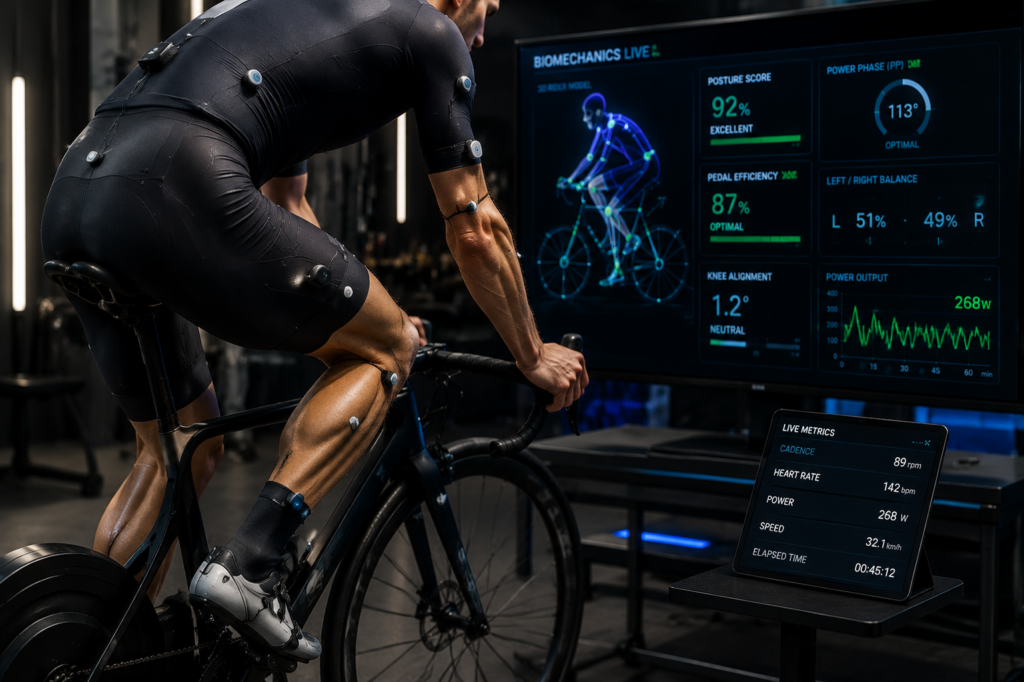
How AI Bike Fit Systems Work
AI bike fitting combines multiple technologies to create a complete analysis of the rider and bicycle interaction.
Common components include:
- Motion capture cameras: Track rider movement from multiple angles.
- Smart sensors: Measure joint movement, pressure, and alignment.
- Artificial intelligence: Identifies patterns and recommends adjustments.
- Digital modeling: Creates visual simulations of improved positioning.
During a fitting session, cyclists typically ride on a smart trainer while cameras and sensors collect data. The AI system then analyzes the information and suggests changes to optimize the rider’s position.
Improving Cycling Efficiency and Power Output
Small adjustments in bike position can significantly affect cycling efficiency. A saddle that is too high, handlebars positioned incorrectly, or poor cleat alignment may reduce power transfer and increase fatigue.
AI-powered systems help identify inefficient movement patterns by analyzing:
- Pedal stroke consistency
- Hip stability
- Knee tracking
- Upper body movement
By improving biomechanics, riders may achieve better energy efficiency during training sessions and long-distance rides.
These insights complement AI training platforms discussed in our guide about AI-Powered Cycling Training 2026.
AI Bike Fitting for Injury Prevention
One of the biggest advantages of advanced bike fitting technology is injury prevention. Repetitive cycling movements can contribute to discomfort when a rider’s position is not properly adjusted.
AI systems can detect potential issues involving:
- Knee alignment problems
- Excessive hip movement
- Uneven pressure distribution
- Incorrect riding posture
By identifying these patterns early, riders can make adjustments before discomfort develops into more serious problems.
Smart Bike Fit and Connected Cycling Systems
Future bike fitting technology will become increasingly connected with other cycling devices. AI fit systems may communicate with:
- Smart bike frames
- Power meters
- Electronic drivetrains
- Wearable sensors
- Indoor training platforms
For example, a smart bicycle could automatically adjust recommendations based on changes in rider performance, fitness level, or training goals.
This creates a complete connected ecosystem similar to the technology discussed in our article about Smart Bike Frames 2026.
Professional Racing and Everyday Cycling Applications
Although professional cyclists have used advanced bike fitting for years, AI systems are making this technology more accessible.
Competitive Cyclists
Racers can use AI fitting to optimize aerodynamic positioning, improve power output, and fine-tune equipment before important events.
Recreational Riders
Casual cyclists benefit from improved comfort and reduced fatigue, especially during longer rides.
Gravel and Adventure Riders
Long-distance riders can optimize their position for endurance, stability, and comfort across changing terrain.
The Future of AI Bike Fit Technology
As artificial intelligence continues improving, bike fitting systems will become faster, more accurate, and more personalized.
Future developments may include:
- Real-time position correction while riding
- AI-powered saddle and handlebar recommendations
- Automatic bike geometry adjustments
- Integration with smart materials
- Cloud-based rider performance profiles
The future bicycle may not only measure performance but actively help riders achieve their optimal position.
Conclusion
AI-powered bike fit systems in 2026 represent a major advancement in cycling technology. By combining artificial intelligence, biomechanics, and connected sensors, these systems help riders improve efficiency, comfort, and long-term performance.
As smart cycling continues to evolve, AI bike fitting will become an essential tool for cyclists seeking a more personalized and data-driven riding experience.