Electric bicycles are entering a new era of energy innovation. In 2026, manufacturers are exploring self-charging technologies designed to extend riding range, improve battery efficiency, and reduce dependence on traditional charging methods. The latest self-charging e-bikes 2026 combine solar assistance, regenerative braking, artificial intelligence, and advanced battery management systems to create more efficient electric cycling experiences.
While fully self-powered e-bikes remain a developing technology, new energy recovery systems are making electric bikes smarter and more sustainable than ever before.
The Evolution of E-Bike Energy Technology
Battery technology has always been one of the biggest factors influencing e-bike performance. Range limitations, charging time, and battery lifespan continue to influence how riders use electric bicycles.
New energy technologies are addressing these challenges by improving how e-bikes generate, store, and manage electricity.
Modern self-charging concepts include:
- Solar-assisted charging systems
- Regenerative braking technology
- AI battery optimization
- Energy-efficient motors
- Smart power management
These developments connect with previous innovations discussed in our article about Smart E-bike Battery Management Systems 2026.
Solar Charging Technology for E-Bikes
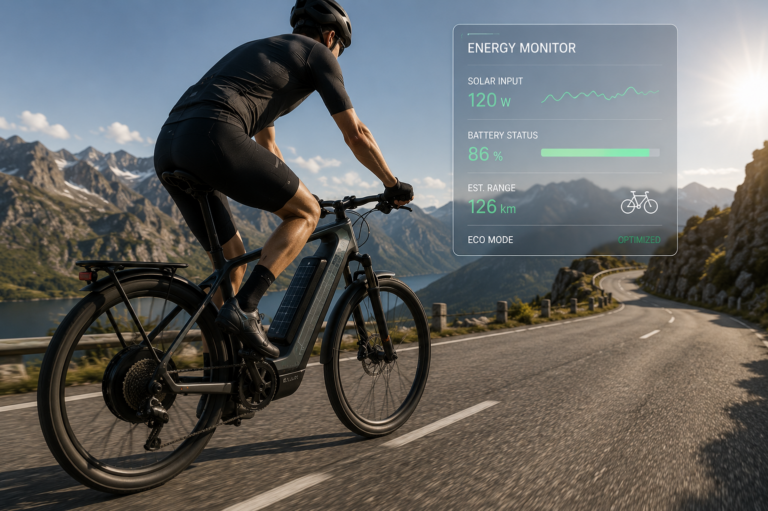
Solar-assisted e-bikes are one of the most promising developments in sustainable cycling technology. Instead of relying entirely on wall charging, solar systems use photovoltaic materials to generate additional energy.
Potential applications include:
- Solar panels integrated into bike accessories
- Solar-powered charging stations
- Energy-generating bikepacking equipment
- Lightweight photovoltaic frame components
Although solar charging alone may not completely replace traditional charging for most riders, it can provide valuable additional range during long-distance adventures.
This technology is especially useful for touring cyclists and bikepackers who spend extended periods away from electrical infrastructure.
For more adventure-focused technology, explore our article about Smart Bikepacking Systems 2026.
Regenerative Braking and Energy Recovery
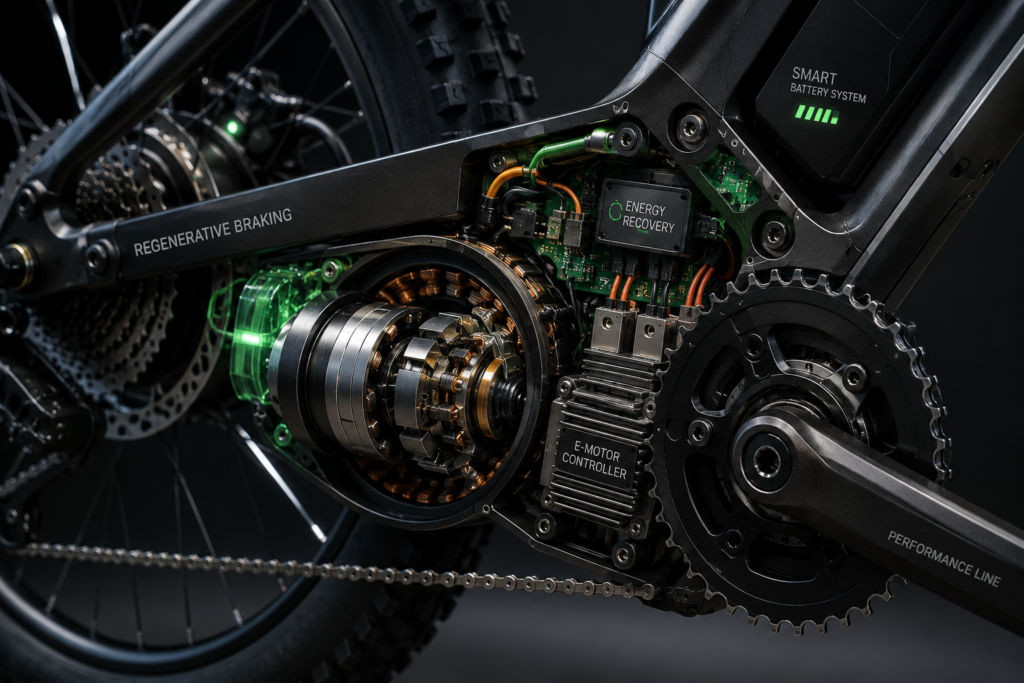
Regenerative braking technology allows electric bicycles to recover some energy that would normally be lost during braking or downhill riding.
Similar systems are already common in electric vehicles, and e-bike manufacturers are adapting these concepts for smaller bicycle motors.
During downhill sections or braking events, regenerative systems can convert motion energy back into electrical energy stored in the battery.
AI Battery Optimization and Intelligent Energy Management
Artificial intelligence is becoming a major component of future e-bike systems. Instead of simply displaying battery percentage, AI-powered systems analyze riding conditions and adjust energy usage automatically.
Smart battery platforms can consider:
- Terrain elevation
- Rider weight
- Pedaling behavior
- Weather conditions
- Remaining route distance
The system can then recommend power modes or adjust motor assistance to maximize remaining battery life.
This approach connects with our coverage of Connected Cycling Analytics 2026, where data-driven cycling systems improve rider decision-making.
Smart Displays and Range Prediction
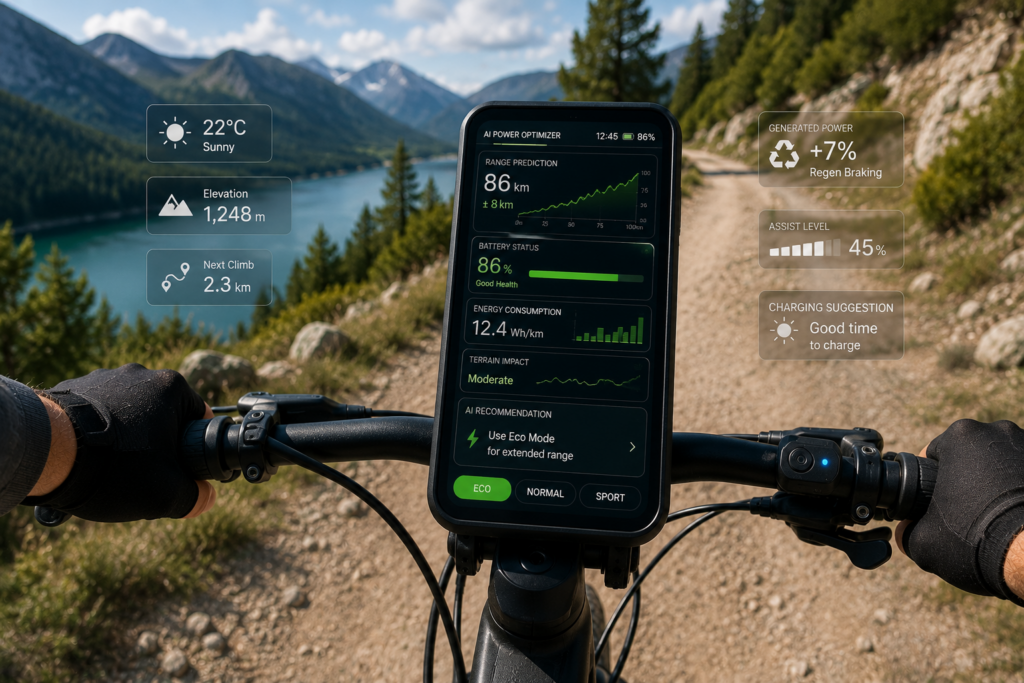
Future e-bikes will provide more accurate range predictions through connected displays and AI-powered analytics.
Instead of estimating range based only on battery percentage, smart systems analyze real-time riding conditions to calculate how far a rider can realistically travel.
Riders may receive information about:
- Remaining distance
- Energy consumption trends
- Charging recommendations
- Optimal assistance settings
Sustainability Benefits of Self-Charging E-Bikes
Energy-efficient e-bike technology supports the growing movement toward sustainable transportation. Improved battery systems can reduce charging frequency while extending battery lifespan.
Manufacturers are also exploring recyclable battery materials and environmentally responsible production methods.
These developments align with trends discussed in our article about Sustainable Cycling Tech 2026.
Challenges Facing Self-Charging E-Bikes
Despite rapid innovation, several challenges remain before self-charging technology becomes standard.
- Limited solar energy production during normal rides
- Additional weight from energy systems
- Higher manufacturing costs
- Battery recycling requirements
- Technology integration challenges
Engineers continue testing solutions to improve efficiency while maintaining the lightweight characteristics cyclists expect.
The Future of Energy-Independent Cycling
The future e-bike may combine multiple energy technologies into one connected system. Solar assistance, regenerative braking, AI management, and smart components will work together to create more efficient electric bicycles.
Future developments may include:
- Advanced solar-integrated frames
- Wireless charging systems
- AI-powered energy forecasting
- Longer-lasting solid-state batteries
- Fully connected e-bike ecosystems
Conclusion
Self-charging e-bikes in 2026 represent an important step toward smarter and more sustainable electric transportation. While complete energy independence is still developing, solar assistance, regenerative braking, and AI battery optimization are already changing how riders experience electric cycling.
As battery technology continues improving, future e-bikes will become more efficient, intelligent, and environmentally friendly for commuters, adventurers, and everyday riders.