The UCI 2026 regulations are expected to significantly reshape modern road cycling. From handlebar width restrictions to frame geometry updates, these rules are influencing how manufacturers design faster, safer, and more standardized race bikes.
Why UCI Changes Matter
The Union Cycliste Internationale continues to refine racing standards to improve safety and fairness. The 2026 updates focus heavily on aerodynamics, rider positioning, and equipment uniformity.
These changes are already impacting brands like Specialized, Canyon, and Trek Bikes.
Aero Handlebar Restrictions
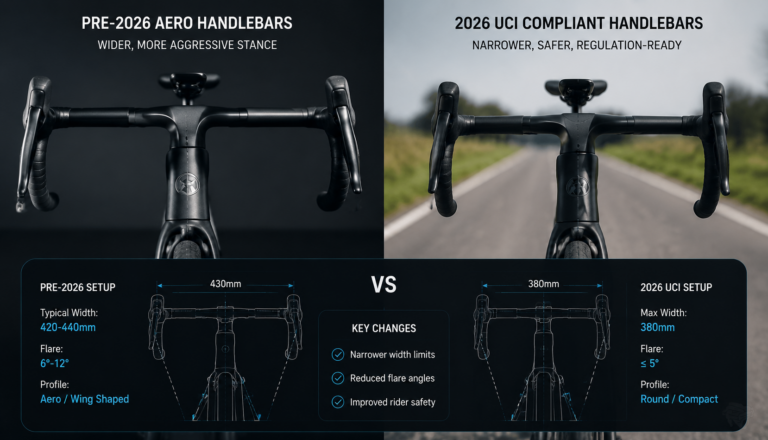
One of the most discussed updates involves handlebar width and flare limits. Riders will need to adopt narrower, standardized cockpits which may reduce extreme aerodynamic positioning but improve safety in pelotons.
Impact on Frame Geometry
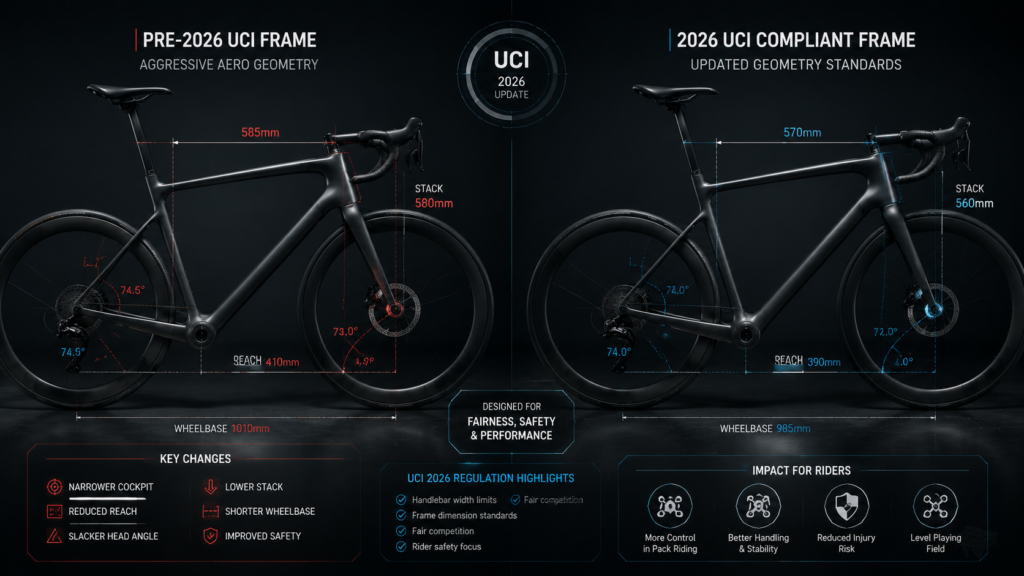
Manufacturers are adjusting reach, stack, and tube shaping to comply with new aerodynamic fairness rules. Expect less extreme aero optimization and more balanced all-round performance bikes.
Training and Racing Adjustments
Professional cyclists will need to adapt their riding positions and power output strategies. Teams are already integrating wind tunnel testing and Garmin performance analytics to adjust to new constraints.
Industry Reaction
While some riders believe the rules limit innovation, others argue they level the playing field and reduce unsafe equipment extremes.

Internal Resources
Conclusion
The UCI 2026 rules will redefine competitive cycling. While performance margins may narrow, innovation will shift toward smarter, safer, and more efficient design philosophies.