Since the dawn of the sport, gravel cycling has been synonymous with words like “innovation,” “grit,” and “spirit.” Races have become longer, routes have become more challenging, and athletes have become more experimental. While road racing obsesses over marginal gains, gravel racers think of something crazy—an idea so outside-the-box that it just might work. As we look ahead to 2026, the landscape of gravel bike suspension technology and aerodynamic optimization is shifting dramatically.
Do you remember the first time a pro gravel racer put mountain bike tires on their gravel bike? We all thought it was ludicrous. Yet, only a few years later, this has become the norm at major races. This begs the question: what’s coming next? What crazy idea in 2026 will become the standard in 2027? Let’s dive into the tech trends shaping the future of gravel.
1. You Will See Suspension Forks Everywhere
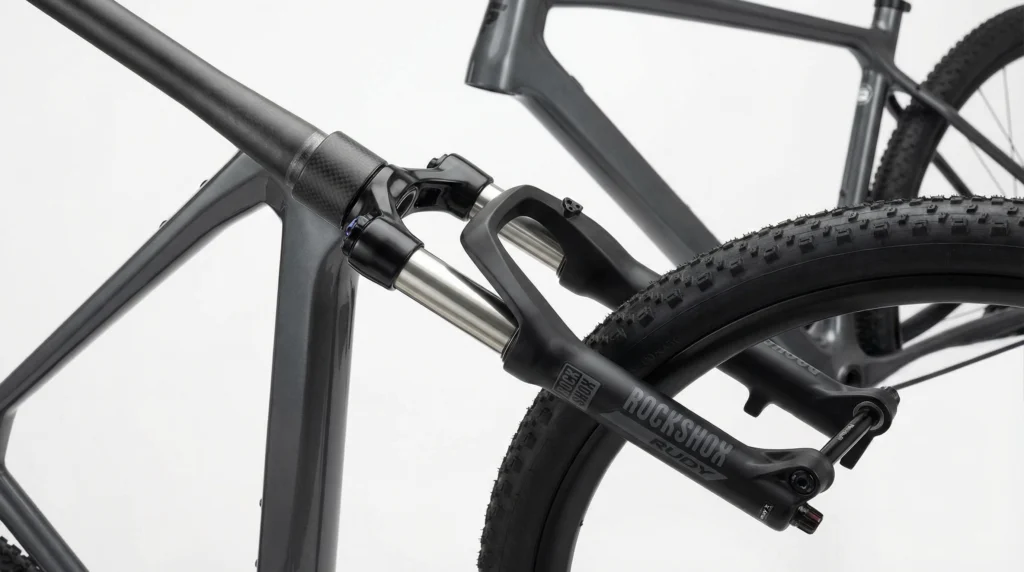
Like MTB tires on gravel bikes, suspension forks used to be for “extreme cases only.” But that is changing at a rapid rate, and now you can find suspension forks on the start line of almost any gravel race. Even the pros are using them, and that means they are fast. While they might add a tiny bit of weight, they can also improve aerodynamics when paired with the right frame and tire width.
Suspension forks, such as the RockShox Rudy and Lauf Grit, can improve traction and comfort across a wide range of terrain. You might want to go rigid for the fastest, smoothest gravel races, but most gravel routes include some combination of singletrack, washboard descents, and wooded tech sections. When you consider the improved aerodynamics of a suspension fork setup, it becomes the go-to option for most gravel events.
2. Suspension Seatposts Become Acceptable (and Fast)
Speaking of suspension, the fork isn’t the only area you could add the bump-numbing stuff to a gravel bike. Suspension seatposts have been around for years, first earning the spotlight at Paris-Roubaix. The bumpy cobblestones begged for an innovation that improved comfort on rough terrain, and thus, suspension seatposts were born. While these bendy and flexible seatposts aren’t for everyone, they could become increasingly popular on road and gravel bikes.
Keep an eye out for 20-40 mm seatposts with new suspension designs, adjustable “race mode” stiffness settings, and gravel frames designed specifically around flex posts. This ties directly into the broader aerodynamic cycling optimization and bike fit trends we are seeing across the industry.
3. Gravel Aero Goes Mainstream—Especially at the Pointy End
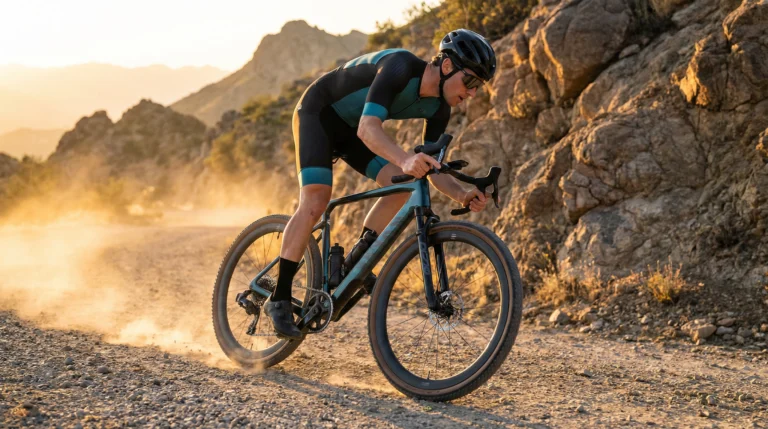
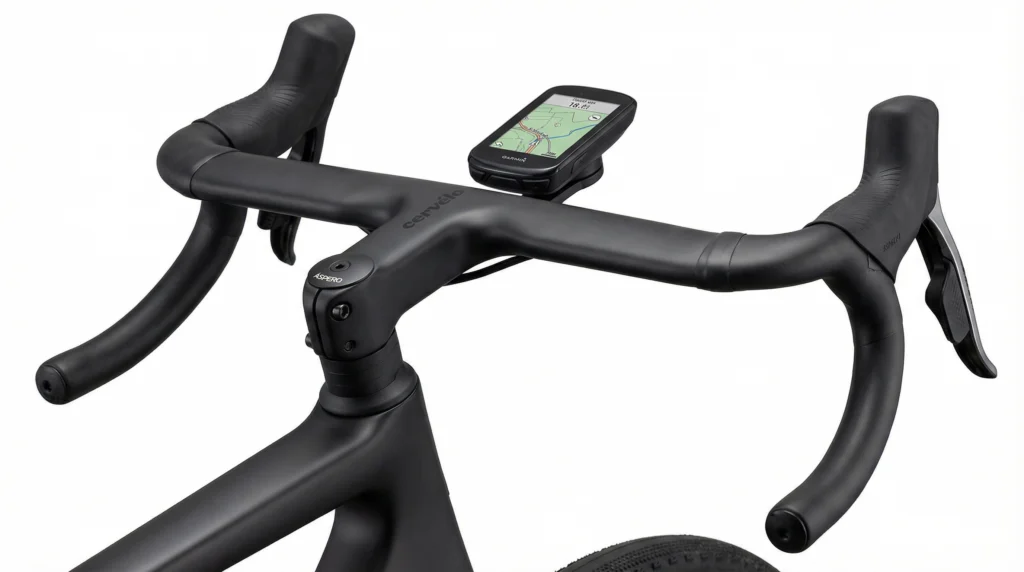
If you are a gravel racer, you have likely thought about a thousand different ways to make your setup faster. Whether that is an integrated cockpit or a wind tunnel-tested position, you’ve likely had the thought. Despite the arduous 200-300km race distances, gravel has shifted towards race-optimized setups that include deep rim carbon wheels, aero frames, and skin-tight aero suits. What’s coming next will be an expansion on the aero priority, small but decisive refinements, and a closer look at the details.
Watch for aero-optimized forks, tubes, and tire clearance. We are also seeing hydration packs stuffed into (rather than on top of) the aero skinsuit, lower and narrower riding positions, and fairing-style bottle cages. This level of optimization is similar to the advancements discussed in our cycling power meters and training metrics guide.
4. Tyre Inserts Become Standard Equipment
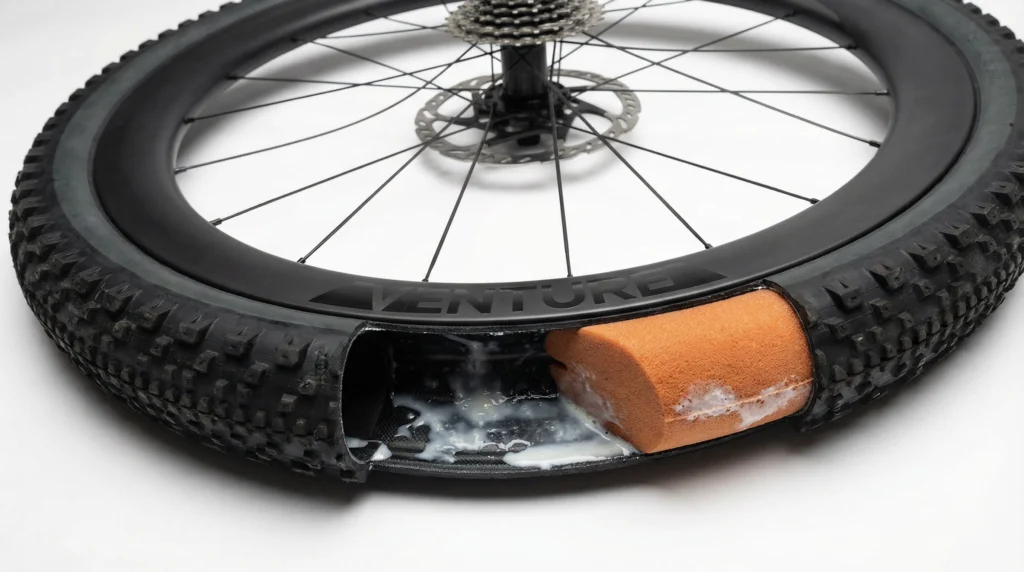
As gravel tires become lighter and faster, they can also become less flat-resistant. It’s a classic negative correlation: the faster and lighter your setup, the more fragile it becomes. Gravel cycling is not the place for fragility. In fact, most pros would probably opt for a heavier and more durable setup if it cut their puncture risk in half.
While tire tech is improving at a rapid rate, it isn’t enough to eliminate the chances of a flat. Thus, many pros have run tire inserts to increase protection. Inserts have a bad rap of being heavy and slow. But as the tech improves, they could become a gravel rider’s best friend. By 2026, expect most gravel setups to include featherweight tire inserts, enabling lower tire pressures that increase comfort and speed. This is a crucial evolution from the road bike tubeless vs tubed tires debate.
5. The Rise of “Smart” Gravel Computers
Perhaps this one is a bit of a stretch, a bonus point, and something that we would personally love to see in gravel. We all love tech, and we all love gravel. To truly combine the two, we want to see as much data as possible in real time. How cool would it be if you could see real-time surface conditions, rolling resistance, and traction levels on your bike computer?
Imagine coming into a corner, and your bike computer is telling you to what speed you need to slow down to make the corner without losing traction. It’s a bit Black Mirror-esque, like piloting a self-driving car, but it could also be the future of gravel. This level of data integration pairs perfectly with the smart trainers and indoor cycling technology many riders use during the off-season.
Final Thoughts on 2026 Gravel Trends
Gravel is the most rapidly evolving segment of cycling. It is part innovation lab, part wild west, and part escape from traditional road culture. While the spirit of gravel may be changing, there is no sign that the sport is slowing down. Races are selling out faster than ever, and there are a million new gravel products every year. We’ll keep a close eye on which ones are marketing attempts and which are here to stay.
The fact of the matter is, gravel isn’t going anywhere. When there are this many talented people in a single space, innovation thrives, and crazy ideas turn into time-tested movements. Whether you are upgrading your bikepacking gear or building a dedicated race rig, 2026 is an exciting time to be riding off-road.
Explore References:
[1] Cycling Weekly. “The next big things in gravel: 2026–2027 tech predictions.”
[2] Skedaddle. “Our Predicted Cycle Trends For 2026.”
[3] Pinkbike. “What’s Hot & What’s Not? Pinkbike Editors’ Picks For 2026 MTB Trends.”
[4] Bicycling Magazine. “The 5 Bikes Our Expert Cannot Stop Thinking About For 2026.”
[5] BikeRumor. “What Innovation Will 2026 Bring? BikeRumor Predictions for a New Year of Bike Tech.”