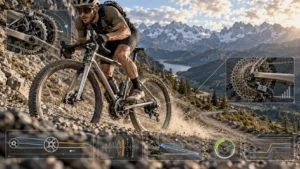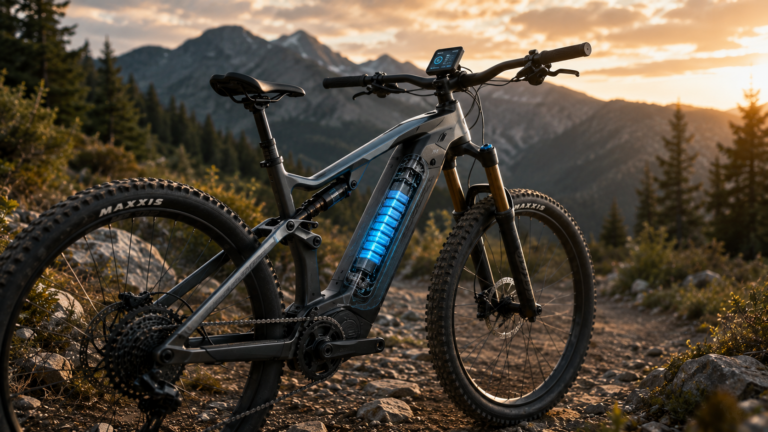
Electric bicycles are entering a new era in 2026. While earlier e-bike innovations focused mainly on larger batteries and stronger motors, the latest developments are centered around intelligent battery management systems that improve efficiency, safety, and overall riding experience.
Modern smart e-bike battery management systems 2026 use artificial intelligence, advanced sensors, and predictive algorithms to help riders travel farther while protecting battery health. These improvements are making electric bikes more reliable for commuters, adventure riders, and performance cyclists.
What Is a Smart Battery Management System?
A battery management system (BMS) controls how an e-bike battery charges, discharges, and maintains temperature. Traditional systems simply monitored basic battery conditions, but modern solutions analyze multiple factors in real time.
New-generation BMS technology can monitor:
- Battery temperature
- Charging speed
- Cell balance
- Power consumption
- Remaining range prediction
Companies such as Bosch eBike Systems are developing smarter electric bike platforms that connect batteries, motors, and digital displays into one integrated ecosystem.
AI Range Prediction for Longer Rides
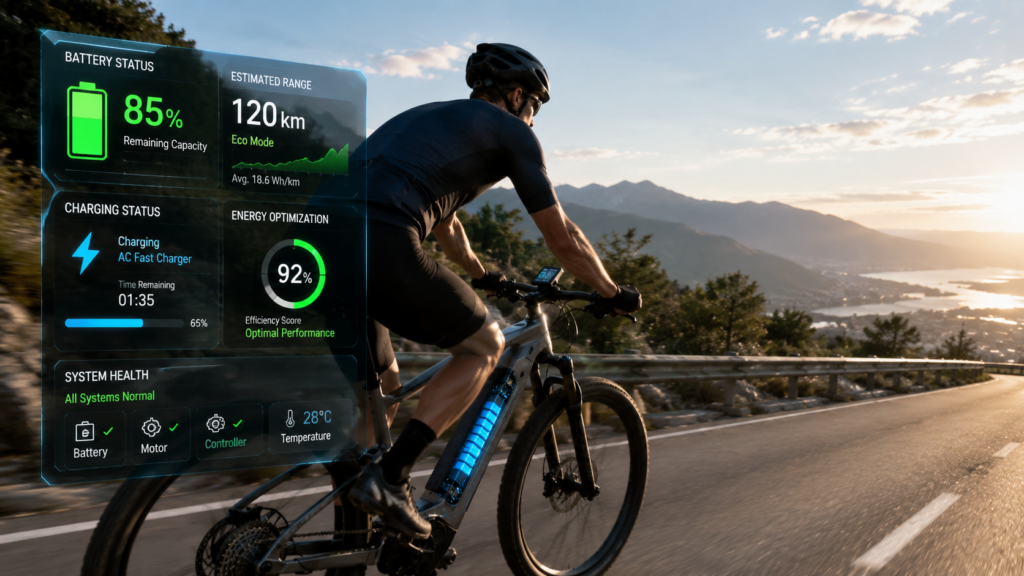
One of the biggest improvements in 2026 e-bike technology is AI-powered range prediction. Instead of estimating distance only from battery percentage, smart systems analyze riding conditions.
Factors such as elevation, rider weight, speed, temperature, and terrain are considered to provide a more accurate remaining range estimate.
For adventure cyclists, this means fewer concerns about running out of power during long-distance rides.
Improved Battery Safety Technology
Battery safety continues to be a major focus as e-bike adoption increases. Advanced battery management systems now include improved thermal monitoring and protection systems designed to prevent overheating.
According to information from the U.S. Department of Energy, battery technology research continues to focus on improving energy density, durability, and safety.
Faster Charging and Battery Longevity
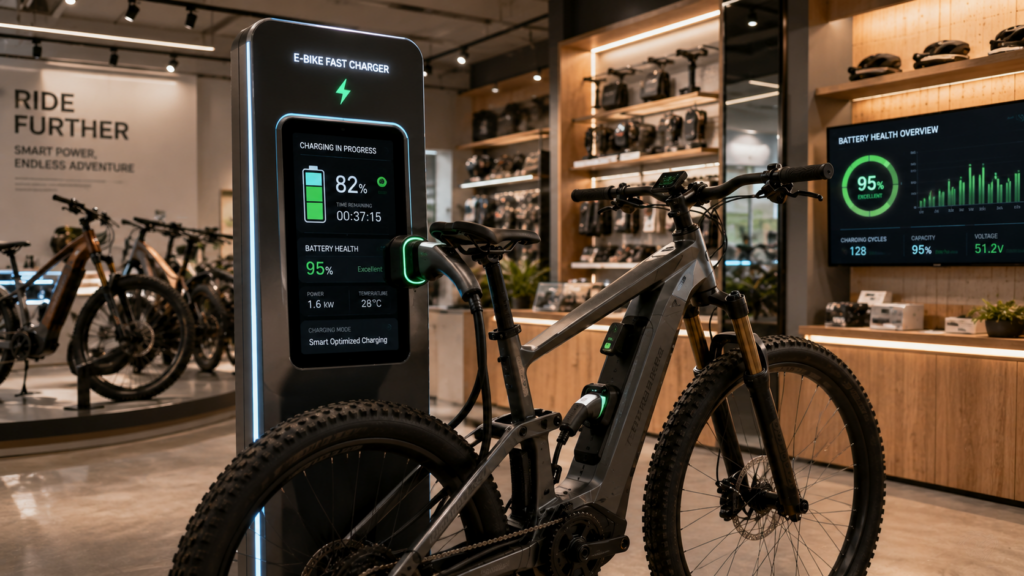
Charging technology is also improving. Smart charging systems can automatically adjust charging speed to reduce battery stress and extend lifespan.
Instead of always charging to maximum capacity, intelligent systems may recommend optimized charging levels depending on the rider’s habits.
This approach helps maintain battery performance over thousands of charging cycles.
Integration With Smart Cycling Apps
Future e-bikes will become increasingly connected. Riders can already monitor battery condition, range, and riding statistics through smartphone applications.
Platforms from companies like Garmin and Strava demonstrate how cycling data is becoming more integrated into everyday riding.
How Smart Batteries Improve Adventure Cycling
Adventure riders benefit significantly from intelligent battery technology. Longer range predictions and improved efficiency allow cyclists to explore remote areas with greater confidence.
Combined with modern gravel and bikepacking technology, smart batteries are helping electric bikes become more capable than ever.
You can also explore related cycling innovations in our guides about gravel bike technology trends and smart bikepacking systems.
The Future of E-Bike Batteries
Future battery developments may include solid-state technology, wireless charging systems, and even more advanced AI energy management.
As electric cycling continues to grow, battery intelligence will become just as important as motor power and frame design.
Conclusion
Smart e-bike battery management systems are transforming electric cycling in 2026. By combining AI, safety monitoring, and energy optimization, these technologies are creating longer-lasting and more dependable e-bike experiences.