In 2026, augmented reality (AR) has rapidly evolved from niche tech to a mainstream enhancement for cyclists who want safer, smarter rides. AR navigation systems and heads‑up displays (HUDs) now project route guidance, hazard alerts, ride stats, and environmental context directly into the rider’s field of view — eliminating distractions and improving on‑road awareness.
How AR Navigation Works for Cyclists
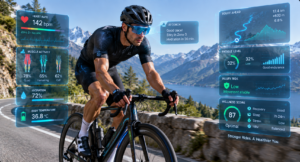
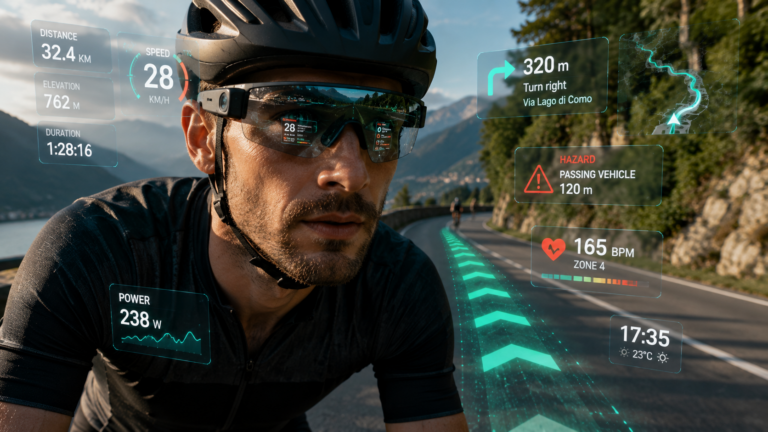
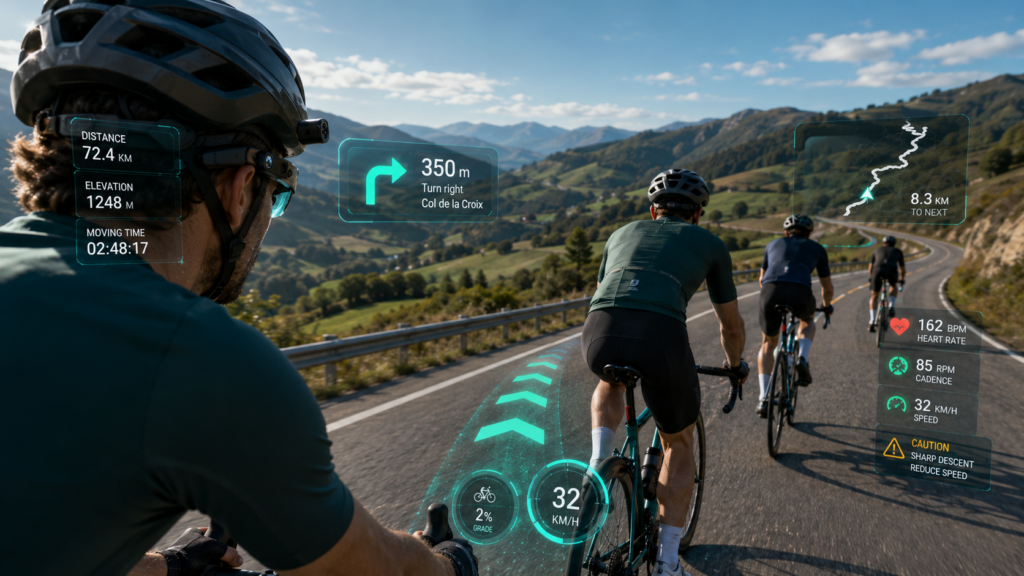
AR cycling systems typically use lightweight glasses, helmet visors, or smart lenses that overlay digital information onto the real world. Instead of glancing down at a phone or cycle computer, riders can see:
- Turn‑by‑turn navigation arrows
- Real‑time hazard warnings
- Traffic information
- Performance metrics like speed, distance, heart rate, and power
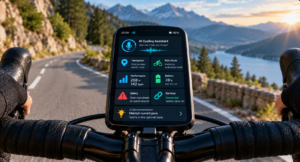
These systems integrate with GPS and cycling apps such as Strava and Garmin, ensuring rides are both optimized and safe.
Boosting Safety With AR Alerts
Safety is a key driver of AR adoption. Today’s AR cycling tech connects to radar and camera sensors to detect approaching vehicles or hazards. Instead of just reacting to danger, riders get predictive alerts superimposed on their vision, giving them critical extra milliseconds to respond.
This builds on the radar safety benefits we discussed in Gravel Bike Technology 2026, extending them into real‑time visual feedback that is less distracting than glancing at a screen.
Training & Performance Metrics
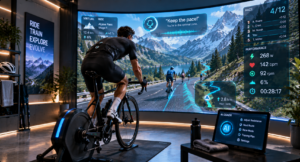
AR systems also assist with performance. Riders can view cadence, power zones, heart rate, and pacing directly in their visual field. Trainers can overlay target power zones during interval sessions, and endurance cyclists can monitor fatigue levels without lowering their heads.
Many systems now sync with smart trainers or wearable sensors to tailor on‑ride guidance based on real‑time performance — blending well with smart training methodologies outlined in our Cycling Training Plans series.
Group Riding and Social Integration
Connected AR displays transform group rides too. Riders can see teammate positions, distance gaps, and planned maneuvers in the HUD. Some advanced platforms integrate social features like live route sharing, group performance comparisons, and voice‑activated ride instructions.
Developing AR Cycling Tech
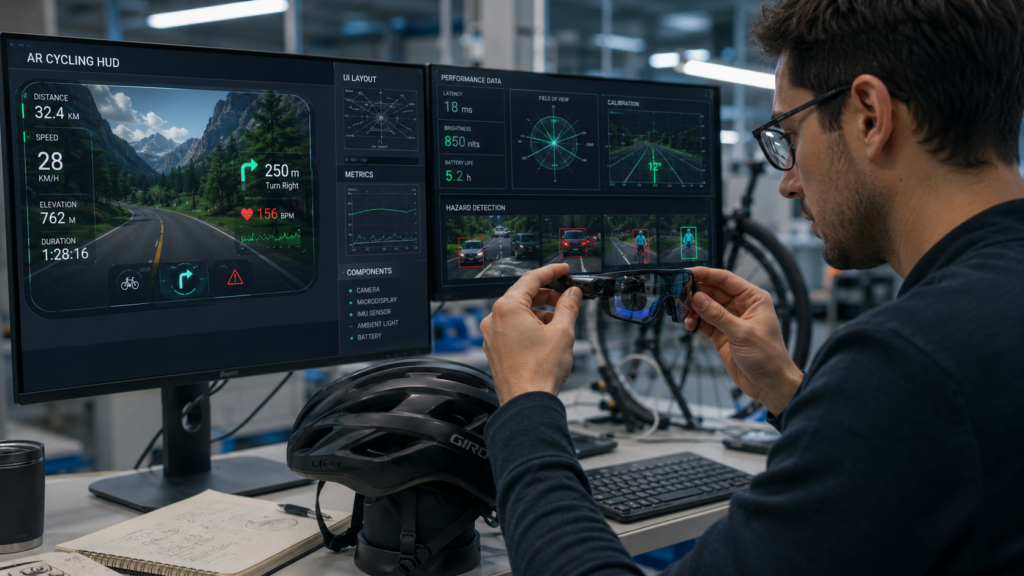
Engineering AR for cycling is challenging. Displays need to be bright enough for daylight, transparent so riders maintain situational awareness, and compact enough for prolonged use. Development labs use simulated environments resembling real routes to fine‑tune UI/UX, latency, and safety overlays.
This iterative testing ensures that the final products not only work but enhance the ride without distracting or overwhelming cyclists.
External Resources & Further Reading
- Wired – AR Headsets Overview
- CyclingNews – AR in Cycling
- TechCrunch – AR Tech Trends
- Apple AR Development
- NHTSA Bicycle Safety Guides
Conclusion
Augmented reality navigation and safety systems are transforming cycling in 2026. By keeping eyes forward and providing intelligent, context‑aware information, AR HUDs make rides safer, more connected, and more enjoyable for cyclists of all levels.