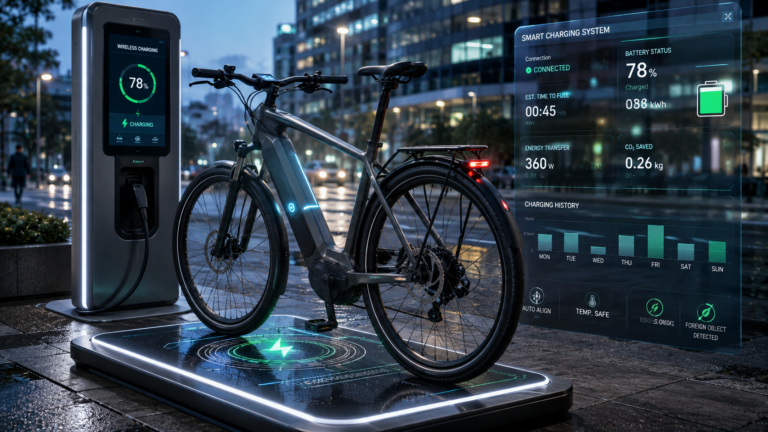
Electric bicycles are becoming smarter, and charging technology is evolving alongside them. In 2026, wireless charging systems are emerging as one of the most promising developments for electric mobility. Instead of relying only on traditional charging cables, future e-bikes may use automated charging stations, induction technology, and connected energy networks.
The latest wireless charging for e-bikes 2026 innovations focus on making battery charging faster, more convenient, and better integrated into everyday transportation systems.
The Evolution of E-Bike Charging Technology
Battery technology has become one of the most important parts of modern electric bicycles. While current e-bikes rely primarily on plug-in chargers, manufacturers are exploring more convenient charging solutions.
Future charging systems may include:
- Wireless induction charging pads
- Smart charging stations
- Automated battery management
- Energy monitoring networks
- Connected charging applications
These developments aim to simplify the charging experience while improving battery efficiency and lifespan.
This technology connects with previous battery innovations discussed in our article about Self-Charging E-Bikes 2026.

How Wireless E-Bike Charging Works
Wireless charging uses electromagnetic induction to transfer energy between a charging surface and a compatible battery system. Similar technology is already used in some consumer electronics and electric vehicle applications.
A wireless e-bike charging system typically includes:
- Charging transmitter pad
- Receiving coil inside the bicycle
- Power management controller
- Battery monitoring system
- Communication software
When the bicycle is positioned correctly, the system transfers energy without requiring a physical connection.
Smart Charging Stations for Urban Cycling
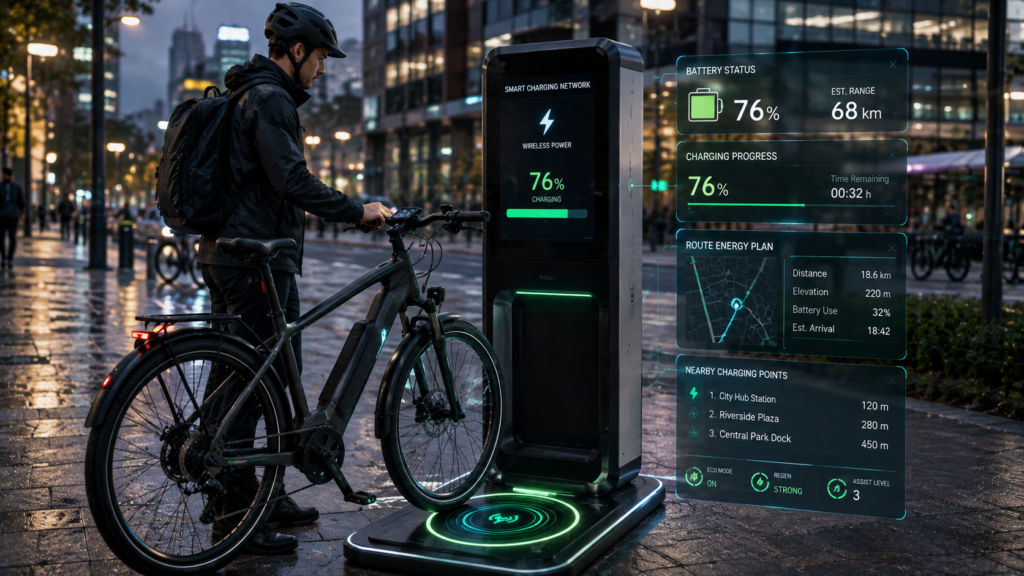
One of the biggest opportunities for wireless charging is the growth of smart urban cycling infrastructure.
Future charging networks could be installed in:
- Bike parking areas
- Public transportation hubs
- Office buildings
- Shopping centers
- Residential communities
A rider could park an electric bike, allow the system to detect the battery level, and automatically begin charging.
This approach supports the broader development of connected mobility systems and smart transportation networks.
AI Battery Management and Automated Charging
Wireless charging becomes more powerful when combined with artificial intelligence. AI battery systems can analyze usage patterns and optimize charging schedules.
Smart battery management can monitor:
- Charging cycles
- Battery temperature
- Energy consumption
- Riding habits
- Battery health
AI systems may determine the best time to charge based on rider schedules, electricity availability, and battery condition.
This connects with our article about Smart Battery Management Systems 2026.
Wireless Charging and Long-Distance E-Bike Riding
Long-distance electric cycling depends heavily on reliable energy access. Wireless charging networks could make touring and commuting more practical by reducing charging limitations.
Potential benefits include:
- More convenient charging during stops
- Less dependence on carrying chargers
- Improved route planning
- Better battery availability
For adventure riders, charging infrastructure could become an important factor when planning extended e-bike journeys.
Integration With Smart E-Bike Systems
Future e-bike charging systems will likely communicate with other connected bicycle components.
Wireless charging networks may integrate with:
- Smart displays
- Navigation systems
- Battery analytics platforms
- Motor controllers
- Connected mobile applications
For example, an e-bike computer could recommend charging locations based on remaining range, terrain, and route conditions.
This connects with our article about AI Cycling Route Optimization 2026.
Environmental Benefits of Wireless Charging Networks
Improved charging technology may support more sustainable transportation by making electric bicycles easier to use for daily travel.
Smart energy systems can help reduce unnecessary charging and improve battery efficiency.
Combined with sustainable manufacturing and recyclable components, wireless charging could contribute to a cleaner future for electric mobility.
Learn more about sustainable bicycle innovations in our article about Sustainable Cycling Tech 2026.
Challenges Facing Wireless E-Bike Charging
Although wireless charging technology is advancing, several challenges remain.
- Infrastructure development costs
- Compatibility between manufacturers
- Charging efficiency improvements
- Weather protection requirements
- Standardization challenges
Manufacturers and technology companies continue researching ways to make wireless charging practical for everyday cyclists.
The Future of E-Bike Charging Networks
The future of electric cycling may include connected charging ecosystems where bicycles automatically communicate with energy networks.
Future developments may include:
- Automatic charging while parked
- Solar-powered charging stations
- AI energy management
- Wireless battery swapping systems
- Connected city charging infrastructure
Conclusion
Wireless charging for e-bikes in 2026 represents an important step toward smarter electric mobility. By combining induction technology, AI battery management, and connected infrastructure, future e-bikes may become easier and more convenient to charge.
As electric cycling continues growing, smart charging networks will play an important role in creating a more connected and efficient riding experience.