Cycling apparel is entering a new era in 2026 as clothing becomes part of the connected cycling ecosystem. Traditional jerseys and performance gear are evolving into intelligent wearable systems with embedded sensors, smart fabrics, and artificial intelligence. The latest smart cycling clothing 2026 technology allows riders to monitor body data, improve comfort, and better understand performance during every ride.
By combining advanced textiles with biometric monitoring, smart cycling apparel is transforming how cyclists train, compete, and interact with their equipment.
The Evolution of Cycling Apparel Technology
Cycling clothing has traditionally focused on aerodynamics, comfort, moisture management, and temperature control. New smart apparel adds another layer of functionality by integrating electronics directly into fabrics.
Modern smart cycling clothing may include:
- Embedded biometric sensors
- Temperature monitoring systems
- Flexible electronic circuits
- Wireless connectivity
- AI performance analysis
Instead of wearing separate devices, cyclists can collect important information directly through their clothing.
This development connects with wearable technology trends discussed in our article about Wearable Cycling Biofeedback Tech 2026.
How Smart Fabrics Work
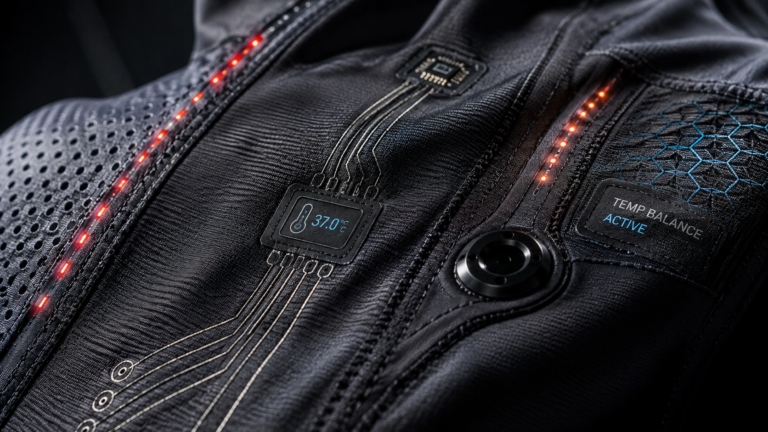
Smart cycling clothing uses advanced textile engineering to combine traditional fabric properties with electronic capabilities. Conductive fibers and miniature sensors can be woven into garments while maintaining flexibility and comfort.
Smart fabrics can monitor:
- Heart rate
- Body temperature
- Movement patterns
- Muscle activity
- Hydration indicators
The collected information can then be transmitted to cycling computers, smartphones, or AI-powered training platforms.
Biometric Monitoring Through Cycling Apparel
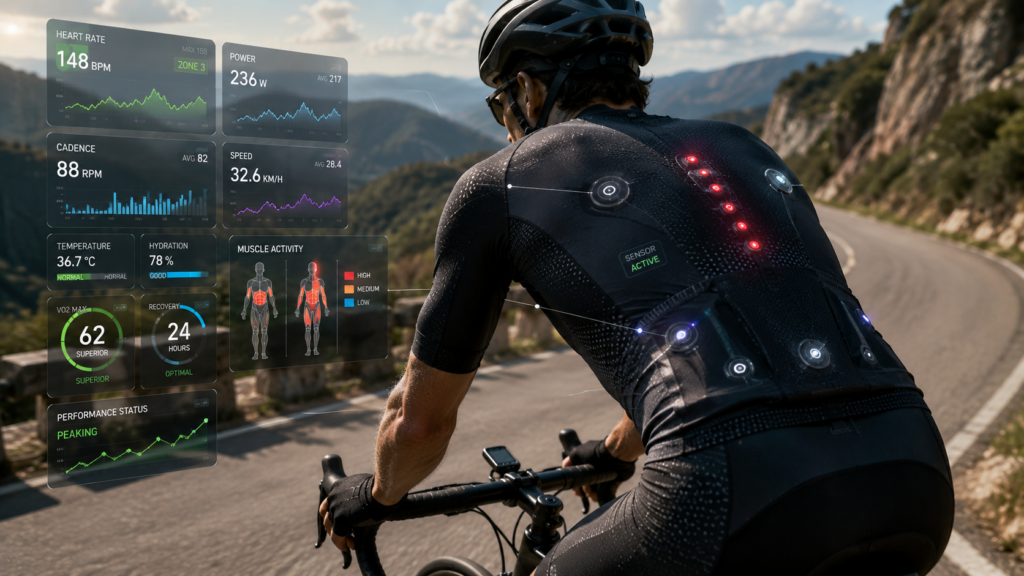
One of the biggest advantages of smart cycling clothing is continuous biometric monitoring. Traditional wearable devices such as watches and chest straps provide valuable data, but smart clothing can collect information from multiple areas of the body.
Future cycling apparel may monitor:
- Heart rate patterns
- Muscle fatigue levels
- Body temperature changes
- Breathing patterns
- Recovery indicators
This creates a more complete picture of how the body responds during training and endurance rides.
These features complement technologies covered in our guide about AI-Powered Cycling Training 2026.
Temperature Regulation and Climate Control
Temperature management is one of the most promising applications of smart fabrics. Cyclists often experience changing conditions during long rides, especially in mountainous or endurance environments.
Smart clothing systems may use:
- Heat-regulating materials
- Moisture sensors
- Adaptive ventilation
- Temperature-responsive fabrics
These technologies help create clothing that responds to environmental changes rather than simply protecting against them.
AI Performance Analysis Through Clothing Data
Smart cycling apparel becomes more powerful when combined with artificial intelligence. AI platforms can analyze biometric information alongside cycling data from power meters, GPS devices, and smart bikes.
For example, AI systems can compare:
- Heart rate response
- Power output
- Pedaling efficiency
- Recovery patterns
This creates a more personalized understanding of rider performance.
This technology works alongside smart performance systems discussed in our article about Smart Cycling Power Meters 2026.
Benefits for Different Types of Cyclists
Professional Riders
Competitive cyclists can use smart clothing to monitor training intensity, recovery, and performance changes during preparation periods.
Endurance Cyclists
Long-distance riders benefit from improved monitoring of fatigue, hydration needs, and body responses during extended efforts.
Everyday Cyclists
Recreational riders can use smart apparel to better understand fitness progress and improve comfort during regular rides.
Smart Clothing and Connected Cycling Systems
Future cycling apparel will become increasingly connected with other smart bicycle technologies.
Smart clothing may communicate with:
- AI cycling glasses
- Smart helmets
- Power meters
- Smart bike frames
- Connected cycling computers
This creates a complete digital ecosystem where equipment and apparel work together to provide deeper performance insights.
This approach matches the connected cycling trends discussed in our article about Connected Cycling Analytics 2026.
The Future of Smart Cycling Apparel
As wearable technology continues advancing, smart cycling clothing may become lighter, more affordable, and easier to integrate into everyday riding.
Future developments may include:
- Self-adjusting temperature control
- AI-powered fatigue detection
- Wireless charging fabrics
- Integrated safety lighting
- Personalized performance recommendations
The future cycling jersey may become an intelligent piece of equipment rather than simply protective clothing.
Smart Apparel Research and Development
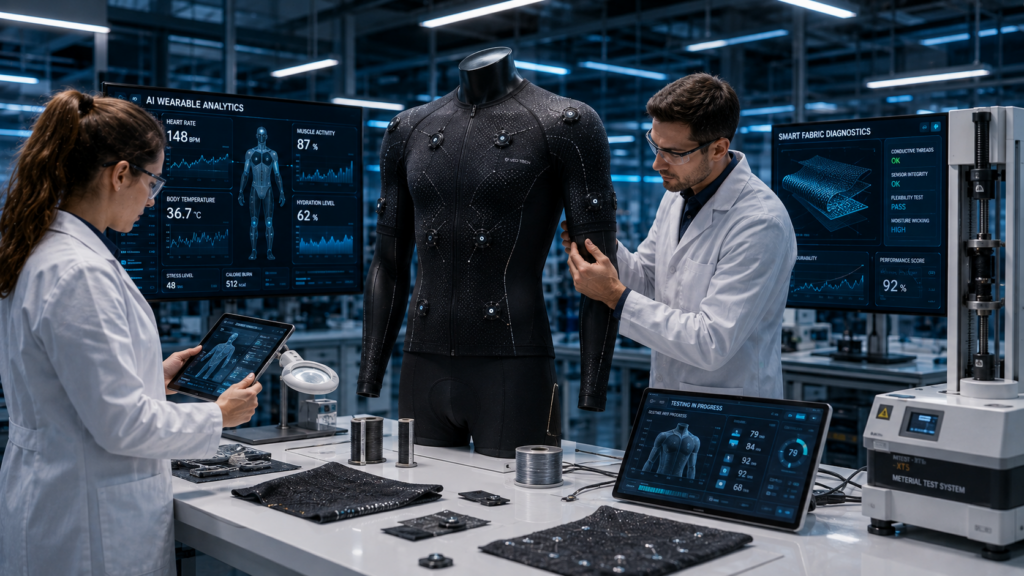
Developing smart cycling clothing requires collaboration between textile engineers, electronics specialists, and cycling technology companies. Testing involves durability, flexibility, sensor accuracy, and real-world riding conditions.
Conclusion
Smart cycling clothing in 2026 represents a major advancement in wearable cycling technology. By combining intelligent fabrics, biometric sensors, and AI analysis, these systems provide riders with deeper insights into performance and comfort.
As connected cycling technology continues expanding, smart apparel will become an important part of the modern cyclist’s equipment ecosystem.