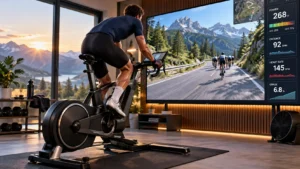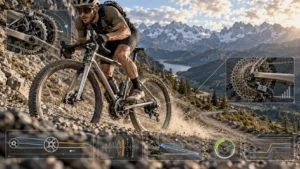
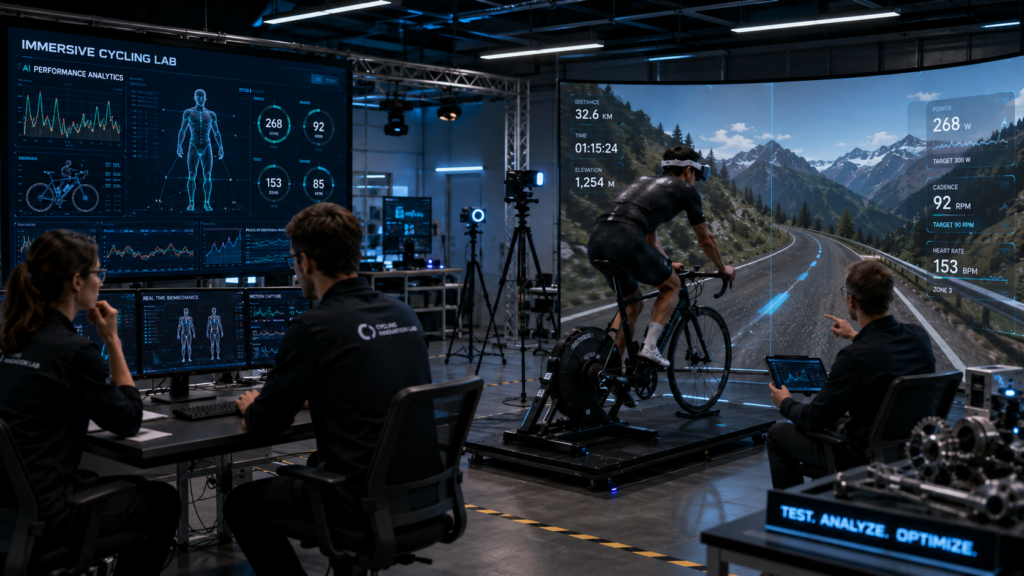
Indoor cycling is becoming more advanced as artificial intelligence, augmented reality, and virtual environments transform how riders train. In 2026, immersive cycling technology 2026 is creating realistic digital riding experiences that combine smart trainers, mixed reality displays, AI coaching, and interactive virtual roads.
Instead of simply riding indoors while watching a screen, cyclists can now experience connected training environments designed to replicate outdoor riding conditions while providing detailed performance feedback.
Modern smart trainers and virtual cycling platforms are increasingly focused on realistic resistance control, adaptive workouts, and immersive environments that make indoor training more engaging.
The Evolution of Indoor Cycling Experiences
Indoor cycling has changed significantly over the last decade. Traditional trainers were mainly designed to maintain fitness during bad weather or limited outdoor riding conditions.
Today’s connected cycling systems create complete digital training environments where riders can interact with virtual landscapes, compete with other cyclists, and follow personalized workouts.
Immersive cycling technology combines:
- Smart trainers
- Virtual cycling platforms
- Augmented reality displays
- Artificial intelligence coaching
- Performance analytics
This creates a more interactive experience that connects physical effort with digital environments.
This connects with our article about Smart Trainers and Indoor Cycling Technology Trends for 2026.
How Mixed Reality Cycling Works
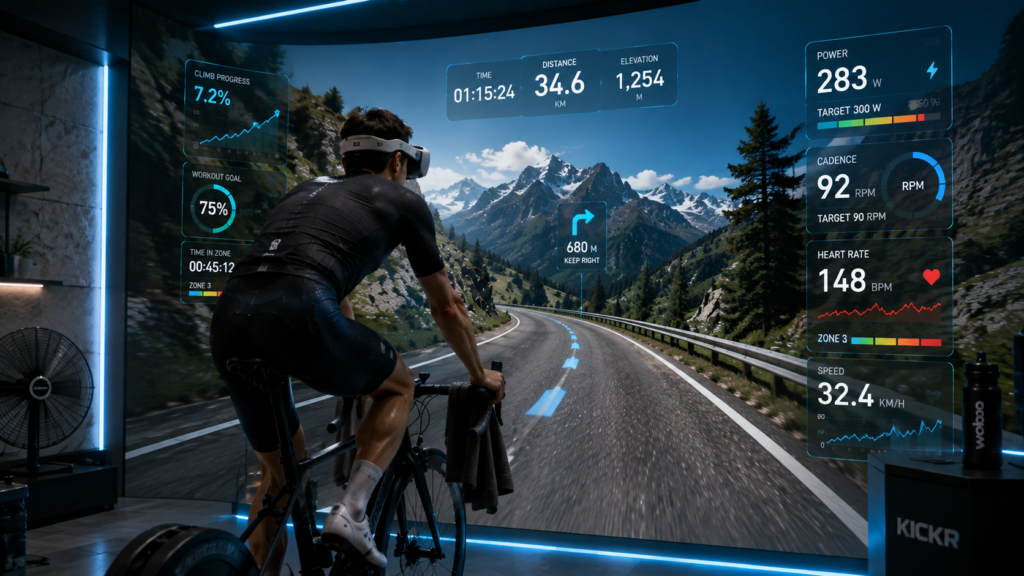
Mixed reality cycling combines real-world cycling equipment with digital environments. Riders use smart trainers, connected bikes, displays, or wearable devices to interact with virtual routes.
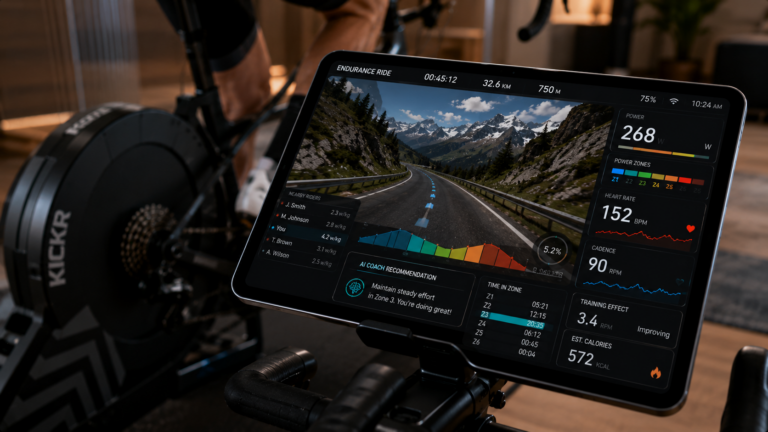
A mixed reality cycling system may track:
- Power output
- Heart rate
- Cadence
- Speed
- Training intensity
- Body movement
The system then uses this information to adjust resistance, provide feedback, and create a more realistic riding experience.
Virtual Roads and Digital Cycling Worlds
One of the biggest developments in immersive cycling is the growth of virtual roads. Riders can now explore digital versions of mountains, cities, and famous cycling locations without leaving home.
Virtual cycling environments may include:
- Real-world route simulations
- Competitive races
- Group rides
- Interactive training courses
- AI-generated landscapes
Platforms such as Zwift and ROUVY have helped popularize connected indoor cycling by combining smart trainers with digital riding environments.
This technology complements our article about Cycling Apps and Training Software Trends 2026.
AI Coaching in Immersive Training
Artificial intelligence is becoming an important part of virtual cycling experiences. Instead of following fixed training programs, AI systems can analyze rider performance and adjust workouts automatically.
AI-powered immersive training may provide:
- Personalized workouts
- Adaptive difficulty levels
- Recovery recommendations
- Pacing suggestions
- Performance predictions
This creates a more personalized training experience based on each cyclist’s ability and goals.
This connects with our article about AI-Powered Cycling Training 2026.
Augmented Reality Displays for Cyclists
Augmented reality is another technology changing cycling experiences. Instead of viewing information on a separate screen, riders can see digital information integrated into their environment.
AR cycling systems may display:
- Route directions
- Training targets
- Performance statistics
- Safety alerts
- Virtual coaching instructions
This extends the concepts covered in our article about AR Cycling Navigation & Safety Tech 2026.
Smart Trainers and Realistic Road Simulation
Smart trainers are the foundation of immersive cycling technology. These devices measure performance while adjusting resistance to simulate different riding conditions.
Advanced smart trainers can simulate:
- Mountain climbs
- Rolling terrain
- Wind resistance
- Race conditions
- Structured workouts
Direct-drive smart trainers have become increasingly popular because they provide accurate power measurement, realistic resistance changes, and compatibility with connected training platforms.
Benefits for Different Cyclists
Professional Cyclists
Competitive riders can use immersive training systems to maintain fitness, complete structured workouts, and analyze performance data.
Indoor Training Riders
Cyclists who prefer home training can experience more realistic rides without needing outdoor routes.
New Cyclists
Virtual environments can make training more engaging by adding motivation, guidance, and social interaction.
The Future of Immersive Cycling
As technology continues improving, immersive cycling experiences may become even more realistic and personalized.
Future developments may include:
- AI-generated virtual routes
- Advanced VR cycling environments
- Real-time digital coaching
- Full-body motion tracking
- Connected cycling communities
Research into AR and VR systems continues exploring how immersive environments can improve interaction, navigation, and user experiences.
Conclusion
Immersive cycling technology in 2026 is transforming indoor training from a simple workout into a connected digital experience. Through augmented reality, virtual roads, smart trainers, and artificial intelligence, cyclists can train in more engaging and personalized ways.
As cycling technology continues evolving, mixed reality riding may become an essential part of how athletes and everyday riders improve performance and enjoy cycling.