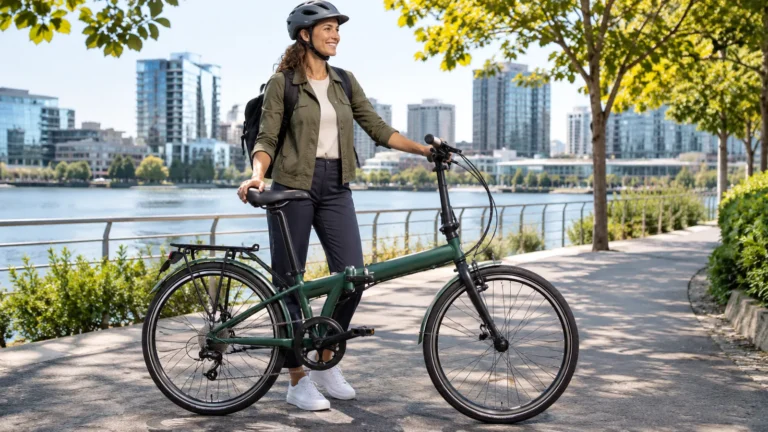
Folding bikes have a reputation for putting compact storage ahead of rider fit. The Dahon Mariner XL 2026 challenges that assumption with a longer cockpit, 22-inch wheels, and a stated 330-pound carrying capacity. Following its recent US availability announcement, it presents an interesting option for taller cyclists, riders transporting everyday gear, and anyone who likes the practicality of a folding bike but wants more room to move.
At a listed US price of $1,299, this is not the smallest or cheapest folder on the market. The important question is whether its extra size solves a real problem for your commute. Here is what Dahon’s published specifications confirm, what they cannot tell us about ride quality, and what to check before buying.
What Is the Dahon Mariner XL?
The Mariner XL is a non-electric, eight-speed folding bicycle developed for a broader range of body sizes than many conventional compact folders. Bicycle Retailer & Industry News reported its US availability on November 3, 2026, highlighting its reinforced design and elevated maximum load rating. Dahon had previously previewed the model at industry events earlier in the year, so this is a US-availability story rather than a claim that the bicycle was invented in November.
According to the official Dahon Mariner XL specifications, its aluminum frame folds for storage and travel, while a Shimano eight-speed derailleur handles the gearing. Hydraulic disc brakes, a rear rack, fenders, and folding pedals add practical commuting equipment without turning the bike into an electric-assisted model.
Dahon Mariner XL Specifications at a Glance
- US listed price: $1,299, before any temporary promotions.
- Maximum load: 330 pounds, as stated by Dahon.
- Recommended rider height: approximately 5 feet 2 inches to 6 feet 9 inches.
- Wheels and tires: 22-inch rims with Kenda 22 × 1.95-inch tires.
- Gearing: Shimano eight-speed rear drivetrain, 11–32-tooth cassette and 52-tooth chainring.
- Brakes: Tektro HD-M280 hydraulic discs.
- Listed bicycle weight: about 31.6 pounds.
- Folded dimensions: approximately 33.4 × 29.5 × 15 inches.
These are manufacturer-listed figures, not measurements from an independent test. Actual weight can vary with accessories, and an individual rider’s fit depends on more than height alone.
Why the 330-Pound Load Rating Matters
Weight capacity is not the same as rider weight alone. A helmet, lock, clothes, pannier, laptop, groceries, and other luggage contribute to the load carried by the bicycle. This distinction matters for someone who is near the upper end of a bike’s rating or who regularly rides with a loaded rack.
Dahon’s Mariner family comparison gives the standard model a capacity of 232 pounds and the XL a capacity of 330 pounds. That is a meaningful change on paper. It does not mean the folding bike becomes a cargo bike, however. The rear rack and every accessory can have separate limits, and the stated maximum does not establish safe loads for every road condition.
Prospective buyers should ask how the manufacturer defines its load rating, whether it includes luggage, and what the rack itself supports. They should also check tire pressure recommendations for their combined system weight and inspect the folding mechanism regularly.
Do 22-Inch Wheels Improve the Ride?
A 22-inch wheel is larger than the 16- or 20-inch wheels commonly associated with compact folding bikes. On rough pavement, the increased wheel diameter may make some bumps feel easier to roll over, but tire construction, pressure, frame stiffness, and riding position also affect comfort. Wheel size alone cannot guarantee a smoother ride.
The Mariner XL uses roughly two-inch-wide tires, which gives riders room to fine-tune comfort within the tire and rim makers’ recommended pressure range. Its rear rack and full fenders also favor real-life commuting rather than minimal race-style weight.
What Does the Longer Cockpit Change?
Dahon lists a 620 mm handlebar for the XL versus 560 mm on its standard Mariner comparison page, along with a slightly longer wheelbase and overall length. Combined with the taller fit range, these proportions are intended to give larger riders more comfortable contact points and steering space.
That is not a substitute for a test ride. Two people of the same height can have different torso lengths, leg proportions, and flexibility. Check whether you can reach the grips without locking your elbows, whether the saddle reaches the correct pedaling height, and whether your knees remain clear of the handlebar during tight turns.
For broader context, iBikeBlog’s guide to urban cycling commute optimization explains how bike fit interacts with route choice, traffic, and equipment.
Can You Actually Carry or Store This Folding Bike?
At approximately 31.6 pounds, the Mariner XL is portable in the sense that it folds, but it is not featherweight. Its folded package is also substantial. Carrying it up several flights of stairs or lifting it into a high luggage rack may be awkward, especially for riders with limited grip strength or mobility.
Before buying, measure your apartment closet, elevator, car trunk, or office storage location. Dahon’s stated folded dimensions are about 33.4 × 29.5 × 15 inches, so a space that accommodates a much smaller 16-inch folder may not accept the XL. Consider a protective cover if the bike will share space with clothing or other luggage.
Train policies need extra care. Amtrak’s folding-bike FAQ permits qualifying folders within a specified size envelope, but rules also depend on available storage, train equipment, and route. The Mariner XL’s listed dimensions appear to fit within that dimensional envelope when oriented appropriately; that does not guarantee acceptance on every journey. Confirm current carriage rules and folded measurements before travel.
What Are the Benefits and Limits of Hydraulic Disc Brakes?
The Mariner XL’s Tektro hydraulic disc system is a notable feature on a practical folding bike. Hydraulic brakes can offer strong stopping control with less frequent cable adjustments than mechanical systems, although pads, rotors, and fluid still need routine service. A new rider should practice controlled stops in a safe location, particularly when carrying luggage.
The Shimano eight-speed range is useful for level streets and moderate rolling hills. It is not a promise that every rider can climb steep terrain comfortably with a heavily loaded bicycle. If your commute includes sustained grades, compare the available gear ratios and take a test ride on a similar incline.
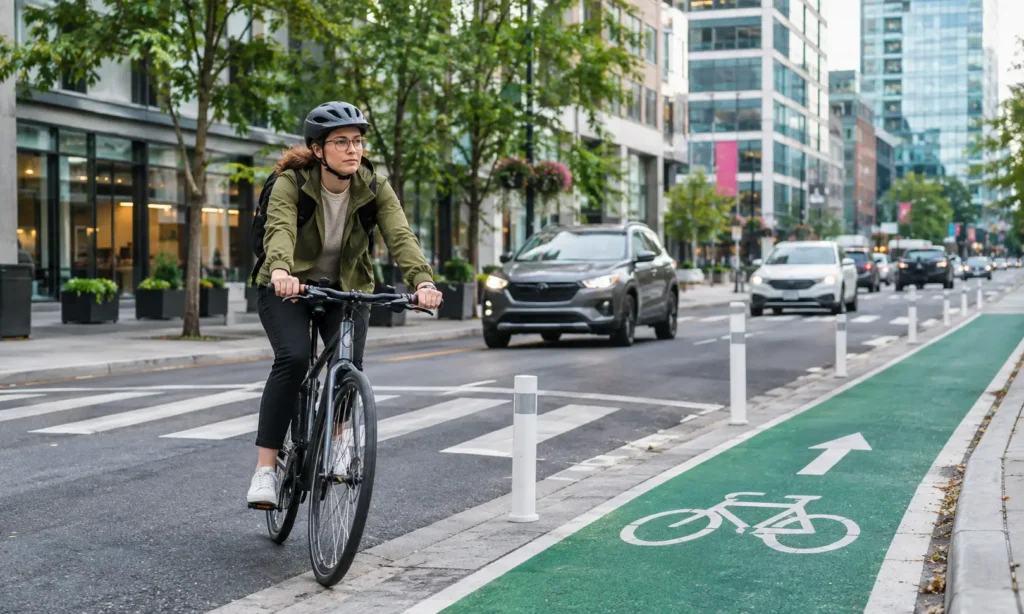
For intersections, infrastructure often contributes more to safety than a specification upgrade. The NACTO guide to protected bike lanes explains why separated facilities make urban travel more comfortable for people of varying ages and experience levels.

Mariner XL vs. a Smaller Folding Bike
Choose the XL primarily for usable fit, load rating, and larger-wheel handling rather than the smallest folded shape. A shorter rider may fit the XL, but can still prefer a lighter compact folder for daily stair climbs or crowded trains. Conversely, a tall commuter might prefer the XL’s cockpit even if that means accepting a larger folded package.
What Should Buyers Check Before Ordering?
Start with five practical checks: fit, folded size, lift weight, service support, and intended terrain. Ask the retailer to demonstrate the latch and safety locks, then practice folding and unfolding the bike yourself. Verify that the seatpost and handlebar adjustment markings are respected and that nothing interferes with the brake hoses or cables as the frame moves.
Confirm the exact build specification supplied in your market. Promotional photographs, early previews and current shop listings can describe slightly different components. Dahon’s earlier 2026 product preview helps explain the design direction, while the live product listing should be checked for the current purchase configuration.
Finally, choose a route where the bike makes sense. Short urban journeys, mixed pavement and modest cargo are natural use cases. A mountain trail, very rough gravel descent, or heavy trailer arrangement should not be assumed appropriate merely because a manufacturer advertises reinforced construction. For everyday route planning, see iBikeBlog’s adventure cycling equipment guide for a useful discussion of cargo distribution and carrying essentials.
Who Is the Dahon Mariner XL Best For?
The strongest candidate is a rider who needs a roomier folding bicycle, values an elevated manufacturer load rating, and has enough space to store its comparatively large folded form. It may also suit someone combining shorter bicycle trips with occasional car travel, provided lifting and storage are manageable.
It is less persuasive for shoppers whose priority is ultralight portability, the tiniest fold, or the lowest initial price. In those cases, compare smaller folders before committing. The Dahon Mariner XL 2026 makes an interesting case for a different kind of portability: a bike that can fold while still providing extra physical room to ride. Whether that compromise works depends on the actual person, route, and storage space, not just the 330-pound number on the specification sheet.